Main Courses
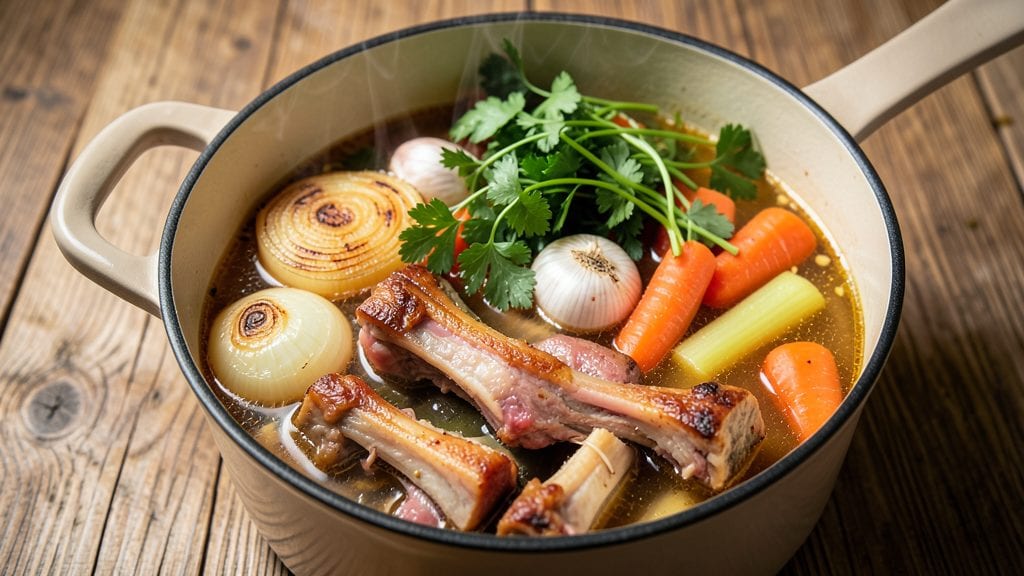
Creating a veal stock recipe that delivers restaurant-quality depth starts with properly roasted bones and carefully selected aromatics—this isn't just water with flavor, it's a rich, umami-packed foundation for sauces, braises, and soups.
The key lies in slow simmering, where collagen dissolves into a velvety liquid that transforms ordinary dishes into extraordinary ones. I've perfected this method over years of testing, ensuring every batch develops that complex, savory character professional chefs rely on.
This recipe transforms simple veal bones into a flavor powerhouse through precise technique: roasting the bones until deeply caramelized unlocks layers of flavor, while a balanced blend of vegetables and herbs—like celery, onion, and parsley—builds a harmonious aromatic base.
The slow simmer (8-12 hours) extracts maximum flavor without bitterness, resulting in a stock that's clear, rich, and packed with body. Professional chefs use this same method to elevate everything from risottos to braised meats.
What you'll end up with is a deep umami base that reduces beautifully into sauces or serves as a luxurious broth for braises—think of it as the secret weapon behind restaurant-quality dishes at home.
The stock develops a velvety texture with just the right balance of savory and sweet notes, making it versatile enough for both classic French cuisine and modern interpretations. Every sip should remind you why homemade stock beats store-bought every time.
Once complete, you'll have enough stock for multiple recipes—store it properly in the refrigerator for up to 5 days or freeze for months. Whether you're making a classic French boeuf bourguignon or a simple weeknight braise, this stock will elevate your cooking to the next level.
Let's get started on creating your flavor foundation.
Ingredients for veal stock
Four pounds of veal bones and twelve cups of water transform into a velvety umami foundation for sauces and braises.
| Ingredient | Amount | Notes |
|---|---|---|
| Veal Bones 🦌 | 4 lb | Split for maximum surface area |
| Yellow Onion 🧅 | 1 whole | Coarsely chopped, peel on |
| Carrots 🥕 | 4 whole | Cut into 2-inch chunks |
| Celery Stalks 🌿 | 6 whole | Cut into 2-inch pieces |
| Garlic Cloves 🧄 | 8 cloves | Crushed with skin on |
| Fresh Parsley 🌿 | ½ cup | Stems included, roughly chopped |
| Fresh Thyme 🌿 | 2 sprigs | Stems intact for flavor infusion |
| Fresh Bay Leaves 🍃 | 2 whole | Dried substitute at half quantity |
| Tomato Paste 🍅 | 2 tbsp | Unsweetened, for depth |
| White Wine 🍷 | 1 cup | Dry variety, deglazing |
| Apple Cider Vinegar 🍏 | 1 tbsp | Brightens flavor profile |
| Diamond Crystal Kosher Salt 🧂 | 1 tbsp | Adjusts seasoning |
| Black Peppercorns 🌶️ | 1 tbsp | Crushed for aroma |
| Cold Water 💧 | 12 cups | Filtered preferred |
Professional butchers often reserve veal bones for stock due to their high collagen content. Look for split bones at specialty butchers or high-end grocers like Whole Foods or D'Agostino—they yield maximum flavor when roasted. The bones should be pale with minimal fat marbling. For aromatics, organic produce from the farmers market delivers superior flavor, but conventional store-bought works perfectly. Celery and onions form the holy trinity of stock-building vegetables—never skip them. Fresh herbs like thyme and bay leaves infuse complexity that dried versions can't replicate, though Penzeys dried herbs work in a pinch.
No veal bones? Pork or beef bones work as substitutes, though veal delivers the most delicate flavor. Substituting dried herbs? Use half the quantity of fresh—dried thyme and bay leaves are potent. The tomato paste and apple cider vinegar are non-negotiable for that restaurant-quality depth; they add umami and brightness without overpowering. White wine should be dry—Sauvignon Blanc or Pinot Grigio work perfectly. For salt, Diamond Crystal kosher dissolves evenly and enhances flavor without clouding the stock. Black peppercorns should be crushed lightly to release their aromatic oils without bitterness.
This stock develops optimal flavor after 8-12 hours of simmering, but never boils vigorously—gentle bubbles are key. Strain through a fine-mesh sieve lined with cheesecloth for maximum clarity. Properly stored in the refrigerator, it keeps for 5 days in an airtight container with a layer of fat preserved on top. For longer storage, freeze in 2-cup portions—they thaw perfectly for single-use applications. The stock reduces beautifully into sauces, so make extra for future braises or risottos where that rich umami character shines.
Why You'll Love This Recipe
- No Chopping Chaos: I swear by the "mirepoix hack"—just roughly chop the onion, carrots, and celery into 1-inch pieces. No julienne skills required, and the stock still tastes like you spent hours prepping.
- Rich Without Effort: That first simmer? Pure magic. The veal bones melt into the pot, releasing collagen that turns into velvety depth, while the garlic cloves caramelize just enough to add a subtle, smoky sweetness—no fancy techniques, just patience.
- Pantry-to-Table Magic: This isn’t just for risotto. Use it to braise chicken thighs, stretch a simple pasta sauce, or even make dumplings taste like they came from a Michelin-starred kitchen. Freeze leftovers in ice cube trays for instant flavor boosts later.
- Budget Luxury: Veal bones might sound fancy, but they’re cheaper than you think—and they make everything taste expensive. A single batch feeds a week’s worth of meals, so you’re basically getting gourmet stock for pennies per serving. (Yes, even on a Tuesday night.)
Step-by-step instructions for veal stock
This method extracts maximum flavor from veal bones while preserving clarity for rich, umami-forward stock.
Prepare and Blanch the Veal Bones
Split the 4 lb veal bones into 2- to 3-inch pieces using a heavy cleaver or meat mallet. This increases surface area for better extraction. Place the bones in a large stockpot and cover with 12 cups cold water. Bring to a boil over high heat, then immediately reduce to a simmer for 10 minutes. This initial blanch removes impurities and blood, which can cloud the stock.
After simmering, drain the bones and rinse them thoroughly under cold water. Discard the blanch water—it contains impurities that would otherwise create an off-flavor. Return the rinsed bones to the clean stockpot and cover with 10 cups fresh cold water. The bones should be completely submerged; if not, add a bit more water.
Build the Aromatic Base
Add the coarsely chopped 1 whole yellow onion, 4 whole carrots cut into 2-inch chunks, and 6 whole celery stalks cut into 2-inch pieces to the pot. These vegetables form the classic "mirepoix" base that provides sweetness and depth. Stir gently to combine, ensuring the vegetables are fully submerged.
Next, add the 8 cloves garlic cloves (crushed with skin on), 2 sprigs fresh thyme, 2 whole fresh bay leaves, and 2 tbsp tomato paste. The tomato paste adds umami depth and helps prevent cloudiness. Bring the mixture to a gentle simmer over medium heat, then reduce to the lowest possible heat that maintains a steady simmer—this prevents scorching and preserves clarity.
Simmer and Develop Flavor
Simmer the stock uncovered for 3 hours, skimming any foam or impurities that rise to the surface with a fine-mesh skimmer or ladle. This step is critical for clarity and purity. After 3 hours, add the 1 cup white wine and 1 tbsp apple cider vinegar, which brighten the stock and cut through any bitterness.
Continue simmering for another 2 hours, maintaining a gentle simmer. The stock should reduce slightly, concentrating flavors while maintaining a rich, golden hue. If the liquid level drops too low, add hot water as needed to keep the bones and vegetables submerged. The goal is 5-6 cups of finished stock with deep umami character.
Strain and Finish
Once simmered for a total of 5 hours, remove the stockpot from heat and let it sit for 10 minutes to allow any settled particles to sink. Line a fine-mesh strainer with cheesecloth or a coffee filter for extra clarity, then carefully strain the stock into a clean container, pressing gently on the solids to extract maximum liquid without introducing sediment.
Discard the solids. Stir in the 1 tbsp diamond crystal kosher salt and 1 tbsp crushed black peppercorns, along with the 0.5 cup roughly chopped fresh parsley (stems included). The parsley adds freshness and a touch of green color. Taste and adjust seasoning if needed—veal stock should be deeply savory with a clean, bright finish. Store in the refrigerator for up to 5 days or freeze for longer preservation.
Pro Tips For Making Veal Stock
- BLANCH BONES FIRST: Skip the raw dump—blanch the veal bones in boiling water for 5 minutes to remove blood and impurities. I learned this the hard way after my first stock tasted metallic; it’s the thing that makes the difference between "meh" and "rich, clear broth."
- CHAR THE VEGETABLES: Don’t just toss them in—sauté onions, carrots, and celery in oil until they’re deeply browned, almost sticky. After burning three batches, I finally figured out that this step unlocks the depth of flavor in the stock, even if it means extra time at the stove.
- USE WHOLE GARLIC, SKIN ON: Peel the garlic cloves but leave the skins on—this prevents them from burning and turning bitter. My grandmother swore by this, and she was right: the skins act like a natural barrier, keeping the garlic sweet and aromatic.
- SIMMER, DON’T BOIL: Keep the stock at a gentle simmer, just below a rolling boil, to avoid cloudiness and preserve clarity. I was skeptical until I tried it—once you see the difference, you’ll never let it boil again.
Best sauces and condiments for this veal stock
Classic Velouté Sauce
This velouté sauce is the perfect way to showcase your veal stock's depth. Begin by melting 4 tbsp unsalted butter in a saucepan over medium heat, then whisk in 4 tbsp all-purpose flour to form a roux.
Slowly ladle in 4 cups veal stock while whisking constantly to avoid lumps. Simmer for 15-20 minutes until thickened to a glossy consistency. Finish with 1 tbsp fresh parsley and a splash of dry white wine for brightness. This sauce pairs beautifully with veal cutlets or chicken piccata. 🍽️
Rich Demi-Glace
For a luxurious demi-glace, start by browning 2 cups veal stock in a heavy saucepan until reduced by half. Add 1 cup red wine and 1 cup beef stock, then simmer until reduced to 2 cups.
Whisk in 2 tbsp tomato paste and 1 tbsp Worcestershire sauce for depth. Strain through a fine-mesh sieve and finish with 1 tbsp cold butter for shine. This sauce elevates braised meats like coq au vin or beef bourguignon to restaurant-level perfection.
Umami-Packed Pan Sauce
Create a quick pan sauce by deglazing a seared veal pan with 1 cup veal stock and 2 tbsp white wine. Add 1 tbsp cold butter and 1 tsp Dijon mustard for richness. Simmer until slightly thickened, then finish with 1 tbsp chopped tarragon or chives.
This sauce works wonders with pan-seared veal chops or roasted vegetables. The mustard adds a subtle tang that balances the stock's umami. 💛
Creamy Risotto Base
For a velvety risotto, start by sautéing 1 cup diced shallots in 2 tbsp olive oil until translucent. Add 2 cups veal stock gradually while stirring Arborio rice, allowing it to absorb the liquid slowly. Finish with 2 tbsp grated Parmesan and 1 tbsp fresh thyme.
The stock's natural richness replaces the need for heavy cream, creating a lighter yet deeply flavorful dish. Perfect for special occasions or weeknight dinners. ✨
Braised Meat Glaze
Reduce 3 cups veal stock with 1 cup red wine and 1 tbsp balsamic vinegar until syrupy. Whisk in 1 tbsp honey for balance and finish with 1 tbsp cold butter.
This glossy glaze clings beautifully to braised meats like pork shoulder or duck confit. The honey and balsamic add complexity that complements the stock's savory notes. 🍯
Nutrition facts
Frequently asked questions
Why does veal stock need to simmer so long?
Simmering for 8-12 hours is essential to break down collagen in the bones, creating that signature velvety texture and deep umami flavor. The slow process extracts maximum flavor without bitterness, unlike quick cooking methods that leave stock bland or cloudy. Think of it as a flavor infusion marathon where patience pays off with restaurant-quality results.
Can I use veal stock for vegetarian dishes?
No, veal stock is always meat-based, but you can create a similar umami depth using mushroom stock or soy-based broths for vegetarian versions. The key difference is collagen—veal stock gets its richness from animal bones, while plant-based alternatives rely on umami-rich ingredients like mushrooms, tomatoes, or soy sauce. For a direct substitute, try a vegetable stock with added miso paste.
What's the best way to store leftover veal stock?
Store in an airtight container in the fridge for up to 5 days, preserving the top layer of fat for flavor. For longer storage, freeze in 2-cup portions—this makes thawing easy for single recipes. When reheating, warm gently on low heat and skim off any congealed fat before using. Never refreeze thawed stock to maintain quality.
How do I fix cloudy veal stock?
Cloudiness usually means impurities weren't skimmed or simmering was too vigorous. To fix it, strain through a fine-mesh sieve lined with cheesecloth for extra clarity. For future batches, skim foam regularly during the first 3 hours of simmering and avoid boiling—gentle bubbles preserve that crystal-clear finish. A splash of apple cider vinegar can also help brighten cloudy stock.
Can I substitute pork or beef bones for veal?
Yes, but expect a slightly different flavor profile. Pork bones add more sweetness, while beef bones contribute a deeper, meatier taste. For a closer match to veal's delicate flavor, use a mix of veal and chicken bones (70% veal, 30% chicken). The key is maintaining the same roasting and simmering techniques—this ensures the stock develops proper body regardless of bone type.