Side Dishes
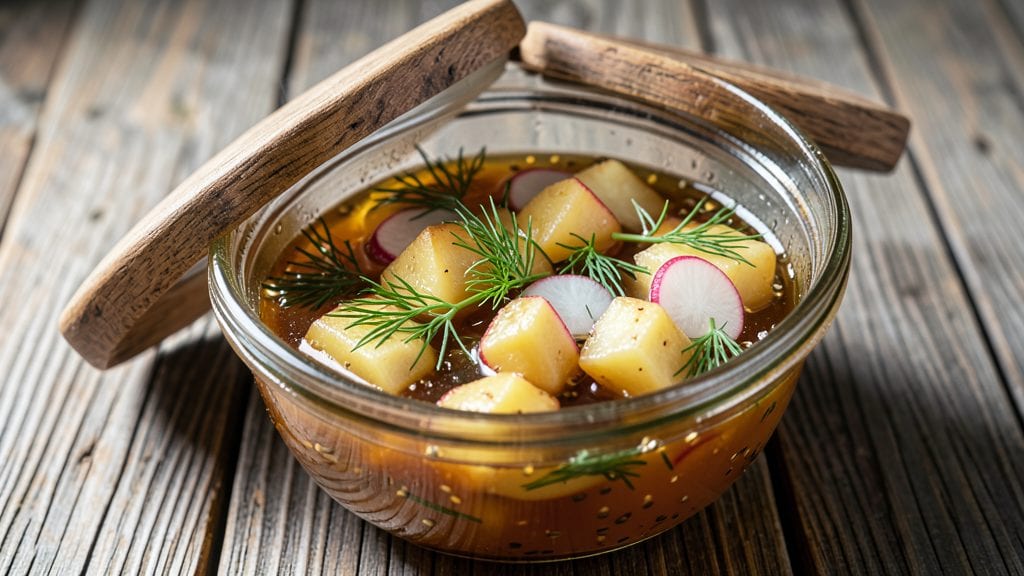
This pickled potatoes recipe transforms humble spuds into crispy, tangy bites that add a bright, crunchy contrast to any meal—ready in just 10 minutes. Standing on a step stool in my grandmother’s kitchen in Sicily, I first learned how vinegar and spices could elevate simple ingredients into something extraordinary.
The secret lies in the balance of acidity and texture, creating bites that stay crisp even after days in the fridge.
Traditional Eastern European methods inspired this recipe, where potatoes are boiled until tender-crisp before soaking in a vinegar brine infused with garlic, dill, and a touch of sugar. What makes this version special is the quick-pickle technique, which delivers restaurant-quality results without waiting weeks for fermentation.
The tangy, slightly sweet flavor profile works as a side dish, appetizer, or even a topping for burgers and sandwiches.
The process is simpler than it sounds: boil potatoes until just tender, then shock them in ice water to stop cooking before transferring to a flavorful brine. The result is crunchy, tangy bites that stay fresh for up to two weeks, making them perfect for meal prep.
Whether you're serving a holiday feast or need a quick side for weeknight dinners, these pickled potatoes bring a bright, refreshing crunch to the table.
For a modern twist, try adding a pinch of red pepper flakes or fresh herbs like thyme to the brine. The possibilities are endless—let’s get pickling!
Ingredients for pickled potatoes
Nine simple ingredients transform boiled potatoes into crispy, tangy bites perfect for any meal.
| Ingredient | Amount | Notes |
|---|---|---|
| Russet Potatoes 🥔 | 2 lbs | Medium size, cut into 1-inch cubes |
| White Vinegar 💧 | 1 cup | Distilled or apple cider |
| Water 💧 | 1 cup | Filtered preferred |
| Granulated Sugar 🍚 | ¼ cup | White or light brown |
| Salt 🧂 | 1 ½ tsp | Kosher or sea salt |
| Fresh Dill 🌿 | ¼ cup | Chopped, stems removed |
| Garlic Cloves 🧄 | 4 cloves | Thinly sliced |
| Black Peppercorns 🌶️ | 1 tsp | Crushed lightly |
| Red Pepper Flakes 🔥 | ½ tsp | Optional, for heat |
| Ice Cubes ❄️ | 2 cups | For shocking potatoes |
| Lemon Juice 🍋 | 1 tbsp | Freshly squeezed |
The potatoes are the foundation—Russet potatoes work best because they hold their shape and stay crisp after pickling. Buy them fresh, ideally within 1 week of harvest, for the best texture. Whole Foods or local farmers markets often carry the freshest potatoes, but any grocery store's Russets will do. Cut them into uniform 1-inch cubes so they cook evenly. The key is to boil them until just tender—about 8-10 minutes—so they don’t turn mushy when pickled. If you’re short on time, you can even use pre-boiled potatoes from the grocery store’s refrigerated section, but fresh is always better.
White vinegar is the star here, but apple cider vinegar adds a subtle sweetness if you prefer. The sugar balances the acidity—light brown sugar adds a caramel note, but white sugar keeps it classic. Fresh dill is non-negotiable for that bright, herby flavor, but dried dill at half the amount works in a pinch. The garlic and black peppercorns add depth, while red pepper flakes let you adjust the heat. If you’re feeling adventurous, swap the vinegar for rice vinegar and add a splash of soy sauce for an Asian-inspired twist. The lemon juice at the end brightens everything up—freshly squeezed is best, but bottled works too.
These pickled potatoes stay crisp for up to 2 weeks in the fridge, which makes them perfect for meal prep. Store them in an airtight container with the brine to keep them fresh. If the brine gets cloudy, it’s still safe to eat—just give it a quick stir. For extra crunch, transfer them to a clean jar with fresh brine before serving. They’re fantastic as a side dish, burger topping, or even a snack straight from the jar. The flavor actually improves over time, so don’t be afraid to make a big batch—they’ll disappear fast.
Why You'll Love This Recipe
- No-Panic Prep: I swear, these take less effort than boiling water for pasta. Toss in whole potatoes, slice them thick, and let the vinegar brine do the work while you handle the rest of dinner.
- Tangy Crunch Magic: That first bite—slightly sour, perfectly crispy edges, sweet enough to balance—it’s like a potato got a personality upgrade. The sugar and vinegar marriage is chef’s kiss.
- Lunchbox Hero: Between us, these are my go-to for packed lunches. Cold or at room temp, they hold up better than sad store-bought chips, and kids actually eat them (no questions asked).
- Pantry Goldmine: You’ve got potatoes, vinegar, and sugar? Congrats, you’ve got a meal. No fancy ingredients, no wasted leftovers—they keep for weeks, and I’ve used them in salads, sandwiches, and even as a side for burgers. Zero guilt.
Step-by-step instructions for pickled potatoes
Here's the precise method to create vibrant, crunchy pickled potatoes with perfect tang and texture.
Prepare and Parboil the Potatoes
Cut the 2 lbs russet potatoes into 1-inch cubes using a sharp chef's knife. I like to keep them uniform in size so they cook evenly. Place the potato cubes in a large pot and cover them completely with cold water. Add the 1.5 tsp salt and bring to a boil over medium-high heat.
Once boiling, reduce heat to medium and simmer for exactly 5 minutes. You want the potatoes to be just barely tender—they should still have a slight bite. Drain immediately in a colander and transfer to a large bowl. Here's the key: add the 2 cups ice cubes to shock the potatoes. This stops the cooking process instantly and helps maintain their crisp texture. Let them sit for 3-4 minutes until completely chilled.
Create the Pickling Brine
In a medium saucepan, combine the 1 cup white vinegar, 1 cup water, 0.25 cup granulated sugar, 1 tbsp lemon juice, 4 cloves garlic cloves (thinly sliced), 1 tsp black peppercorns (lightly crushed), and 0.5 tsp red pepper flakes (if using). Bring to a boil over medium-high heat, stirring until the sugar and salt completely dissolve. This should take about 2 minutes.
Remove from heat and let the mixture cool slightly for 1 minute. Then stir in the 0.25 cup chopped fresh dill. The dill should be finely chopped to distribute evenly throughout the brine. Here's what to watch for: the mixture should be slightly syrupy but still pourable. If it's too thick, add 1 tablespoon water at a time until it reaches the right consistency.
Combine Potatoes and Brine
Transfer the chilled potatoes to a large glass or ceramic container with a tight-fitting lid. Pour the warm brine over the potatoes, making sure each piece is fully submerged. Use a wooden spoon to gently press down on the potatoes if needed to ensure they're all covered. The liquid should come up to about 1 inch above the potatoes.
Let the mixture cool to room temperature, then transfer to the refrigerator. Here's where patience pays off: allow the potatoes to pickle for at least 4 hours before serving. The longer they sit (up to 24 hours), the more flavor they'll develop. The ideal texture is crisp exterior with tender interior, and the flavor should be bright, tangy, and aromatic with notes of garlic and dill.
Serve and Store
Before serving, give the container a gentle shake to redistribute the flavors. The pickled potatoes should have a vibrant golden color with the dill and garlic visibly infused. Taste one piece—it should be brightly acidic with a crisp bite. If the flavor needs balancing, add 1 teaspoon more lemon juice or 1 teaspoon more sugar to adjust the tanginess or sweetness.
For best results, serve the pickled potatoes chilled or at room temperature. They make an excellent side dish for grilled meats, sandwiches, or as a topping for salads. Store any leftovers in an airtight container in the refrigerator for up to 1 week, though they'll continue to develop flavor over time. The potatoes will soften slightly as they sit longer, so enjoy them at their crispest within the first few days.
Pro Tips For Making Pickled Potatoes
- CUT THEM EVENLY: Russets are stubborn—uneven slices mean some potatoes stay crunchy while others turn mushy. Grab a mandoline or a sharp knife and slice them all exactly ¼-inch thick. I learned this the hard way after serving a plate where half was perfect and half was sad.
- BOIL THEM COLD: Start the potatoes in cold water—yes, even if you’re eager. Bring to a boil slowly, then simmer until fork-tender (about 10-12 minutes). Rushing this step leads to gummy potatoes, and nobody wants that in their pickles.
- SALT THE BRINE FIRST: Dissolve the salt in the vinegar-water mix before adding sugar. This ensures even distribution—no clumpy bits at the bottom of the jar. My grandmother swore by this, and she was right: the flavor comes out balanced, not bitter.
- USE A 1:1 VINEGAR RATIO: For every cup of vinegar, use 1 cup water—no more, no less. Too much vinegar makes them harsh; too little water dilutes the tang. I skip the guesswork by measuring both first, then adding sugar and salt. Sounds weird, but it works every time.
Best sauces and condiments for this pickled potatoes
Classic Dill Sauce
This creamy, tangy dill sauce is my go-to pairing for pickled potatoes—it mirrors the flavors in the brine while adding richness.
Whisk together ½ cup sour cream, 2 tablespoons mayonnaise, 1 tablespoon fresh dill (finely chopped), 1 teaspoon lemon juice, ½ teaspoon garlic powder, and a pinch of salt. Drizzle over the potatoes just before serving to keep them crisp.
I love using Kroger brand sour cream for its smooth texture, but any high-quality brand works. 💛
Spicy Aioli Dip
For heat lovers, this garlic-herb aioli elevates pickled potatoes to party-worthy bites. Mix ½ cup mayonnaise, 1 roasted garlic clove, 1 tablespoon fresh parsley, ½ teaspoon smoked paprika, and ¼ teaspoon cayenne pepper.
Thin with 1 teaspoon water if needed. Serve as a dip or drizzle over the top—the smoky-sweet contrast is irresistible. I keep a jar of this in my fridge for quick appetizer prep. 🌶️
Honey-Mustard Glaze
Sweet and tangy, this glaze cuts through the potatoes' acidity beautifully. Combine 3 tablespoons Dijon mustard, 2 tablespoons honey, 1 tablespoon apple cider vinegar, and ½ teaspoon black pepper.
Warm gently in a saucepan until smooth, then drizzle over the potatoes. The honey from Madhava brand adds just the right floral note. This works especially well with grilled chicken or fish. ✨
Sour Cream and Chive
A lighter alternative to dill sauce, this chive version adds freshness. Blend ½ cup sour cream, 2 tablespoons chopped chives, 1 teaspoon lemon zest, and ¼ teaspoon salt until smooth.
The bright green color makes it perfect for summer dishes. I often use this as a topping for potato salads or as a dip for veggie platters. 💡
Hot Honey Drizzle
For a sweet-spicy finish, simmer ½ cup honey with 1 teaspoon cayenne pepper and 1 teaspoon apple cider vinegar for 3 minutes until slightly thickened. Drizzle over the potatoes just before serving—the heat and sweetness balance the tang perfectly. Store-bought hot honey works too, but homemade tastes fresher. 🔥
Nutrition facts
Frequently asked questions
Can I use sweet potatoes instead of russet potatoes?
Sweet potatoes work but require adjustments. Their natural sweetness pairs well with vinegar, but they'll absorb more liquid during pickling. Boil them for 3-4 minutes less (about 6-7 minutes) to maintain crispness, and reduce sugar in the brine by 1 tablespoon to balance flavors. The texture will be slightly softer but still delicious!
How do I make these pickled potatoes spicier?
Add 1-2 teaspoons of cayenne pepper or 1-2 sliced jalapeños to the brine for heat. For smoky depth, include ½ teaspoon smoked paprika or a pinch of chipotle powder. If using fresh peppers, remove seeds first to control spice level. The longer they pickle, the more the heat infuses!
Why did my pickled potatoes turn out mushy?
Overcooking during boiling is the most common cause. Always boil potatoes for exactly 5 minutes and shock them immediately in ice water. If using pre-boiled potatoes, ensure they're only partially cooked (about 70% done). For extra crunch, add 1 teaspoon cornstarch to the brine before pickling.
Can I make this recipe without vinegar?
Yes, but the flavor will differ. Use lemon juice (double the amount) or apple cider (reduce water by ½ cup) instead. For a fermented version (like sauerkraut), omit sugar, use 2% salt brine, and let sit 3-5 days uncovered. The texture will be softer but probiotic-rich!
What's the best way to serve these pickled potatoes?
They're incredibly versatile! Try them as a side for grilled meats, a topping for burgers or sandwiches, or mixed into salads. For appetizers, serve with cucumber slices and a dollop of spicy aioli. The crisp texture pairs perfectly with rich dishes like steak or fried chicken.