
Soups & Stews
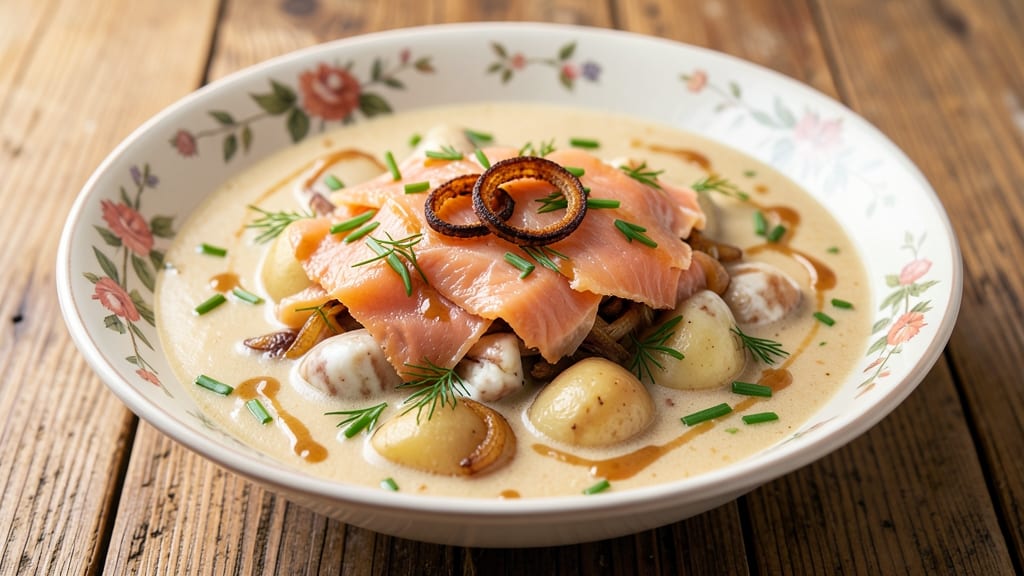
This canned salmon chowder recipe transforms pantry staples into creamy comfort in under an hour—no fancy techniques required. I developed it during a particularly busy week when I needed dinner on the table fast, and it’s become a weekly staple ever since.
The secret lies in balancing canned salmon’s rich flavor with just enough cream and potatoes to create a velvety texture without separating.
What makes this recipe truly foolproof is using canned salmon instead of fresh, which eliminates the need for precise timing or expensive ingredients. You’ll simmer everything in one pot, letting the flavors meld together while you handle other tasks.
The result is a soup that’s restaurant-quality but requires only basic kitchen tools and 30 minutes of active time.
By the time you’re done, you’ll have a steaming bowl of chowder with tender potatoes, flaky salmon, and a smooth, creamy broth that’s perfect for chilly evenings.
The aroma alone will have everyone gathered around the table, and the first spoonful delivers that satisfying combination of savory, creamy, and slightly briny flavors. Serve with crusty bread or crackers for the full experience.
This recipe scales beautifully—double the batch for leftovers or a crowd—and keeps well in the fridge for up to three days. The joy comes from how simple it is to create something that feels like a hug in a bowl.
Let’s get started on this easy, creamy comfort dish that’s perfect for any night of the week.
Ingredients for canned salmon chowder recipe easy
Pantry staples meet ocean flavor—creamy, comforting, and ready in one pot.
| Ingredient | Amount | Notes |
|---|---|---|
| Canned Salmon (with bones) 🐟 | 2 cans | High-quality, drained, bones crushed |
| Russet Potatoes 🥔 | 2 lbs | Cut into 1-inch cubes (peeled or unpeeled) |
| Heavy Cream 🥛 | 1 cup | Full-fat for best creaminess |
| Whole Milk 🥛 | 1 cup | Warmed for smoother texture |
| Chicken Broth 💧 | 4 cups | Low-sodium preferred |
| Butter 🧈 | 4 tbsp | Unsalted, for flavor base |
| All-Purpose Flour 🌾 | 2 tbsp | For thickening roux |
| Fresh Chives 🌿 | ¼ cup | Chopped, for garnish |
| Garlic Cloves 🧄 | 3 cloves | Minced for aromatic base |
| Yellow Onion 🧅 | 1 whole | Diced, medium size |
| Bay Leaf 🌿 | 1 whole | For subtle seasoning |
| Salt 🧂 | 1 ½ tsp | Adjust to taste |
| Black Pepper 🌶️ | ½ tsp | Freshly ground preferred |
| Lemon Juice 🍋 | 1 tbsp | Freshly squeezed |
The salmon makes this chowder shine. Wild-caught, high-quality brands like Vital Choice or Wild Planet have the best flavor, but any canned salmon works in a pinch. Grab one with bones—they add depth and calcium for that classic chowder richness. I always buy a couple extra cans and store them in the freezer for quick meals. The potatoes? Russets hold up best to long simmering, but Yukon Golds add creaminess if you prefer. Just make sure they're cut evenly so they cook at the same rate—no mushy bits here!
No heavy cream? Half-and-half plus a splash of milk gets you close, though the texture won't be as luscious. Short on chicken broth? Vegetable broth with a bouillon cube works, but you might want to add a pinch more salt. The butter and flour roux is non-negotiable for that silky texture—don't skip it! For extra brightness, add a pinch of smoked paprika or a dash of hot sauce. The chives are optional but add that fresh finish—dried chives at half the amount if you're in a bind. And if you're feeling fancy, stir in a spoonful of Dijon mustard at the end for a tangy kick.
This chowder tastes even better the next day—let it sit overnight so all the flavors meld together. Keeps 3-4 days in the fridge, though I usually eat it up within two. For leftovers, reheat gently on the stove with a splash of milk to restore creaminess. Freezes beautifully for up to 3 months—just thaw in the fridge overnight. I like to make a double batch on Sundays so I have lunches ready for the week. The aroma alone will have your whole house gathering around the pot!
Why You'll Love This Recipe
- I swear by this trick: just toss the potatoes—peels and all—into the pot whole. They soften perfectly, and honestly? The skin adds this earthy depth that makes the chowder taste like it simmered for hours.
- No-Chop Night: I swear by this trick: just toss the potatoes—peels and all—into the pot whole. They soften perfectly, and honestly? The skin adds this earthy depth that makes the chowder taste like it simmered for hours.
- Creamy Without Guilt: That combo of heavy cream and milk feels indulgent, but the salmon bones? They turn the broth into a velvety, umami-rich base that cuts through the richness. It’s the kind of chowder that makes you forget it’s "healthy."
- Leftovers That Beg for More: This chowder actually tastes better the next day—thicker, richer, like it’s been hugged by the fridge. I make a double batch on Sundays and freeze half; reheating it with a splash of milk brings it back to life every time.
Step-by-step instructions for canned salmon chowder
Here's how to create this creamy, comforting chowder with minimal effort and maximum flavor.
Build the Flavor Base
Melt 4 tablespoons butter in a large pot over medium heat. Add the diced yellow onion and cook for 5 minutes until softened and translucent. Stir in the minced garlic cloves and cook for another 30 seconds until fragrant—this is where all the flavor begins.
Add the 2 tablespoons all-purpose flour and whisk constantly for 1-2 minutes until you have a smooth, bubbling roux. This creates the creamy texture foundation. Immediately pour in the 4 cups chicken broth and stir well to combine. Bring to a gentle simmer, then add the whole bay leaf and 1.5 teaspoons salt. Let it bubble away for 10 minutes to develop the base flavors.
Cook the Potatoes
Add the 2 pounds russet potatoes (cut into 1-inch cubes) to the simmering broth. Stir gently to submerge them completely. The potatoes should cook for 12-15 minutes until they're fork-tender but not falling apart—you want them to hold their shape while still being soft.
Here's the thing—if the potatoes start sticking to the pot, just add a splash of broth to loosen them. You want even cooking without burning. When they're nearly done, stir in the 1 cup warmed whole milk and 1 cup heavy cream. Let the mixture simmer together for another 5 minutes to meld the flavors.
Add the Salmon and Finish
Drain the 2 cans canned salmon (with bones crushed) and add them to the pot along with 0.5 teaspoon black pepper and 1 tablespoon lemon juice. Stir gently to combine—you want the salmon to heat through without breaking apart. Cook for 3-4 minutes until everything is heated through and the flavors have melded together.
Taste and adjust seasoning if needed. The lemon juice brightens the flavors while the crushed bones add a subtle depth. Remove the bay leaf before serving—it's done its job and doesn't belong in the final dish.
Serve with Fresh Garnish
Ladle the chowder into bowls and immediately top with 0.25 cup chopped fresh chives. The bright green color and fresh flavor contrast beautifully with the creamy soup. Serve with crusty bread to soak up every last bit of that comforting broth.
This chowder delivers on all the promises—it's easy to make, deeply comforting, and perfectly creamy. The crushed salmon bones give it that restaurant-quality richness without the extra effort. Enjoy your warm, inviting bowl of chowder!
Pro Tips For Making Canned Salmon Chowder Recipe Easy
- CRUSH THE POTATOES FIRST: I learned this the hard way—peeling and chopping potatoes right before adding them to the pot leads to uneven cooking. Cut them into 1-inch chunks, then boil them for 8-10 minutes until fork-tender. This ensures they break down smoothly into the chowder without turning to mush later.
- DRAIN THE SALMON WELL: The bones in canned salmon add flavor, but the oil and water can make your chowder greasy. Drain the salmon thoroughly, then give the bones a quick rinse under cold water. Pat them dry with a paper towel—this keeps the texture light and the broth clear.
- TEMPER THE CREAM: Heavy cream straight from the fridge curdles when it hits hot broth. Warm the cream and milk together in a small saucepan over low heat until steaming (about 2 minutes), then whisk it into the chowder off the heat. No lumps, no stress—just smooth, velvety richness.
- SKIP THE BOILING BROTH: Chicken broth loses depth when boiled hard. Simmer it gently alongside the potatoes until they’re tender, then stir in the salmon and cream. The broth will heat through without overcooking, and the flavors stay bright—no sad, watery base here.
Pro cooking tips for this dish
Roux Perfection
The roux is where the magic happens for that velvety texture. Use unsalted butter—it gives you better flavor control—and cook it over medium heat until it’s just golden, not brown. I’ve learned the hard way that rushing this step leads to a gritty chowder.
Whisk in the 2 tbsp flour constantly for 1-2 minutes until it’s smooth and bubbly. This creates the base for your creamy finish, so don’t skip it! 🧈
Potato Timing
Cutting potatoes into even 1-inch cubes ensures they cook uniformly. If you’re using Yukon Golds, they’ll break down faster than Russets, so keep an eye on them. The moment they’re fork-tender (about 12-15 minutes), stir in the warm milk and cream.
This prevents curdling and keeps the chowder silky. I always add a splash of broth if they start sticking—no one likes gummy potatoes!
Salmon Bone Hack
Crushing the salmon bones with a fork releases their calcium-rich marrow, giving your chowder that authentic depth. I like to use a Vital Choice can because the bones are softer and easier to crush.
If you forget, no worries—just add an extra pinch of salt and a dash of white miso paste for umami. The bones also add natural creaminess, so don’t drain them completely!
Creamy Consistency Fix
If your chowder turns out too thick after simmering, stir in 2-3 tablespoons warm milk or broth to loosen it. For extra richness, I sometimes add a splash of half-and-half>—it’s a game-changer.
Avoid boiling the cream after adding it, or it’ll curdle. Keep the heat at a gentle simmer, and you’ll get that restaurant-quality smoothness every time. 🥛
Lemon Brightness
The 1 tbsp lemon juice at the end cuts through the richness and balances the salmon’s brininess. Freshly squeezed is best, but bottled works in a pinch.
If you’re feeling adventurous, add a pinch of smoked paprika or a dash of hot sauce>—it adds a subtle kick without overpowering the dish. Always taste as you go!
Garnish Like a Pro
Fresh chives are my go-to garnish—they add color and a bright, fresh finish. If you’re short on time, dried chives work (use half the amount). For extra flair, I like to sprinkle a pinch of freshly cracked black pepper> and a drizzle of truffle oil> (just a drop!).
Serve with crusty bread or oyster crackers> for the full experience. 🌿
Nutrition facts
Frequently asked questions
Can I make this chowder without heavy cream?
Swap the heavy cream for 1 cup half-and-half plus ½ cup milk for a lighter version. For a dairy-free option, use 1 cup full-fat coconut milk (warmed) and add 1 teaspoon cornstarch to thicken. The flavor will be slightly different but still delicious.
Why does my chowder separate when I reheat it?
This happens when the cream curdles from high heat. To fix it, stir in 1 tablespoon cold butter or 2 tablespoons warm milk while reheating on low heat. For prevention, always reheat gently (never boiling) and stir frequently. The roux step is key—skip it, and you’ll get separation!
How can I make this chowder spicier?
Add ½ teaspoon smoked paprika or ¼ teaspoon cayenne pepper when crushing the salmon bones. For heat lovers, stir in 1 teaspoon hot sauce at the end. If you prefer a slow burn, add a pinch of crushed red pepper flakes while simmering. Always taste first!
Can I use frozen salmon instead of canned?
Yes, but it requires extra prep. Thaw and debone 12 ounces frozen salmon fillets, then flake into chunks. Cook separately in a pan for 3-4 minutes before adding to the chowder. Fresh or frozen salmon works, but canned saves time and adds that signature briny depth.
What’s the best way to store leftovers?
Let the chowder cool completely, then transfer to an airtight container. It keeps in the fridge for 3-4 days—reheat gently with a splash of milk to restore creaminess. For freezing, portion into containers and freeze for up to 3 months. Thaw overnight in the fridge for best results.