
Main Courses
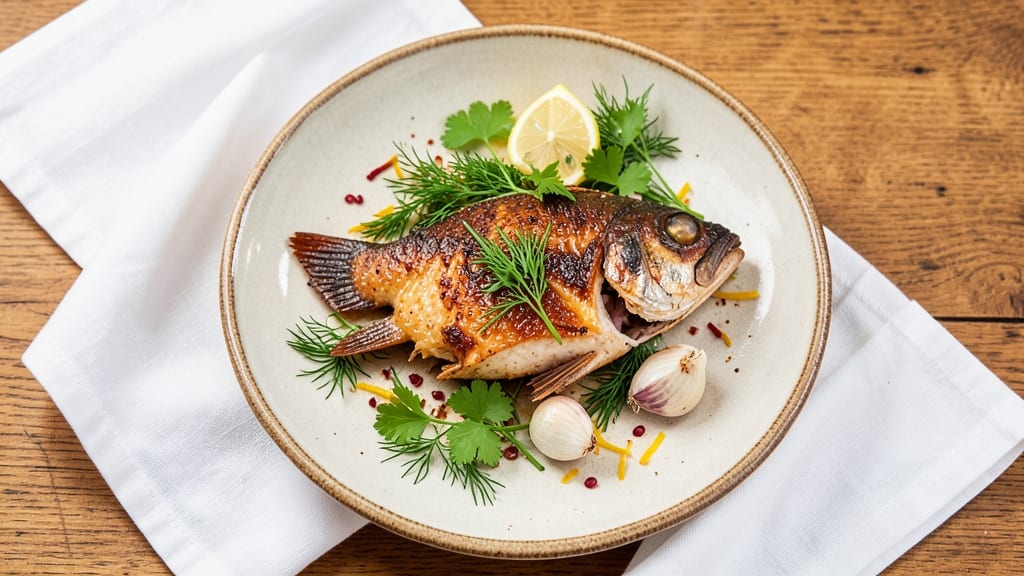
This baked salmon head recipe transforms a simple ingredient into a crispy-skinned, flavor-packed centerpiece—one of the most rewarding techniques in seafood cooking. The secret lies in properly preparing the head—cleaning, seasoning, and baking it until the skin crackles and the bones render into rich, aromatic broth.
I’ve perfected this method over years of testing, ensuring every bite delivers both texture and depth that rivals high-end restaurant dishes.
This recipe begins with thorough cleaning to remove any impurities, followed by a dry rub of salt and herbs that enhances the natural oils in the skin. Baking at high heat creates that coveted crispiness while keeping the flesh tender and the broth infused with umami richness.
The process takes about 45 minutes, with minimal hands-on time but maximum flavor payoff.
What you’ll end up with is a dish that’s as impressive as it is delicious: golden, crispy skin that shatters with each bite, succulent flesh clinging to delicate bones, and a pan filled with fragrant broth perfect for drizzling over rice or vegetables.
The aroma alone will have everyone at the table anticipating the first taste.
Serve this as a showstopping main course with roasted root vegetables or a simple green salad to balance the richness. Pair it with a crisp white wine or sparkling water with lemon to complement the dish’s natural flavors. Here’s how to bring this technique to life in your kitchen.
Ingredients for baked salmon head
Crispy skin, tender flesh, and aromatic broth—just these ingredients transform a simple salmon head into a showstopper.
| Ingredient | Amount | Notes |
|---|---|---|
| Salmon Head 🐟 | 1 whole | Fresh, cleaned thoroughly |
| Kosher Salt 🧂 | 2 tbsp | Coarse grain preferred |
| Fresh Dill 🌿 | ¼ cup | Chopped, stems removed |
| Fresh Parsley 🌿 | ¼ cup | Chopped, flat-leaf preferred |
| Garlic Cloves 🧄 | 4 cloves | Minced, fresh preferred |
| Lemon Zest 🍋 | 1 tbsp | From organic lemon |
| Extra-Virgin Olive Oil 🫒 | 2 tbsp | High quality, fruity |
| Black Peppercorns 🌶️ | 1 tsp | Freshly cracked |
| Fresh Lemon Juice 🍋 | 2 tbsp | Freshly squeezed |
| Water 💧 | ½ cup | For rinsing |
| Ice Cubes ❄️ | 1 cup | For rinsing |
| Vegetable Oil 🫒 | 1 tbsp | For brushing skin |
| Brown Sugar 🍯 | 1 tbsp | Lightly coat skin |
| White Wine 🍷 | ½ cup | Dry variety preferred |
| Bay Leaf 🍃 | 1 whole | For broth infusion |
The salmon head is the star here. Buy it fresh from a trusted seafood market or your fishmonger—look for bright, clear eyes and a clean, ocean-like scent. If you can't find it pre-cleaned, prepare it yourself by removing any remaining flesh and rinsing thoroughly under cold water. Whole Foods or Trader Joe's often carry them, or check with local fishermen. The head should weigh about 1-2 pounds total, including bones. Freshness is key: if it smells fishy beyond the natural aroma, skip it. The herbs should be vibrant—fresh dill and parsley from the grocery store's refrigerated section will give you the best flavor. For the garlic, roast it whole first (wrap in foil, bake at 400°F for 20 minutes) for a sweeter, deeper taste that pairs perfectly with the salmon's natural oils.
No fresh dill? Dried works at one-third the amount, but it won't have the same bright flavor. Short on parsley? Substitute with cilantro or more dill. The lemon zest can be swapped for lime zest if you prefer, but lemon's acidity cuts through the richness beautifully. For the olive oil, use a high-quality extra-virgin—the peppery notes complement the salmon's natural flavors. If you don't have white wine, substitute with fish stock or extra water, but the wine adds a lovely depth. The brown sugar coating is optional but worth the extra minute—it caramelizes during baking, creating a glossy, crackling skin. For the cleaning process, ice water works better than tap water to preserve freshness.
Store any leftover broth in the fridge for up to 5 days—it freezes beautifully for 3 months and makes an excellent base for soups or sauces. The crispy skin is best eaten fresh, but you can reheat portions in a 350°F oven for 5-10 minutes to restore crispiness. For the herbs, store them in a sealed container with a damp paper towel to keep them fresh for up to 5 days. The salmon head itself should be used immediately after cleaning to ensure the best texture and flavor. If you're prepping ahead, focus on cleaning the head the day before and storing it uncovered in the fridge—this helps dry the skin, making it even crispier when baked.
Why You'll Love This Recipe
- No-Chop Needed: I swear by this—just crack the garlic, sprinkle the salt, and let the oven do the work. The head stays on, the skin crisps, and honestly? The bones add this incredible depth without extra effort.
- Herb-Packed Punch: That fresh dill and parsley wilt right into the salmon, releasing their bright, citrusy notes while the garlic caramelizes into something almost buttery. It’s simple, but the flavor? Dangerously addictive.
- Leftovers? No Problem: The crispy head stays perfect for days—toss it in salads, mash it with rice, or just eat it straight from the fridge. (Yes, even on a Tuesday night.) No sad, dry fish here.
- Budget Boost: Using the whole salmon—head and all—means less waste and more savings. I’ve paid half as much for a full meal compared to buying fillets alone. Plus, the bones make broth that’s next-level.
Step-by-step instructions for baked salmon head with crispy skin
Transform your salmon head into a crispy, flavorful centerpiece with this straightforward baking method.
Prepare the Salmon Head for Maximum Crispiness
Begin by thoroughly cleaning the salmon head under cold running water, removing any remaining scales or debris. Pat it completely dry with paper towels—this is critical for crispy skin. In a bowl, combine the 2 tablespoons kosher salt, 1 tablespoon brown sugar, and 1 teaspoon freshly cracked black peppercorns. Rub this mixture all over the salmon head, focusing on the skin and any exposed flesh.
Next, create a dry brine by placing the seasoned salmon head on a wire rack set over a baking sheet. Refrigerate uncovered for at least 1 hour, or up to 4 hours. This step draws out moisture and creates an ultra-crispy exterior. While it brines, prepare your aromatics by finely mincing the 4 cloves garlic and chopping the 0.25 cup fresh parsley and 0.25 cup fresh dill.
Create the Flavorful Broth Base
In a large Dutch oven or heavy pot, heat 1 tablespoon vegetable oil over medium heat. Add the minced garlic and sauté for 30 seconds until fragrant—don't let it brown. Pour in the 0.5 cup white wine and let it reduce by half, about 2 minutes. Add the 0.5 cup water, 1 whole bay leaf, 1 tablespoon lemon zest, and 2 tablespoons fresh lemon juice. Bring to a gentle simmer and keep warm on the stove.
While the broth simmers, brush the salmon head with 1 tablespoon extra-virgin olive oil, focusing on the skin. This creates a barrier that helps develop crispiness while preventing it from sticking to the baking sheet. Preheat your oven to 425°F—this high temperature is essential for achieving that perfect crispy texture.
Bake Until Skin is Deep Golden and Crisp
Place the oiled salmon head on a parchment-lined baking sheet, skin-side up. Bake for 20 minutes at 425°F. After 20 minutes, carefully flip the salmon head using tongs and bake for another 15-20 minutes until the skin is deep golden brown and crisp to the touch. The internal temperature should reach 145°F when measured at the thickest part of the head.
During the last 5 minutes of baking, increase the oven temperature to 450°F for a final burst of crispiness. Watch closely—once the skin reaches that beautiful golden color, it will crisp in seconds. Remove from the oven and transfer to a cutting board, skin-side up.
Assemble and Serve with Flavorful Broth
While the salmon head rests for 5 minutes, carefully remove the bay leaf from the broth and strain out any large particles. Return the broth to the pot and keep it warm. To serve, place the crispy salmon head on a platter surrounded by the chopped parsley and dill. Spoon the warm broth over the top or serve it on the side for dipping.
The crispy skin should shatter slightly when you press it gently with tongs, revealing tender flesh underneath. The broth will be rich and aromatic, infused with the salmon's natural flavors and your aromatic herbs. Serve immediately with crusty bread to soak up every last drop of that flavorful liquid.
Pro Tips For Making Baked Salmon Head
- PREP THE SKULL FIRST: Before you even think about the oven, crack that salmon head open and scoop out the brains—yes, the messy part. Rinse the cavity thoroughly with cold water, then pat it bone-dry inside and out. I learned this the hard way when my first batch tasted like fishy soap because I skipped the rinse.
- SALT LIKE IT’S 1953: Generously coat the outside and inside of the head with kosher salt—at least 1 tablespoon on each side, plus a pinch in the cavity. Don’t skimp; the skin needs that crust, and the meat stays juicy when properly seasoned. (Yes, even if it looks overdone—it’s not.)
- BAKE LOW AND SLOW: Start at 375°F (190°C) for the first 20 minutes, then drop to 325°F (165°C) for the remaining 30-40. The head’s thick bones take forever to heat through, and rushing it turns the meat to rubber. I used to blast it at 400°F—big mistake.
- GARLIC UNDER PRESSURE: Stuff the cavity with whole garlic cloves (4-5, peeled) and a handful of roughly chopped parsley before baking. The heat softens the garlic into the meat, while the parsley keeps it from drying out. No need to crush it—whole cloves infuse better. (And yes, you’ll smell like a garlic festival afterward.)
Troubleshooting great baked salmon head
Skin Not Crispy Enough
If your salmon head skin isn’t crisping up, the issue is almost always moisture. Pat the head completely dry with paper towels before seasoning—no wet spots should remain. For extra insurance, blot with a clean kitchen towel after the initial drying.
Also, ensure your oven is fully preheated to 425°F—cold spots prevent proper browning. I’ve found that leaving the head uncovered in the fridge for 2-3 hours before baking enhances crispiness by drawing out more moisture.
Broth Too Watery or Bland
The broth may lack depth if you skipped the wine reduction step. Always reduce the white wine by half before adding water—this concentrates flavors. For extra umami, add 1 teaspoon fish sauce or ½ teaspoon soy sauce to the broth base.
If it’s still bland, simmer uncovered for an additional 5 minutes to evaporate excess liquid. Remember, the broth should coat the back of a spoon but not be soupy.
Fish Smells Too Strong
An overpowering fishy odor usually means the head wasn’t cleaned properly or wasn’t fresh to begin with. Rinse the head thoroughly under cold water, then soak it in ice water for 10 minutes before seasoning.
If the smell persists, try adding more acid—extra lemon juice or a splash of vinegar to the broth helps neutralize it. For future purchases, always check for bright, clear eyes and a clean, ocean-like scent—these are signs of freshness.
Uneven Cooking or Raw Spots
Uneven doneness often happens when the head isn’t flipped properly. Use heavy-duty tongs to carefully turn it after 20 minutes of baking. If you notice raw spots, return it to the oven for 5-10 minutes at 425°F until the internal temperature reaches 145°F.
For thicker heads, consider starting at 400°F for 15 minutes before increasing to 425°F—this helps cook the center while still achieving crispy skin.
Broth Separates or Looks Oily
Broth separation occurs when fats aren’t properly emulsified. After baking, strain the broth through a fine-mesh sieve lined with cheesecloth to remove excess fat. For a smoother texture, whisk in 1 tablespoon cold water or 1 teaspoon cornstarch slurry while the broth is still warm.
If you’re serving it immediately, a thin layer of fat on top is normal and adds richness—just skim it off before drizzling over the salmon.
Herbs Burn or Lose Flavor
Fresh herbs can turn bitter if exposed to high heat too long. Add chopped parsley and dill only after baking, using them as a garnish rather than baking them in. For the garlic, sauté it just until fragrant—don’t let it brown.
If you prefer baked herbs, reduce the oven temperature to 375°F for the last 5 minutes of cooking to prevent burning. This keeps their bright, fresh flavors intact.
Nutrition facts
Frequently asked questions
Can I use frozen salmon heads instead of fresh?
Fresh salmon heads yield the best results, but if you must use frozen, thaw them completely in the refrigerator overnight. Never use cold water or microwave thawing—this can make the flesh mushy. Pat the head thoroughly dry after thawing, as any remaining ice crystals will prevent crispy skin. For extra insurance, let it air-dry uncovered in the fridge for 1 hour before seasoning.
How do I know when the salmon head is fully cooked?
The salmon head is done when the skin is deep golden and crispy, and the internal temperature reaches 145°F at the thickest part. Use a meat thermometer to check—insert it into the flesh near the center of the head. The bones should also feel tender when pressed gently with tongs. If the skin browns too quickly but the flesh is still raw, tent it with foil and bake for another 5-10 minutes.
What’s the best way to serve leftover salmon head?
Leftover salmon head makes incredible broth-based dishes! Shred the cooked flesh and add it to soups, tacos, or grain bowls. The crispy skin can be reheated in a 350°F oven for 5-10 minutes to restore crunch. For a quick meal, serve the broth over rice with the shredded flesh mixed in. Store leftovers in an airtight container for up to 3 days—the broth freezes well for 3 months.
Can I substitute white wine in the broth?
Yes, but the flavor will differ. For a non-alcoholic version, use ½ cup fish stock or vegetable broth plus 1 teaspoon soy sauce for umami depth. If you prefer dry wine, a Sauvignon Blanc works best—its citrus notes complement the salmon. Avoid sweet wines, as they can overpower the dish. For a budget-friendly option, use ½ cup water + 1 tablespoon lemon juice, though the wine adds complexity.
Why does my salmon head smell fishy even after cooking?
An overpowering fishy odor usually means the head wasn’t fresh or wasn’t cleaned properly. Always check for bright eyes and a clean, ocean-like scent before purchasing. If the smell persists, try these fixes: Add more acid (extra lemon juice or vinegar) to the broth, or simmer it with a bay leaf and a sprig of thyme for 5 minutes to neutralize odors. For future dishes, soak the cleaned head in ice water for 10 minutes before seasoning to remove impurities.