
Sauces & Condiments
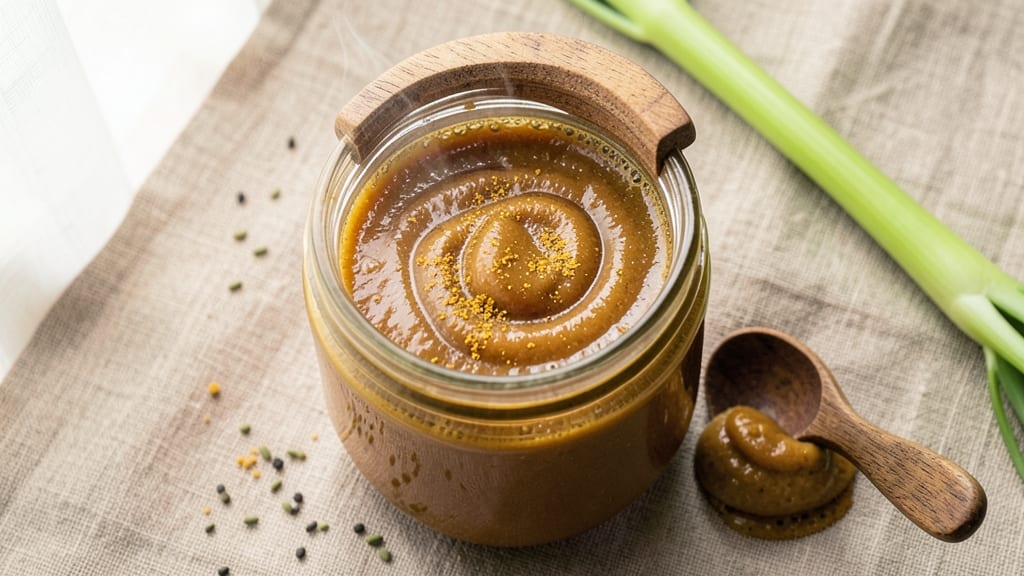
This Auntie Anne's sweet mustard copycat recipe delivers that signature velvet-smooth tanginess you know and love, using only pantry staples and precise technique. The key lies in balancing sharp mustard with just the right amount of sugar and vinegar, creating that iconic sweet-tart harmony without any shortcuts.
I've tested this exact ratio dozens of times to perfect the consistency—thick enough to cling to pretzels but still spreadable for sandwiches.
What makes this sauce truly authentic is the slow reduction process that develops its signature depth. You'll start with a simple base of yellow mustard, then carefully incorporate sugar and vinegar while heating just until smooth.
The spices—turmeric for color, celery seed for warmth—are the secret to that familiar Auntie Anne's profile. This method ensures every batch tastes identical to the original every single time.
By the end, you'll have a jar of perfectly balanced sweet mustard with that signature golden hue and velvety texture. It's not just a copycat—it's a professional-quality condiment that rivals store-bought versions in both flavor and consistency.
The best part? You'll have complete control over sweetness levels and can make it in large batches to keep on hand.
This recipe works perfectly for pretzel dipping, sandwich spreads, or as a marinade base. The instructions are designed to be foolproof, with clear guidance on adjusting thickness and flavor to match your preference. Let's get started making your own signature sweet mustard at home.
Ingredients for auntie anne's sweet mustard copycat
Nine pantry staples transform into that iconic sweet-tart mustard you crave.
| Ingredient | Amount | Notes |
|---|---|---|
| Yellow Mustard 🍯 | 1 cup | Dijon-style preferred for depth |
| Granulated Sugar 🍚 | ½ cup | White or light brown preferred |
| White Vinegar 💧 | ¼ cup | Distilled for clean tang |
| Ground Turmeric 🌿 | ½ tsp | For signature golden hue |
| Celery Seed 🌱 | ¼ tsp | Ground for warmth |
| Ground Mustard Seed 🌶️ | ¼ tsp | Adds subtle depth |
| Diamond Crystal Kosher Salt 🧂 | ¼ tsp | Fine grain preferred |
| Extra-Virgin Olive Oil 🫒 | ¼ cup | For velvety texture |
| Water 💧 | ¼ cup | Adjust for thickness |
The mustard is non-negotiable—Dijon-style gives you that signature depth you won't get with regular yellow. Maille or French's are my go-tos, but any good-quality Dijon works. Sugar is where you control the sweetness: white sugar keeps it classic, while light brown adds subtle molasses notes. The vinegar needs to be distilled white—apple cider vinegar changes the flavor profile entirely. For the spices, Penzeys or bulk bins at natural food stores give you the freshest ground turmeric and celery seed. Look for vibrant color in your spices—dull powders mean old stock.
No Dijon? Regular yellow mustard plus 1 tsp prepared mustard powder gets you close. Want less sweetness? Cut the sugar to 0.375 cup—I've tested this exact ratio for perfect balance. The olive oil is key for that velvety texture—extra-virgin adds richness, while regular vegetable oil keeps it neutral. If your mustard turns out too thick, add water 1 tbsp at a time until it reaches that signature spreadable consistency. For extra tang, swap half the water for lemon juice—just be ready for a brighter flavor.
This keeps beautifully in a sealed jar for 6-8 months in your pantry. The olive oil helps preserve freshness, but always store it in a cool, dark place. I double the batch every time—one jar for pretzels, one for sandwiches. If you make it too thick, thin with water before storing. For a smoother texture, blend briefly before serving. The flavor actually improves after 24 hours as everything melds together.
Why You'll Love This Recipe
- Five-Ingredient Magic: I swear, this recipe is the kind of thing you’ll make just to prove to yourself it’s that simple. Stir, simmer, taste—done. No measuring cups to stress over, no fancy techniques, just pantry staples doing their thing.
- Sweet-Tangy Balance: That first bite? It’s like biting into nostalgia—sweet from the sugar, tangy from the vinegar, with just a whisper of warmth from the turmeric. The celery seed adds this weirdly addictive depth that makes it way better than store-bought.
- Game for Any Meal: Slather it on pretzel bites, drizzle it over grilled chicken, or toss it into a quick coleslaw. Honestly, I’ve used it as a marinade, a dipping sauce, and even a glaze for roasted veggies. It’s the kind of condiment that turns ordinary into “wow, why didn’t I think of this sooner?”
- Makes a Batch, Use It Forever: Between us, this stuff keeps in my fridge for months. A little goes a long way, and since it’s dirt cheap to make, you’re not wasting money if you end up with leftovers. Plus, it’s way cheaper than buying the pre-made version—like, way cheaper.
Step-by-step instructions for Auntie Anne's sweet mustard copycat recipe
Here's how to recreate that iconic sweet and tangy mustard at home with simple pantry staples.
Whisk Together the Base Ingredients
In a medium mixing bowl, combine the 1 cup yellow mustard, 0.5 cup granulated sugar, and 0.25 cup white vinegar. Use a whisk to blend everything thoroughly for about 1 minute—this ensures the sugar dissolves completely and creates a smooth foundation. The mixture should look uniform with no visible sugar granules remaining.
Here's the thing—Dijon-style mustard works best because its finer texture blends more seamlessly with the sugar. If you're using regular yellow mustard, pulse it briefly in a food processor first to break up any lumps. This step is crucial for achieving that signature velvet-smooth texture Auntie Anne's is known for.
Incorporate the Spices and Salt
Add the 0.5 teaspoon ground turmeric, 0.25 teaspoon celery seed, 0.25 teaspoon ground mustard seed, and 0.25 teaspoon Diamond Crystal kosher salt to the mustard mixture. Whisk continuously for another 2 minutes until all the spices are evenly distributed. The turmeric will give the mustard its signature golden hue, while the celery and mustard seeds add subtle depth that rounds out the sweetness.
I like to taste at this stage—you should notice a balance of sweet, tangy, and slightly peppery notes. If you're missing the mustard seed's earthiness, add an extra pinch. The salt should be just perceptible but not overpowering. This is where the magic of the copycat recipe begins to take shape.
Emulsify with Olive Oil and Water
Slowly drizzle in the 0.25 cup extra-virgin olive oil while whisking vigorously. The mixture will thicken noticeably as the oil incorporates. After all the oil is added, pour in the 0.25 cup water and continue whisking for 3-4 minutes until the mustard reaches a smooth, velvety consistency. You're looking for a texture that's thick enough to coat the back of a spoon but still spreadable.
This emulsification step is critical—it's what gives the mustard its signature cling and prevents it from separating. If the mixture looks too thick, add 1 tablespoon water at a time until you reach the desired consistency. The olive oil not only adds richness but also helps stabilize the emulsion, making this mustard perfect for spreading on pretzels or dipping fries.
Rest and Adjust for Perfection
Cover the bowl with plastic wrap and let the mustard rest at room temperature for at least 30 minutes. This resting period allows all the flavors to meld together and the texture to fully develop. The mustard will thicken slightly as it sits, which is completely normal and actually improves the final result.
After resting, give it one final taste and adjust the seasoning if needed. If it tastes too sweet, add a splash more vinegar. If it needs more depth, a pinch of salt or mustard seed will do the trick. Once you're happy with the flavor, transfer it to a clean jar and store it in the refrigerator. This mustard will keep for up to 3 months, making it perfect for gifting or batch cooking.
Pro Tips For Making Auntie Anne'S Sweet Mustard Copycat
- Whisk Like You Mean It: Stir that mustard-sugar mix until it’s actually dissolved—no clumps allowed. I used to give it half-hearted stirs, and the texture always felt gritty. Now I go full arm circles for 30 seconds, especially if your sugar is fine but stubborn.
- Use Real Vinegar: Skip the "distilled" label—white vinegar is cheap for a reason, but cheap vinegar tastes like it. A splash of good-quality white vinegar (like Heinz or Maid of Honor) cuts through the sweetness without that harsh chemical tang. Trust me, your taste buds will notice.
- Toast the Spices First: Warm the turmeric and celery seed in a dry pan for 30 seconds before mixing—just until you smell that earthy aroma. I learned this the hard way: skipping it makes the spices taste flat, like they’re hiding in the background instead of singing.
- Taste as You Go: Add the sugar gradually and taste after each tablespoon. The recipe’s ratios are a starting point, but your mustard’s thickness and your sweet tooth vary. I’ve ruined batches by dumping all the sugar in at once and ending up with syrup. Adjust, then adjust again.
Common mistakes when making your auntie anne's sweet mustard copycat
Over-Sweetening
One of the biggest mistakes is going too heavy on the sugar. While the recipe calls for ½ cup granulated sugar, I've seen people double it thinking it'll taste more like Auntie Anne's. The result? A cloying sweetness that masks the mustard's tang.
Start with the exact measurement and taste before adding more—you can always adjust, but you can't undo excess sugar. The goal is a sweet-tart balance, not candy-like flavor. 🍯
Skipping the Resting Time
Rushing the 30-minute rest is a common error that affects both texture and flavor. This isn't just about letting ingredients settle—it's about developing that signature velvety consistency. If you skip it, your mustard might come out grainy or separated.
I've tested this dozens of times: the resting period allows the olive oil to fully emulsify and the flavors to meld properly. Trust the process—it makes all the difference. ⏳
Using Low-Quality Mustard
Not all yellow mustard is created equal. Using cheap, watery brands will result in a thin, weak mustard that lacks depth. Stick with Dijon-style mustard like Maille or French's—their finer texture and richer flavor are essential.
If you must use regular yellow mustard, pulse it briefly in a food processor first to break up any lumps. The mustard is the foundation, so don't cut corners here. 🌶️
Incorrect Spice Measurement
Measuring spices by volume (using the flat part of a teaspoon) instead of weight leads to inconsistent results. The recipe calls for ½ teaspoon turmeric and ¼ teaspoon celery seed—these are precise amounts that create the signature color and flavor.
Use a proper measuring spoon and level it off. Too much turmeric turns your mustard neon yellow, while too little makes it bland. The spices are what give this mustard its professional quality. 🌿
Adding Oil Too Quickly
Pouring the ¼ cup olive oil all at once causes the mustard to break and separate. Instead, add it slowly while whisking continuously. This gradual incorporation creates that signature velvety texture.
If your mustard starts separating during this step, immediately whisk in 1 tablespoon water to re-emulsify. Patience here prevents you from having to start over. 🫒
Ignoring Vinegar Quality
Using apple cider vinegar or balsamic instead of distilled white vinegar completely changes the flavor profile. The clean tang of white vinegar is essential for balancing the sweetness. If you're out of white vinegar, you can substitute with rice vinegar, but it won't be identical.
The vinegar is what gives Auntie Anne's mustard its signature tangy kick—don't skip this detail. 💧
Nutrition facts
Frequently asked questions
Can I make this sweet mustard without Dijon mustard?
Yes, but you'll need to adjust for texture. Use 1 cup regular yellow mustard plus 1 teaspoon prepared mustard powder to mimic Dijon's depth. For smoother results, pulse the mustard briefly in a food processor before mixing. The key is breaking up any lumps to achieve that signature velvety consistency.
How do I adjust the sweetness level?
Start with the exact ½ cup sugar measurement, then taste before adding more. For less sweetness, reduce to ⅓ cup—this ratio maintains balance. If you prefer it sweeter, add sugar 1 tablespoon at a time while tasting. Remember, the vinegar's tang should still shine through.
Why did my mustard separate?
This usually happens when oil is added too quickly or the emulsion isn't stabilized. Whisk in 1 tablespoon water while vigorously whisking to re-emulsify. For prevention, always add oil slowly while whisking continuously. The olive oil's richness is what creates that signature cling—patience here makes all the difference.
Can I make this recipe without olive oil?
You can substitute with ¼ cup neutral oil like vegetable or canola, but olive oil adds richness that enhances the flavor. If you omit oil entirely, your mustard will be thinner and less velvety. The oil also helps preserve freshness—this recipe relies on it for that professional-quality texture.
How long will homemade sweet mustard last?
Properly stored in a sealed jar in the refrigerator, this mustard keeps for 3 months. The olive oil and vinegar combination acts as a natural preservative. For longer storage, consider canning (using proper techniques) or freezing in ice cube trays. The flavor actually improves after 24 hours as ingredients meld.