
Side Dishes
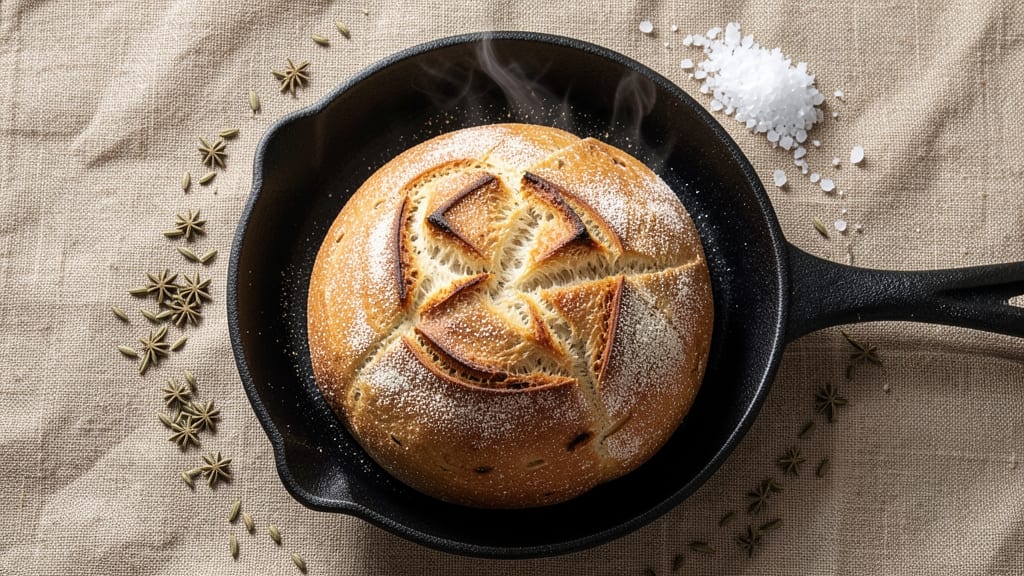
This Algerian bread recipe delivers the flaky, layered perfection of traditional khobz—where crispy semolina crust meets tender, airy interiors. The secret lies in precise dough handling and anise-infused flour that gives each bite its signature aroma.
I first discovered this technique during a trip to Algiers, where street vendors crafted golden loaves that disappeared as quickly as they were baked.
What makes this recipe special is the combination of semolina and all-purpose flour, which creates those signature flaky layers when baked. The dough requires careful proofing and shaping, but the results—crusty on the outside, soft and pillowy inside—are worth every step.
Anise seeds add a subtle licorice-like warmth that elevates the bread beyond ordinary flatbreads.
By the time you pull this bread from the oven, you’ll have golden-brown loaves with crisp edges and tender crumb, perfect for dipping in olive oil or pairing with stews.
The aroma alone will transport you to a bustling Algerian marketplace, where freshly baked bread is a centerpiece of every meal. This recipe serves as a gateway to understanding North African baking traditions.
Whether you’re making it for a special occasion or just craving something authentic, this Algerian bread recipe is a game-changer. The process is straightforward once you understand the key techniques, and the reward is bread that tastes like a piece of Algeria itself.
Let’s get started on creating your own batch of this beloved classic.
Ingredients for algerian bread
Four cups of flour blend with anise for that signature Algerian aroma you crave.
| Ingredient | Amount | Notes |
|---|---|---|
| All-Purpose Flour 🌾 | 3 cups | For dough structure and flakiness |
| Fine Semolina Flour 🌾 | 1 ½ cups | For signature crust texture |
| Active Dry Yeast 🍞 | 0.03 oz | Or 2.25 tsp equivalent (1 packet) |
| Granulated Sugar 🍚 | 1 tbsp | Feeds yeast activation |
| Salt 🧂 | 1 ½ tsp | Fine sea salt preferred |
| Whole Anise Seeds 🌿 | 1 ½ tsp | Crushed lightly for aroma |
| Warm Water 💧 | 1 ¼ cups | 110°F ideal for yeast |
| Extra-Virgin Olive Oil 🫒 | 2 tbsp | For dough elasticity |
| Cornmeal 🌽 | ½ cup | For dusting work surface |
| Coarse Sea Salt 🧂 | 1 tsp | For final sprinkle |
| Sesame Seeds 🌻 | 1 tbsp | Optional for topping |
The semolina is non-negotiable—it creates those signature crispy layers. Bob's Red Mill or King Arthur brands work best for fine texture. Anise seeds? Whole Foods bulk section has the freshest, but any spice aisle will do. Just crush them lightly—no need to grind into powder. The yeast is the heart of this dough, so check expiration dates—old yeast won't activate properly. I always keep a backup packet in my freezer for emergencies.
No semolina? Fine cornmeal at half the amount works in a pinch, though texture will differ slightly. Short on anise? 1 tsp ground anise seed or even ½ tsp fennel seeds for a similar warmth. The olive oil matters here—use something fruity and peppery. California Olive Ranch is my go-to, but any extra-virgin will do. For the water, 110°F is ideal—too hot kills yeast, too cold slows activation. If you don't have a thermometer, just dip your pinky finger in—should feel warm but not hot.
This dough doubles in size, so use a large bowl—it gets messy. Proofing takes 1-2 hours depending on your kitchen (warmer rooms = faster rise). For storage, wrap cooled loaves in beeswax wrap—keeps them crisp for 3 days. Freeze extras by slicing and freezing on a tray, then bagging. Reheat slices in a 350°F oven for 5 minutes to restore crispiness.
Why You'll Love This Recipe
- No-Knead Magic: I swear by this dough—just mix, let it rise, and fold once. The semolina gives it that signature crunch without a single punch of the counter.
- Sweet & Savory Crunch: That sugar in the dough? It caramelizes just enough to make every bite addictive, while the semolina crust stays crisp even when cold. Honestly, I eat it straight from the pan.
- Breakfast to Snack: Tear it for a quick msemen-style breakfast, freeze the extras for instant flatbreads, or use it to scoop up stews. Between us, it’s the one bread that does it all.
- Pantry Goldmine: Three ingredients—flour, yeast, sugar—cover 90% of my baking needs. A single batch stretches for days, and the leftovers? Perfect for toasting or crumbling into soups. Budget-friendly doesn’t get much better.
Step-by-step instructions for Algerian bread recipe
Let's create this flaky, anise-kissed bread with layers so delicate they'll surprise you.
Activate the Yeast and Mix the Dough
In a small bowl, combine the 0.03 oz active dry yeast, 1 tbsp granulated sugar, and 1.25 cups warm water (about 110°F). Let it sit for 5-10 minutes until frothy—this means your yeast is alive and ready to work. If it doesn't bubble, your bread won't rise properly.
In a large bowl, whisk together the 3 cups all-purpose flour, 1.5 cups fine semolina flour, 1.5 tsp salt, and 1.5 tsp whole anise seeds (lightly crushed between two spoons). Add the yeast mixture and 2 tbsp extra-virgin olive oil to the dry ingredients. Stir with a wooden spoon until a shaggy dough forms, then turn it out onto a lightly floured surface.
Knead Until Smooth and Elastic
Knead the dough for 8-10 minutes by hand, pressing down and folding it over itself. You're looking for a smooth, elastic dough that springs back when poked. The semolina flour will make it slightly grittier than regular bread dough, but that's what gives it that signature texture.
If the dough feels too sticky, add 1-2 tablespoons of all-purpose flour at a time. Once it's ready, place it back in the bowl, cover with a damp towel, and let it rise in a warm spot for 1-2 hours or until doubled in size. This slow rise develops the flavor and ensures those flaky layers.
Shape and Layer for Flaky Perfection
Punch down the risen dough and divide it into 4 equal pieces. Roll each piece into a 12-inch log, then gently flatten one end into a disc. Place the disc on a parchment-lined baking sheet, then roll up the log tightly over the disc to form a spiral. This creates the signature layered effect.
Cover the shaped bread with the damp towel and let it rise for another 30-45 minutes until puffy. While it rises, preheat your oven to 375°F. The dough should expand noticeably—this is your signal it's ready to bake.
Bake Until Golden and Crisp
Brush the tops of the bread with a little water, then sprinkle with 1 tsp coarse sea salt and 1 tbsp sesame seeds (if using). Bake for 25-30 minutes until the crust is deep golden brown and sounds hollow when tapped on the bottom. The anise seeds will release their warm, licorice-like aroma as it bakes—this is the true test of authenticity.
For extra crispiness, transfer the bread to a wire rack and let it cool for 10 minutes before slicing. The layers should separate cleanly, revealing those flaky semolina sheets. Serve warm with olive oil for dipping or alongside your favorite Mediterranean dishes.
Pro Tips For Making Algerian Bread
- Sift the Semolina: Algerian bread’s signature crunch comes from the semolina, but clumps kill texture. Sift it with the all-purpose flour—don’t just dump it in—and give it a quick whisk to break up any grit. I learned this the hard way after biting into a chewy, uneven loaf.
- Proof at Room Temp: That yeast won’t wake up properly if your kitchen’s a fridge. Mix the wet ingredients (yeast, sugar, warm water) and let it sit for 10 minutes before adding dry ingredients—you’ll see bubbles. Skip this, and your dough might rise sluggishly or collapse later.
- Shape Loaves Tight: Algerian bread is dense for a reason—don’t go easy on the pressure. Press the dough into the pan firmly, then use your knuckles to create deep dimples. This traps steam and guarantees a crackly crust. (Yes, it’ll look messy at first.)
- Steam the First 10: The oven’s hot, but the dough’s not ready—cover the pan with a damp towel for the first 10 minutes. The steam mimics a commercial bakery’s effect, giving you that signature crisp exterior without burning the edges. I was skeptical until I tried it.
Serving suggestions for this dish
Olive Oil Dipping Ritual
This bread shines when served with a simple yet elegant olive oil dipping ritual. Warm ½ cup extra-virgin olive oil (like California Olive Ranch) with 1 crushed garlic clove and ¼ tsp red pepper flakes in a small saucepan over low heat for 2-3 minutes.
Strain through a fine-mesh sieve to remove solids, then serve in a shallow bowl with crusty bread pieces. 🫒
Mediterranean Meal Pairings
Pair your Algerian bread with traditional North African dishes like chermoula-marinated grilled chicken or spiced lamb tagine. The bread's flaky texture soaks up rich sauces beautifully. For a vegetarian option, serve with za'atar-spiced roasted vegetables and hummus. The anise notes complement the earthy flavors perfectly.
Breakfast Service Style
Transform this bread into a breakfast centerpiece by serving it with whipped goat cheese and sliced figs. Brush warm bread slices with olive oil, top with 2 tbsp whipped goat cheese, and add 3 fig slices.
Finish with a sprinkle of flaky sea salt. The sweet-tangy contrast creates a memorable morning treat.
Coffee or Tea Companion
Algerian bread makes an excellent companion for mint tea or spiced coffee. The bread's crispy crust contrasts beautifully with the warm, aromatic beverages. For an extra touch, serve with date paste (mash 4 Medjool dates with 1 tbsp water) as a sweet spread.
This pairing is especially popular during Algerian afternoon tea ceremonies.
Garnish Like a Pro
Elevate your presentation by dusting cooled bread with toasted sesame seeds using a fine-mesh sieve. For a savory touch, sprinkle with smoked paprika or za'atar seasoning.
If serving at a gathering, arrange bread slices on a wooden board with a drizzle of olive oil and a scattering of fresh rosemary sprigs for a rustic, inviting display. ✨
Storage-Friendly Serving
For make-ahead serving, bake an extra batch and store cooled loaves in beeswax wrap at room temperature for up to 3 days. Reheat slices in a 350°F oven for 5 minutes to restore crispiness.
Serve with preserved lemon slices and olives for a complete Algerian meze spread that can be assembled in minutes.
Nutrition facts
Frequently asked questions
Why does Algerian bread need both all-purpose and semolina flour?
The combination creates the signature flaky layers. Semolina adds the crispy crust, while all-purpose flour gives structure and elasticity to the dough. The semolina's high protein content creates those delicate sheets when baked, while the all-purpose flour ensures the bread holds its shape during proofing and baking.
Can I make this bread without a stand mixer?
This dough requires hand-kneading for 8-10 minutes to develop proper gluten structure. The semolina makes it slightly grittier than regular bread dough, so focus on creating smooth, elastic strands. A lightly floured surface and your palms work perfectly—no mixer needed!
What if my dough doesn't rise properly?
Check three things: yeast freshness, water temperature (110°F), and warm environment for proofing. If your kitchen is cold, place the dough bowl on top of your turned-off oven with the light on for gentle warmth. For extra insurance, use 1 extra packet of yeast (total 4.5g) if your first attempt fails.
How do I store leftovers to keep them crispy?
Wrap cooled loaves in beeswax wrap or foil and store at room temperature for 2-3 days. To revive crispiness, slice and reheat at 350°F for 5 minutes. For longer storage, freeze slices on a tray first, then transfer to a bag—this prevents them from sticking.
What's the best way to substitute anise seeds?
Use ½ tsp ground anise seed or 1 tsp fennel seeds (lightly crushed) for similar warmth. Star anise pods work too—just use ¼ pod (remove before baking). The flavor will be slightly different but still aromatic. For a milder version, omit entirely and add ½ tsp cinnamon instead.