
Main Courses
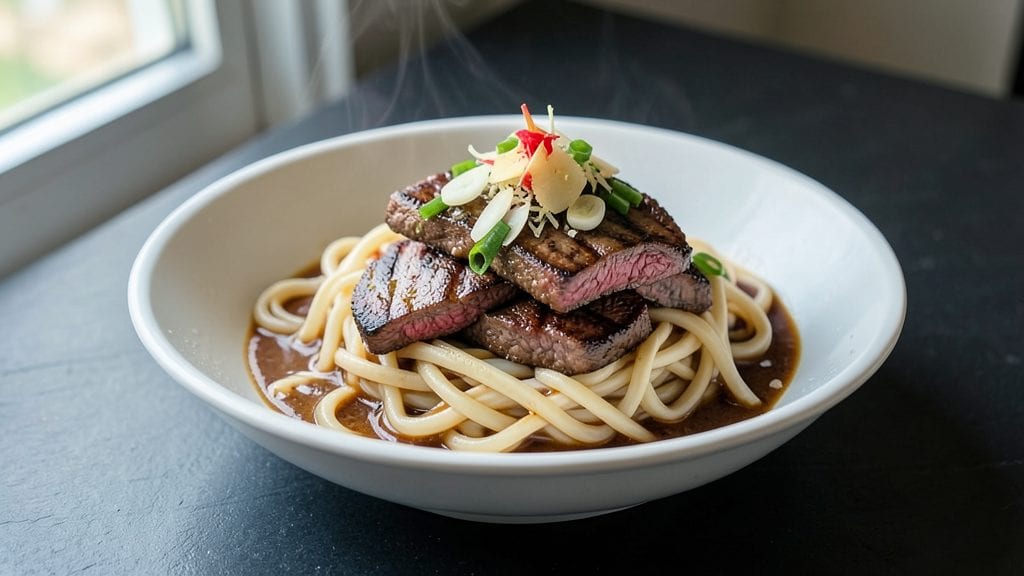
Creating a steak udon recipe that balances smoky, sweet, and savory flavors is all about technique—starting with perfectly seared steak and finishing with a rich, aromatic broth.
The key lies in thinly slicing the steak against the grain so it melts in your mouth, then building layers of umami through slow-simmered broth and a touch of caramelized sweetness. This dish transforms a simple weeknight meal into something restaurant-worthy with minimal effort.
The foundation begins with high-quality udon noodles, which soak up the broth beautifully while maintaining their satisfying chew. You'll sear the steak quickly over high heat to lock in juices, then slice it thinly for easy incorporation into the dish.
The broth, infused with garlic, ginger, and a splash of soy sauce, simmers until deeply flavorful, while a drizzle of honey or mirin adds that essential sweetness to balance the smokiness.
What you end up with is a steaming bowl of udon where every bite delivers tender steak, chewy noodles, and a rich broth that coats your mouth with each spoonful.
The aroma alone—smoky from the seared meat, aromatic from the broth—will have everyone at the table asking for seconds before the first bite. This recipe proves that homemade can rival takeout, with a depth of flavor that's impossible to find in a store-bought version.
The best part? It comes together in under an hour, with most of that time spent simmering the broth. Whether you're feeding a crowd or treating yourself to a solo dinner, this steak udon delivers restaurant-quality results without the fuss. Let's get cooking—your taste buds will thank you.
Ingredients for steak udon
Four servings of restaurant-quality steak udon start with just these ingredients.
| Ingredient | Amount | Notes |
|---|---|---|
| High-Quality Udon Noodles 🍜 | 8 oz | Fresh or frozen, 8 oz per serving |
| Ribeye Steak 🥩 | 1 lb | Thinly sliced against grain |
| Garlic Cloves 🧄 | 6 cloves | Minced for aromatic base |
| Fresh Ginger 🌿 | 1 tbsp | Grated, for zesty kick |
| Soy Sauce 🍶 | ½ cup | Light or dark preferred |
| Dashi Powder 🍲 | 2 tbsp | For umami depth |
| Mirin 🍶 | ¼ cup | Sweet rice wine |
| Honey 🍯 | 1 tbsp | For caramelized sweetness |
| Sesame Oil 🫒 | 1 tbsp | Toasted for aroma |
| Green Onions 🧅 | 3 whole | Sliced for garnish |
| Vegetable Oil 🫒 | 2 tbsp | For high-heat searing |
| Salt 🧂 | 1 tsp | Kosher or sea salt |
| Black Pepper 🌶️ | ½ tsp | Freshly ground |
| Water 💧 | 4 cups | For broth base |
The udon noodles are everything here—fresh or frozen works, but avoid the dried kind. Trader Joe's and Costco carry excellent pre-packaged udon, but if you're feeling adventurous, Japanese grocery stores have the freshest options. For the steak, ribeye or sirloin gives the best tenderness when sliced thin. Buy a 1-pound package and ask the butcher to slice it against the grain if possible. The dashi powder is non-negotiable for that signature umami—Honten or Marukome are my go-tos, but any quality brand works. Fresh ginger loses potency fast, so grab it near the end of your shopping trip and store it in the freezer if you won't use it all.
No mirin? Honey plus a splash of rice vinegar mimics the sweetness and acidity. Short on dashi? Double the soy sauce and add a dash of bonito flakes if you can find them. The steak can be swapped for flank steak or even chicken thigh, but slice it just as thin. For extra richness, add a dash of Worcestershire sauce to the broth. The green onions should be bright and crisp—if they're wilted, skip them or swap for fresh cilantro. The sesame oil is for aroma only, so use the toasted variety—it makes all the difference.
This broth keeps for 4-5 days in the fridge, but the noodles are best fresh. I like to prep the broth ahead and reheat it gently—it only gets better as flavors meld. The steak can be seared and sliced up to 2 days ahead, then stored in the fridge. Freeze the broth for up to 3 months if you're prepping for a crowd. The leftovers reheat beautifully—just add a splash of water to loosen the broth before serving.
Why You'll Love This Recipe
- I swear by this trick: sear the ribeye in the same pan you’ll toss the udon. Less cleanup, same restaurant-quality flavor—just with half the dishes.
- One-Pan Magic: I swear by this trick: sear the ribeye in the same pan you’ll toss the udon. Less cleanup, same restaurant-quality flavor—just with half the dishes.
- Umami Bomb: That ribeye, sliced thin after a quick sear, melts into the broth with the soy and ginger. It’s rich but balanced, like a hug in a bowl—no weird aftertaste, just pure satisfaction.
- Lunchbox Hero: Between us, this is my go-to for packed lunches. The udon stays al dente, the steak holds up, and the sauce keeps it fresh-tasting for days. (Yes, even on a Tuesday.)
Step-by-step instructions for steak udon with rich broth
Here's how to create a perfectly balanced steak udon with deep umami broth and tender ribeye slices.
Prepare the Steak and Aromatics
Thinly slice the 1 lb ribeye steak against the grain into ¼-inch thick strips. This ensures each bite stays tender. Pat the slices dry with paper towels to remove any surface moisture, which helps them sear properly later.
In a small bowl, combine the 6 minced garlic cloves, 1 tbsp grated fresh ginger, 1 tsp salt, and 0.5 tsp black pepper. Mix well to create your steak marinade. Let the ribeye slices sit in this mixture for 10 minutes while you prepare the rest of your ingredients. The acidity from the ginger and garlic will help tenderize the meat slightly.
Create the Umami-Packed Broth Base
In a large pot, combine the 4 cups water, 0.5 cup soy sauce, 2 tbsp dashi powder, 0.25 cup mirin, and 1 tbsp honey. Bring to a boil over medium-high heat while stirring to dissolve the dashi powder completely. Once boiling, reduce heat to medium-low and let it simmer for 5 minutes to develop the flavors.
The broth should smell rich and aromatic with a balance of salty, sweet, and umami notes. If you notice any foam forming on top, skim it off with a spoon. This simmering step is crucial for building the complex flavor foundation of your steak udon.
Cook the Udon Noodles
While the broth simmers, prepare the 8 oz high-quality udon noodles according to package instructions. I recommend using boiling water and cooking them for 4-5 minutes until they're al dente but still slightly firm. Drain immediately and rinse briefly under cold water to stop the cooking process.
Don't overcook the noodles—they'll continue cooking in the hot broth. Transfer them to a large serving bowl or individual bowls and set aside. The slight chill from the rinse will help prevent them from sticking together while you finish the dish.
Sear the Steak and Build the Final Broth
Heat 2 tbsp vegetable oil in a large skillet over high heat until shimmering. Working in batches if needed, add the marinated ribeye strips and sear for 1-2 minutes per side until they develop a beautiful brown crust. Remove the steak and set aside, keeping it warm.
In the same skillet, add 1 tbsp sesame oil and the reserved steak marinade. Let it sizzle for 30 seconds to release the flavors, then pour this aromatic mixture into the simmering broth. Return the cooked udon noodles to the pot and gently stir to combine. Add the seared steak strips back into the broth and let everything simmer together for 2 minutes.
Finish and Serve
Taste the broth and adjust seasoning if needed—you might want to add a splash more soy sauce or a touch of honey for balance. Divide the steak udon among serving bowls, garnishing each with sliced green onions. The vibrant green color will contrast beautifully with the rich brown broth.
Serve immediately while the noodles are hot and the steak is still juicy. The perfect steak udon should have tender, slightly chewy noodles, perfectly cooked ribeye strips with a caramelized crust, and a broth that's rich yet balanced with sweet, smoky, and umami flavors. Enjoy with a cold drink to complement the warm, hearty dish.
Pro Tips For Making Steak Udon
- Sear Steak First: Walk the ribeye into a screaming-hot pan with just oil—no butter yet—until it’s got deep brown crust on both sides. That’s where the flavor hides, and rushing this step means muddy, bland meat later. I used to skip this, and the dish just tasted like soy sauce with a side of regret.
- Prep Ginger Like a Pro: Use a microplane or knife to get thin ginger slices—not matchsticks, not chunks. Thin means they cook fast, soften just enough to melt into the sauce, and don’t turn to mush. (Yes, even if you’re impatient like me.) Store-bought pre-grated? Skip it—it’s waterlogged and dull.
- Don’t Overcook the Udon: Udon’s done when it’s al dente—firm to the bite, not mushy. Taste it at 1 minute 45 seconds in boiling water, then pull it when it’s just shy of perfect. Overcooking turns them into sad, gluey noodles, and no one wants that in a steak udon. (Your future self will thank you.)
- Finish with Butter, Not Soy: Toss the cooked udon in a splash of soy, then hit it with cold butter at the end—just 1-2 tablespoons. The fat coats the noodles, making them silky, while the soy keeps its depth. I learned this the hard way after drowning the dish in sauce and ending up with a soggy mess.
Pro cooking tips for perfect results
Steak Searing Secrets
For perfect steak slices, use a cast iron skillet like Lodge—it retains heat better than nonstick. Heat the oil to 375°F (use an instant-read thermometer) before adding the steak. Sear for 1-2 minutes per side until deep brown crust forms—this is your Maillard reaction in action. 🔥
Work in batches if needed to avoid crowding the pan, which lowers temperature. I like to use thin-cut ribeye (about ¼-inch thick) because it cooks faster and stays tender. Pat slices extremely dry before searing—moisture steams instead of browning.
Broth Flavor Boosters
Don’t skip the 5-minute simmer for your broth—this lets flavors meld. For extra depth, add ½ cup beef broth instead of water. If you have bonito flakes, toast them in a dry pan for 30 seconds before adding to the broth for a smoky aroma. 💫
Balance is key: if your broth tastes too salty, add 1 tbsp mirin or 1 tsp honey. Too bland? A splash of fish sauce (just ½ tsp) adds umami without overpowering. Taste as you go—adjust gradually.
Noodle Texture Control
Udon should be al dente when drained—4-5 minutes in boiling water. Rinse briefly under cold water to stop cooking, but don’t overdo it or they’ll turn mushy. Transfer noodles to a well-oiled bowl while you finish the steak to prevent sticking. 🍜
For extra chew, cook noodles 1 minute less than package instructions, then finish in the hot broth. If using fresh udon, cook for 3-4 minutes—they’re thicker and absorb broth differently than dried varieties.
Steak Slice Precision
Slice steak against the grain at a 45-degree angle for uniform strips. Use a sharp chef’s knife—a dull blade crushes fibers, making meat tough. For even thinner slices, freeze steak for 20 minutes before slicing—it becomes more pliable. 💡
If your steak slices shrink while cooking, they were too thick. Aim for ¼-inch max—thinner slices cook faster and stay juicy. For extra tenderness, pound slices with a meat mallet (lightly!) before marinating.
Nutrition facts
Frequently asked questions
Can I substitute beef with another protein in this steak udon?
Flank steak or sirloin work perfectly, but slice them just as thin. For a lighter option, try chicken thigh (bone-in for extra flavor) or shrimp—simmer them in the broth for 3-4 minutes instead of searing. Just adjust cooking times to avoid overcooking.
How do I make the broth richer without dashi powder?
Double the soy sauce and add ½ cup beef broth instead of water. For umami depth, toast 1 tsp bonito flakes in a dry pan for 30 seconds before adding to the broth. If you have Worcestershire sauce, add ½ tsp—it adds complexity without overpowering.
Why did my udon turn mushy in the broth?
Overcooking is the most common mistake. Cook udon for 4-5 minutes (or 3-4 minutes for fresh), then rinse briefly under cold water to stop the cooking process. Never boil them again in the broth—transfer them directly to the simmering liquid.
Can I prepare this recipe ahead of time?
Yes! The broth keeps for 4-5 days in the fridge or 3 months frozen. Cook the udon fresh, but sear the steak up to 2 days ahead and reheat it gently in the broth. Garnish with green onions just before serving for the freshest flavor.
What’s the best way to serve this steak udon?
Garnish with sliced green onions and a drizzle of sesame oil for color and aroma. Serve with pickled ginger on the side to cut through the richness, or add a soft-boiled egg for extra heartiness. Pair with a cold Asahi beer or green tea for the perfect balance.