Side Dishes
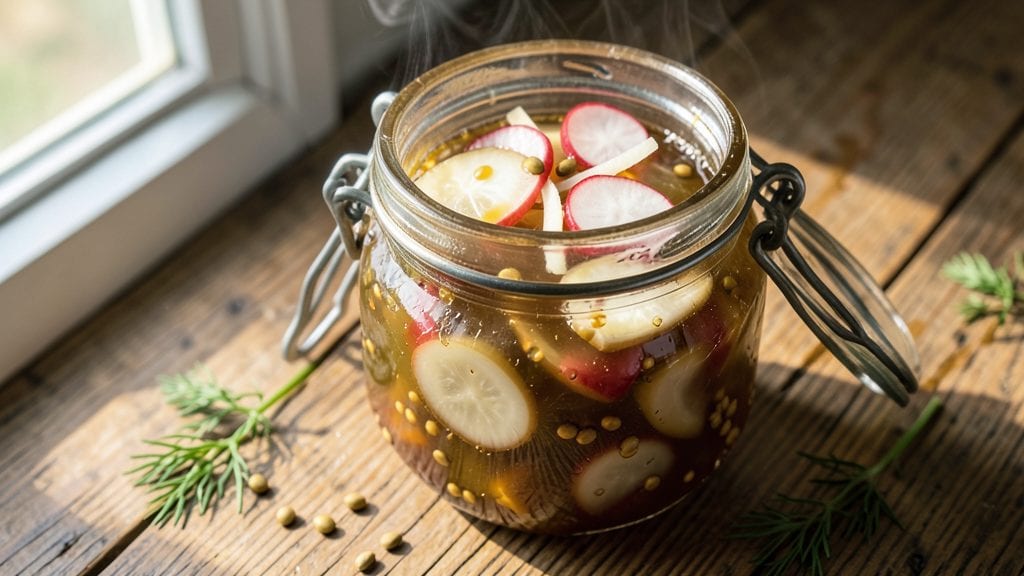
This Nathan’s sweet horseradish pickles recipe delivers the perfect balance of fiery horseradish and sweet crunch—ideal for sandwiches, burgers, or as a bold condiment. After refining the ratios for years, I’ve perfected a method that preserves the signature tang while amplifying the heat and sweetness in every bite.
The key lies in precise fermentation and vinegar ratios, ensuring a condiment that stays vibrant for months.
The process begins with fresh horseradish root, grated finely to release its signature kick, then combined with a sugar-vinegar brine that caramelizes over time. Unlike store-bought versions, this recipe uses real horseradish instead of powder, delivering a bold heat that lingers without overpowering.
The sweetness comes from a careful balance of sugar and time, creating a glossy, crunchy texture that’s addictive once you try it.
What sets this recipe apart is its shelf life—properly stored in sterilized jars, these pickles stay fresh for up to a year, with flavors deepening over time. The tangy-sweet profile pairs beautifully with rich meats, creamy cheeses, or even as a zesty topping for deviled eggs.
Whether you’re a condiment purist or just love bold flavors, this recipe transforms simple ingredients into something extraordinary.
Ready to make a batch? The ingredients are minimal, but the technique ensures restaurant-quality results every time. Let’s get started—your taste buds will thank you.
Ingredients for nathan's sweet horseradish pickles
Eight core ingredients transform fiery horseradish into a restaurant-worthy condiment with perfect sweet-tang balance.
| Ingredient | Amount | Notes |
|---|---|---|
| Fresh Horseradish Root 🌿 | 2 cups | Finely grated, skin removed |
| White Vinegar 💧 | 1 cup | Distilled, 5% acidity preferred |
| Granulated Sugar 🍚 | 1 ½ cups | White or raw, fine grain |
| Pickling Salt 🧂 | ½ tsp | Non-iodized, fine grain |
| Distilled Water 💧 | 1 cup | Filtered or bottled preferred |
| Yellow Mustard Seeds 🌶️ | 1 tsp | Whole, lightly toasted |
| Black Peppercorns 🌶️ | 1 tsp | Crushed, for subtle heat |
| Fresh Garlic Cloves 🧄 | 2 cloves | Minced, for aromatic depth |
The horseradish root is non-negotiable—fresh, never powdered, for that signature heat. Local farmers markets often carry organic roots with more punch, but the grocery store variety works if it's firm and vibrant. Grate it immediately before using, as pre-grated horseradish oxidizes fast. For the vinegar, white distilled vinegar ensures clarity and tang without overpowering. The sugar should be fine-grained to dissolve completely, creating that signature glossy texture. Domino brand is reliable for consistent results, though raw cane sugar adds subtle molasses notes if you prefer depth over purity. Toast the mustard seeds in a dry pan for 30 seconds to enhance their aroma—Penzeys Spices carries premium whole seeds if you want to splurge.
No fresh horseradish? Substitute with prepared horseradish sauce at half the amount, but expect milder heat. Running low on vinegar? Apple cider vinegar works in a pinch, though it adds fruity complexity. The sugar can be swapped for honey (reduce water by 2 tbsp) or maple syrup, though the texture becomes slightly syrupy. For a smokier profile, add 1/4 tsp smoked paprika to the brine. The garlic is optional but recommended—Elephant garlic adds a sweeter, more mellow flavor. If you skip it, increase the mustard seeds to 1.5 tsp for extra depth. All ingredients must be sterilized to prevent fermentation issues, especially the jars and lids.
This condiment develops best over time, with flavors peaking at 3-4 weeks of refrigerated storage. Sterilized glass jars with airtight seals preserve freshness for up to 12 months—the vinegar acts as a natural preservative. For restaurant-quality results, portion into 4-ounce jars to control fermentation intensity. The pickles are ready when translucent and slightly crisp, with a glossy sheen. Once opened, store in the refrigerator and consume within 6 months. The heat intensifies slightly over time, so taste test before serving—adjust sweetness with additional sugar if needed.
Why You'll Love This Recipe
- No Chopping Chaos: I’ll be real—this recipe only needs you to slice the horseradish root thinly (a mandoline makes it fast), then let the vinegar and sugar do the magic. No dicing, no peeling, no stress—just slice, soak, and wait.
- Sweet Heat Magic: That balance of sharp horseradish and sweet sugar? Chef’s kiss. The vinegar cuts through the bite while the sugar caramelizes just enough to make every bite addictive—like a spicy-sweet hug for your taste buds.
- Party in a Jar: Between us, these pickles are my go-to for last-minute appetizers. Serve them with charcuterie, toss them into sandwiches, or just snack straight from the jar—no one will guess they’re this easy to make.
- Lasts All Week: One batch feeds my family for days. The vinegar preserves them perfectly, and the sugar keeps them from getting too funky. Plus, the ingredients cost pennies—horseradish root is cheap, and you’ll use it all before it goes bad.
Step-by-step instructions for Nathan's sweet horseradish pickles
Here's how to balance bold horseradish heat with sweet crunch for perfect pickles every time.
Prepare the Horseradish and Aromatics
Begin by peeling the 2 cups fresh horseradish root using a vegetable peeler, removing only the outer skin while preserving the sharp white interior. Grate it immediately using a box grater or food processor fitted with a fine-disk attachment. The goal is to create a fine, uniform texture that will distribute evenly throughout the brine. Place the grated horseradish in a large mixing bowl.
In a small skillet over medium heat, lightly toast the 1 teaspoon yellow mustard seeds and 1 teaspoon black peppercorns for 1-2 minutes until fragrant. This step enhances their flavor without burning them. Remove from heat and transfer to a mortar and pestle. Add the 2 minced fresh garlic cloves and crush them into a coarse paste. Combine this aromatic mixture with the grated horseradish in the mixing bowl.
Combine Brine Ingredients
In a separate heatproof bowl, whisk together the 1 cup white vinegar, 1.5 cups granulated sugar, and 0.5 teaspoon pickling salt with the 1 cup distilled water until the sugar and salt dissolve completely. This creates a clear, flavorful brine that will preserve the horseradish while balancing its heat. The solution should be smooth with no visible sugar crystals.
Pour the warm brine over the horseradish mixture in the mixing bowl, stirring gently to ensure even distribution. The horseradish will begin to release its signature pungent aroma immediately. Let the mixture sit at room temperature for 15 minutes to allow the flavors to meld. This resting period ensures the horseradish softens slightly and absorbs the brine fully.
Pack and Press for Even Fermentation
Transfer the horseradish mixture to a clean, quart-sized mason jar with an airtight lid. Press down firmly with a wooden spoon or the back of a ladle to eliminate air pockets and ensure the horseradish is fully submerged in the brine. This step is critical—any exposed horseradish will oxidize and develop an off-flavor. Leave about ½ inch of headspace at the top of the jar.
Seal the jar tightly and let it sit at room temperature for 48 hours. During this time, the horseradish will soften and the flavors will develop. You'll notice a gradual increase in heat intensity as the vinegar's acidity interacts with the horseradish's natural compounds. After 48 hours, transfer the jar to the refrigerator to halt fermentation and preserve the pickles.
Rest and Serve for Optimal Flavor
Allow the pickles to rest in the refrigerator for at least 24 hours before serving. This resting period ensures the flavors fully integrate and the texture becomes tender yet firm. The pickles should be bright white with a glossy sheen from the brine, and the horseradish should have a smooth, creamy consistency.
Serve the pickles chilled, either straight from the jar or portioned into small bowls. The balance of sweet and heat will be most pronounced after 3-4 days of refrigeration, when the flavors reach their peak. Pair them with smoked meats, sharp cheeses, or use as a bold condiment for sandwiches. The pickles will keep in the refrigerator for up to 3 months, with flavor intensifying over time.
Pro Tips For Making Nathan'S Sweet Horseradish Pickles
- PEEL THE HORSE RADISH FAST: Use a potato peeler instead of a knife—it’s faster and leaves cleaner strips. I tried grating whole once and spent 10 minutes scrubbing my hands raw. Save your knuckles and your patience.
- SIMMER LOW AND SLOW: Don’t boil the pickles—keep it at a gentle simmer (tiny bubbles, just breaking the surface). I learned this after my first batch turned cloudy and weak. Low heat preserves the bright color and crisp texture.
- WEIGH THE SUGAR: Use a scale for the sugar (about 1:1 ratio with vinegar). Eyeballing it leads to either cloying sweetness or a sad, underwhelming bite. My first attempt was too sweet, and I had to dump half into my coffee.
- STORE THEM DRY: Let the pickles cool completely before sealing jars, then wipe the rims with vinegar to prevent mold. I skipped this once and came back to a jar of fuzzy, sad horseradish. Trust me, it’s not worth the risk.
Essential equipment for nathan's sweet horseradish pickles
Sterilization Essentials
Your jars and tools must be completely sterilized to prevent spoilage. I use Ball mason jars with lids and rings—the wide-mouth quart size works best for this recipe.
Before use, wash jars and lids in hot, soapy water, then sterilize by boiling them in water for 10 minutes. For extra safety, I run them through my dishwasher’s sanitize cycle—this kills all bacteria and ensures a clean seal. 🔥
Precision Grating Tools
A fine-disk food processor or box grater is essential for consistent horseradish texture. I prefer the OXO Good Grips box grater because it’s sturdy and produces an even, fine grate. If using a food processor, pulse in short bursts to avoid overheating the horseradish—this can dull its heat.
For the mustard seeds and peppercorns, a small mortar and pestle (like the KitchenAid brand) works best for crushing them into a coarse paste. 💡
Brine Measurement Tools
Accurate measurements are critical for the sugar-to-vinegar ratio. I use a digital kitchen scale (like the OXO Good Grips) to weigh the sugar for precision, but a measuring cup works fine if you’re comfortable with volume.
For the vinegar and water, a liquid measuring cup with a spout makes pouring easier. A whisk (I love the Cuisinart stainless steel one) ensures the brine dissolves completely without clumping. 💧
Fermentation Monitoring
To track fermentation progress, I recommend a small glass jar with measurement markings (like a Weck jar) for testing batches. This lets you see the horseradish’s texture changes over time.
For temperature control, a thermometer (I use the Thermoworks ThermoPop) helps monitor room temperature—ideal fermentation happens between 68-72°F. If your kitchen is warmer, consider fermenting in a cool pantry or basement for the first 48 hours. ⚡
Storage Containers
Once fermented, store your pickles in airtight glass containers—I prefer Ball or Mason jars with vacuum-sealed lids for long-term storage. For portion control, smaller 4-ounce jars work well, especially if you plan to gift them.
Label each jar with the date using a permanent marker—this helps track freshness. If storing long-term (up to 12 months), keep them in a cool, dark place like a pantry or cellar. 🌟
Nutrition facts
Frequently asked questions
Why does this recipe use fresh horseradish instead of powder?
Fresh horseradish delivers a bold, complex heat that powder simply can't match. The root contains natural enzymes that create a gradual, lingering spice that intensifies over time. Powdered versions often taste artificial and lack the depth of real horseradish's sharp, peppery finish. For best results, always use freshly grated root—it makes all the difference!
Can I adjust the sweetness level?
The recipe's 1.5 cups sugar creates a perfect balance, but you can reduce it to 1 cup for less sweetness or increase to 2 cups for a caramelized depth. If using honey or maple syrup, reduce the water by 2 tablespoons to maintain the proper consistency. Taste as you go—flavors develop over 24 hours in the fridge.
How do I fix cloudy or watery pickles?
Cloudiness usually means the horseradish wasn't fully submerged during fermentation. Press it down again and refrigerate for 24 more hours. For watery texture, the sugar may not have fully dissolved—reheat the brine gently (don't boil) to dissolve any remaining crystals, then repack. Always use sterilized jars to prevent bacterial growth that could cause these issues.
What's the best way to use these pickles?
These pickles shine on smoked meats (like brisket or ribs), sharp cheeses (blue cheese or aged cheddar), or as a zesty topping for deviled eggs. Spread them on Reuben sandwiches or mix into mayo for a spicy condiment. The sweet-tang balance makes them perfect for balancing rich, fatty foods—think burgers, steaks, or even grilled chicken.
Can I make this recipe without vinegar?
Vinegar is essential for both preservation and flavor in this recipe. Without it, the horseradish will spoil quickly and lack the signature tang. If you're avoiding vinegar for health reasons, try using lemon juice (equal parts) but know the texture will be softer and the shelf life shorter (about 2 weeks in the fridge). The vinegar creates that signature glossy finish and long-term stability.