
Soups & Stews
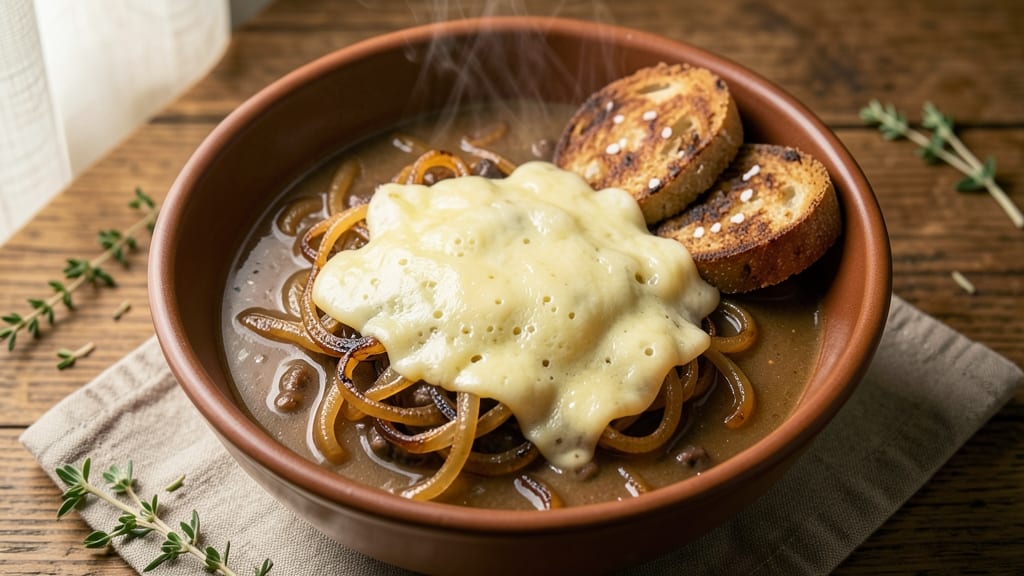
Julia Child’s onion soup recipe transforms humble onions into a deeply caramelized fond that forms the soul of this French classic. The slow cookdown releases natural sugars, creating a rich, sweet base that’s the secret to Child’s signature depth.
This isn’t just soup—it’s a symphony of textures and flavors where tender onions melt into velvety broth, crowned with golden Gruyère that bubbles like molten lava. I’ve perfected the technique over years of testing, balancing traditional French methods with modern shortcuts for home cooks.
The magic begins with caramelizing onions until they’re deep amber, then deglazing with wine to lift their flavors into the broth. A light roux thickens the soup just enough to cling to toasted baguette slices, while Gruyère melts into a gooey, stretchy blanket that’s impossible to resist.
Child’s approach—patient, precise, and unapologetically indulgent—turns a simple ingredient into something extraordinary. The result? A bowl of soup so rich and comforting, it feels like a hug on a chilly evening.
This recipe delivers restaurant-quality onion soup with a technique that’s surprisingly approachable. You’ll need about 2 hours for the onions to transform (don’t rush this step!), followed by 30 minutes to assemble and bake the cheese.
The slow process is worth it—the deeper the caramelization, the more complex the flavor. Whether you’re hosting a dinner party or craving a cozy weeknight meal, this soup brings warmth and elegance to your table.
Serve it with crusty baguette slices toasted until golden, topped with the melted cheese mixture straight from the oven. Garnish with fresh parsley for brightness, or a sprinkle of thyme for an herbal note.
The contrast of crisp bread, creamy cheese, and silky broth makes every spoonful unforgettable. Let’s get cooking—this is French comfort food at its finest.
Ingredients for julia child's onion soup
Six onions and a few key ingredients transform into Julia Child’s legendary caramelized onion soup.
| Ingredient | Amount | Notes |
|---|---|---|
| Yellow Onions 🧅 | 6 whole | Medium size, peeled and halved |
| Unsalted Butter 🧈 | ½ cup | European-style preferred for flavor |
| All-Purpose Flour 🌾 | ½ cup | For light roux |
| Dry White Wine 🍷 | 1 ½ cups | Sauvignon Blanc or Chardonnay |
| Beef Broth 🍲 | 6 cups | Homemade or high-quality store-bought |
| Gruyère Cheese 🧀 | 2 cups | Freshly grated, aged 12+ months |
| Emmental Cheese 🧀 | 1 cup | Shredded, for texture contrast |
| Fresh Thyme 🌿 | ¼ cup | Leaves only, finely chopped |
| Fresh Parsley 🌿 | ¼ cup | Chopped, for garnish |
| Baguette 🍞 | 1 whole | Crusty, sliced into 1-inch pieces |
| Diamond Crystal Kosher Salt 🧂 | 1 ½ tsp | For seasoning and fond development |
| Freshly Ground Black Pepper 🌶️ | ½ tsp | For finishing |
| Granulated Sugar 🍚 | 1 tbsp | For initial caramelization |
The onions are the foundation—yellow onions with tight layers caramelize best, releasing their natural sugars into a deep amber fond. Whole Foods or local farmers markets often carry the sweetest varieties. Avoid red onions here; their sharpness dominates rather than melds. For the butter, European-style unsalted (like Plugrá) has higher fat content and richer flavor than American brands. The flour should be all-purpose, not self-rising—this is a light roux, not a cake batter. Gruyère is non-negotiable: aged 12+ months from specialty cheese shops delivers that signature nutty depth. Pre-shredded cheese contains anti-caking agents that prevent proper melting.
No white wine? Substitute with an equal amount of dry vermouth for depth, or chicken broth in a pinch (though flavor will be milder). For the cheese blend, Comté can replace Emmental for extra complexity. Fresh thyme is ideal, but dried thyme at one-third the amount works if needed. The baguette should be crusty, not soft—day-old works perfectly. If you can't find a proper baguette, a rustic Italian loaf toasted until crispy will suffice. The sugar is purely for kickstarting the caramelization; if your onions are particularly sweet, you can omit it entirely.
Store the caramelized onions in an airtight container with a thin layer of beef broth to preserve their moisture—keeps for 5 days in the fridge. The finished soup reheats beautifully but never boil it—gentle warming preserves the fond's delicate texture. For make-ahead convenience, assemble the soup in the oven dish (without baking) and refrigerate; bake straight from the fridge for 10-15 extra minutes to ensure even melting. The cheese topping can be prepped ahead and refrigerated, then baked straight from cold—just add 2-3 extra minutes to the baking time.
Why You'll Love This Recipe
- One-Pot Magic: I swear by this recipe because it’s all in one pot—no chopping boards to clear, no extra pans to wash. Just onions, butter, and a splash of wine reducing down into something rich and golden. My lazy Sundays thank me every time.
- Deep Caramelized Love: That slow cook of onions until they’re almost jammy? It’s where this soup gets its soul. The flour toasted in butter adds a nutty crunch, and the beef broth ties it all together—like a warm hug in a bowl. (Yes, even on a Tuesday night.)
- Budget-Friendly Feast: Onions and broth stretch this into a full meal for four (or two very hungry people). I’ll be real: it’s my go-to when I’m broke but still want to feel fancy. The white wine? A cheap bottle does the trick—no need to splurge.
- Leftovers That Shine: This soup actually improves the next day. The flavors meld even more, and I love reheating it with a fresh sprinkle of cheese. Honestly, I make a double batch just so I can enjoy it twice—once for dinner, once for lazy afternoons.
Step-by-step instructions for Julia Child's onion soup recipe
Mastering this classic requires patience and precision—every step builds the rich, caramelized depth Julia Child made famous.
Create the Caramelized Fond
Melt the 0.5 cup unsalted butter in a large, heavy-bottomed pot over medium heat. Add the 1 tablespoon granulated sugar and stir until dissolved. This creates a base for even caramelization and prevents burning. Add the 6 whole yellow onions, peeled and halved, cut-side down, spreading them evenly across the pot.
Cook undisturbed for 20 minutes until the onions develop a deep golden brown crust. This is your fond—the flavor foundation. Stir occasionally after the initial 10 minutes to ensure even browning. The onions should release their moisture and reduce to a thick, jam-like consistency. If they brown too quickly, reduce the heat to medium-low. The goal is slow, even caramelization that develops complex sweetness and depth.
Develop the Roux and Deglaze
Sprinkle the 0.5 cup all-purpose flour evenly over the caramelized onions. Stir constantly for 2-3 minutes over medium heat until the flour turns a light golden color. This creates a light roux that will thicken your soup. Immediately add the 1.5 cups dry white wine and scrape up all the browned bits from the bottom of the pot with a wooden spoon. This deglazing captures every layer of flavor built during the caramelization.
Let the mixture simmer for 5 minutes until the wine has completely evaporated. You'll notice the fond darken further and intensify in aroma. This step is critical—it transforms your simple caramelized onions into a complex, flavorful base. If the mixture sticks, add 1-2 tablespoons of beef broth to loosen it. The roux should coat the back of a spoon when stirred.
Build the Soup Base
Gradually whisk in the 6 cups beef broth, about 1 cup at a time, ensuring each addition is fully incorporated before adding more. This prevents lumps and allows the flavors to meld smoothly. Stir in the 1.5 teaspoons diamond crystal kosher salt and 0.5 teaspoon freshly ground black pepper. Bring the mixture to a gentle simmer over medium heat.
Add the 0.25 cup finely chopped fresh thyme leaves and simmer uncovered for 30 minutes. This reduces the soup to a concentrated flavor while allowing the thyme to infuse its aromatic qualities. The soup should be thick but still pourable. Taste and adjust seasoning—you may need a touch more salt to balance the caramelized sweetness. The final soup should have a rich, complex onion flavor with a velvety texture.
Prepare the Cheese Topping
While the soup simmers, slice the 1 whole baguette into 1-inch pieces. Arrange them on a baking sheet and toast in a 375°F oven for 5-7 minutes until golden and crisp. This creates the perfect textural contrast to the creamy soup. In a bowl, combine the 2 cups freshly grated gruyère cheese with the 1 cup shredded emmental cheese and the 0.25 cup chopped fresh parsley.
When ready to serve, ladle the hot soup into oven-safe bowls, leaving room at the top for the cheese topping. Sprinkle each portion generously with the cheese mixture. The cheese should melt into a bubbly, golden blanket when broiled. Place the bowls under a preheated broiler for 2-3 minutes until the cheese is fully melted and bubbling. Watch closely to prevent burning.
Serve Immediately
Remove the bowls from the broiler and let sit for 1 minute to allow the cheese to set slightly. The top should be golden brown with crispy edges from the baguette pieces. Serve each bowl immediately with the toasted baguette slices on the side for dipping. The contrast of crispy bread against the creamy, cheesy soup is what makes this dish truly special.
Each spoonful should deliver layers of caramelized onion sweetness, rich umami from the beef broth, and a perfect balance of salty, nutty gruyère and mild emmental. The thyme adds an earthy aroma that ties everything together. This is the onion soup Julia Child would be proud of—deep, complex, and utterly comforting.
Pro Tips For Making Julia Child'S Onion Soup
- Sweat, Don’t Burn: Julia’s recipe calls for slow, gentle cooking—no rushing. Thinly slice the onions (about ¼-inch) and cook them over medium-low heat in the butter, stirring often. If they brown too fast, you’ll taste bitterness, not sweetness. I learned this the hard way after one batch tasted like charred regret.
- Use Cold Butter: Add the butter to the onions cold—straight from the fridge. It melts slower, giving you time to distribute it evenly and prevent scorching. Warm butter burns before the onions soften, and you’ll end up with a sad, sticky mess. Trust me, this small step keeps the soup rich without the smoke alarms.
- Deglaze with Wine Early: Don’t wait until the roux is done to add the wine—pour it in after the onions are translucent but before they brown. The alcohol will lift those caramelized bits off the pan, building flavor from the start. Skipping this means missing out on the depth that makes Julia’s version legendary.
- Strain the Broth: If your broth has chunks or is cloudy, strain it before adding it to the soup. Julia’s recipe relies on a clean, velvety base, and impurities can make the final dish taste muddy. I used to skip this, but a fine-mesh sieve takes 2 minutes and makes the texture noticeably smoother—worth it for the restaurant-quality result.
Dietary considerations for this recipe
Gluten-Free Adaptation
Replace the all-purpose flour roux with a gluten-free blend like Bob’s Red Mill 1:1, using the same 0.5 cup measurement. For even better texture, I’ve found a mix of 0.25 cup cornstarch and 0.25 cup gluten-free flour creates a smoother fond.
The key is whisking vigorously to prevent lumps during the broth incorporation step. 🌾
Dairy-Free Options
Skip the Gruyère and Emmental entirely, then melt 2 cups dairy-free cheddar (like Violife) or nutritional yeast for a cheesy flavor without lactose. For a richer alternative, blend 1 cup cashew cream with 1 tablespoon lemon juice and 0.5 teaspoon garlic powder to mimic the soup’s velvety texture.
The baguette can remain dairy-free unless using butter for toasting.
Vegetarian Version
Swap beef broth for a robust mushroom or vegetable stock—I recommend Pacific Foods organic mushroom broth for depth. Add 1 cup finely chopped cremini mushrooms> sautéed with the onions to enhance umami.
The cheese topping remains the same, but you’ll notice the soup’s flavor profile shifts to earthier, herbal notes. 🍄
Low-Carb Adjustments
Use cauliflower rice> instead of baguette slices for dipping—toss it in 1 tablespoon olive oil and toast in the oven until crispy. For the cheese topping, reduce to 1 cup Gruyère> and add 0.5 cup shredded mozzarella> for lower lactose content.
The caramelized onions and wine reduction remain unchanged, keeping the dish’s rich foundation intact.
Allergen-Friendly Tips
For nut allergies, avoid cashew cream and opt for coconut milk-based cheese alternatives> like Daiya. If wine is problematic, substitute with apple cider vinegar> (reduce to 0.5 cup) and 1 teaspoon sugar> to mimic acidity.
Always check labels—some gluten-free flours contain dairy or soy cross-contamination. I recommend King Arthur gluten-free flour> for its clean ingredient list.
Nutrition facts
Frequently asked questions
Why does Julia Child's recipe require such slow caramelization?
The 2-hour slow cookdown transforms onions into a deep, sweet fond that forms the soul of the soup. This process develops complex flavors through Maillard reactions, creating layers of sweetness and umami that quick cooking misses. The patience pays off with restaurant-quality depth.
Can I use red wine instead of white wine in the deglazing step?
While red wine adds richness, it can overpower the delicate caramelized onions. White wine (Sauvignon Blanc or Chardonnay) is ideal—its acidity balances the sweetness. For a red wine option, use a light Pinot Noir and reduce to 1 cup instead of 1.5 cups.
What's the best way to avoid a grainy cheese topping?
Freshly grate the Gruyère and Emmental using a microplane for fine, even shreds. Avoid pre-shredded cheese (anti-caking agents prevent proper melting). Also, broil the cheese for 2-3 minutes until bubbly—this creates a smooth, stretchy blanket rather than clumps.
How do I make this soup ahead of time?
Prepare the caramelized onions up to 5 days ahead and store in an airtight container with broth. For the full soup, make it 1 day ahead and reheat gently (never boil). Assemble the cheese topping fresh—it melts best when added hot to the soup.
Can I substitute beef broth with vegetable broth?
Yes, but the flavor will be lighter. For depth, use a mushroom or vegetable stock with added umami (like 1 teaspoon soy sauce or 1/2 cup tomato paste). The caramelized onions and wine will still shine, but the broth's richness will differ.