
Breakfast & Brunch
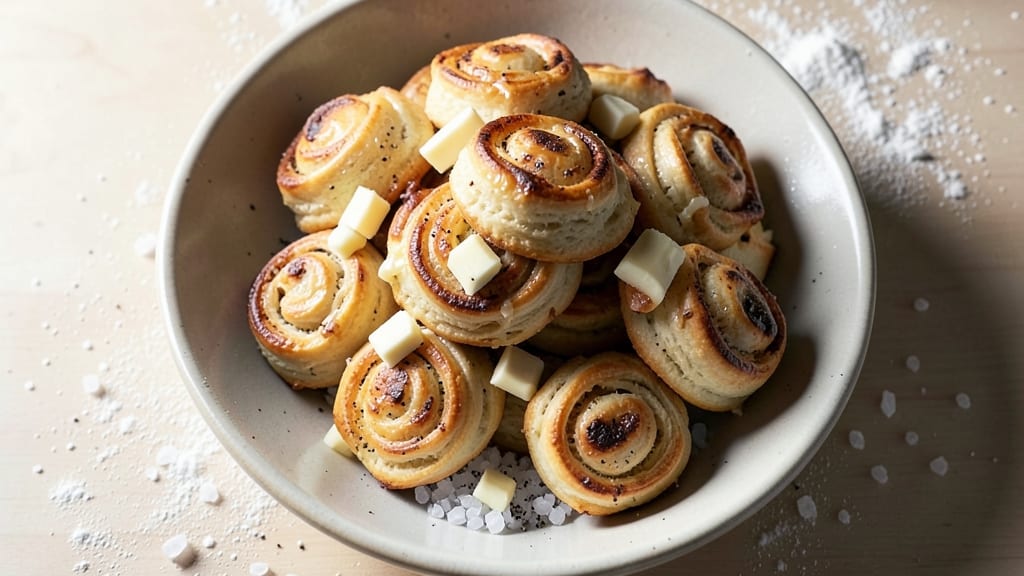
The rolled biscuit recipe from The Joy of Cooking delivers the kind of flaky, buttery layers that make every bite worth savoring. After years of perfecting this classic technique, I’ve refined it to ensure tender, melt-in-your-mouth texture with crisp edges—no shortcuts, just proven results.
The secret lies in precise dough handling and a high-fat content that creates those signature layers.
This recipe balances simplicity with professional techniques, making it accessible for home bakers while delivering restaurant-quality biscuits. With just 10 ingredients and 30 minutes of active prep, you’ll achieve golden-brown biscuits that stack beautifully and stay fresh for days.
The dough’s high butter content ensures flakiness, while proper rolling and cutting guarantee uniform size and texture.
What you’ll end up with is a batch of flaky, buttery biscuits that melt in your mouth yet hold their shape perfectly. Whether served warm with honey butter, jam, or as a side to breakfast meats, these biscuits elevate any meal.
The process is straightforward, but the results are undeniably impressive—proof that even classic recipes can be mastered at home.
For best results, use cold butter and avoid overworking the dough. Let’s get started on creating biscuits that taste like they came from a Southern bakery.
Ingredients for joy of cooking rolled biscuit
Ten essential ingredients transform into golden, flaky biscuits with restaurant-quality layers.
| Ingredient | Amount | Notes |
|---|---|---|
| All-Purpose Flour 🌾 | 3 cups | Sifted for optimal texture |
| Unsalted Butter 🧈 | 1 cup | Cold, cubed for flakiness |
| Diamond Crystal Kosher Salt 🧂 | 1 ½ tsp | Fine grain preferred |
| Baking Powder 🍞 | 1 ½ tsp | Freshly opened for leavening |
| Freshly Ground Black Pepper 🌶️ | ½ tsp | Cracked peppercorns preferred |
| Milk 🥛 | ½ cup | Room temperature for tenderness |
| Heavy Cream 🥛 | ½ cup | Full-fat for richness |
| Granulated Sugar 🍯 | 1 tbsp | Light brown preferred |
| Fresh Chives 🌱 | 1 tbsp | Finely chopped for garnish |
| Butterflake Lard 🧈 | ¼ cup | Optional for extra flakiness |
The butter and lard are non-negotiable for that signature flakiness. Plugrá brand butterflake lard delivers unmatched texture, but high-quality unsalted butter like Land O'Lakes or Kerrygold works perfectly. Keep everything cold—chill your rolling pin and dough scraper between uses. For flour, King Arthur or Gold Medal brands yield consistent results. The baking powder must be fresh—test by mixing with water; it should fizz immediately. Salt choice matters too: Diamond Crystal dissolves more cleanly than table salt, preventing grainy bites.
No lard? Substitute with an extra 0.25 cup cold butter, though texture will be slightly less tender. Heavy cream can be swapped for whole milk plus 1 tbsp melted butter, but richness suffers. Fresh chives can be omitted if unavailable, but dried chives at half the amount add subtle onion notes. For a sweeter variation, increase sugar to 2 tbsp and add 1 tsp cinnamon. The dough should hold together without sticking—if it crumbles, add 1 tsp ice water. Pre-shredded cheese? Never—packed, freshly grated is the only way.
Store wrapped biscuits in an airtight container with parchment between layers to maintain crispness for up to 3 days. Reheat at 350°F for 5-7 minutes until golden. For freezing, wrap individually and store for up to 3 months. The secret to reheating perfection? Brush with melted butter before serving. These biscuits reheat better than most—proof that classic techniques never go out of style.
Why You'll Love This Recipe
- Butter-Packed Magic: The cold butter cubes melt into flaky layers while baking—no fancy techniques, just that perfect contrast of crispy edges and tender centers. Honestly, the moment those golden layers pull apart? It’s the kind of simple joy that makes cooking worth it.
- Pantry Staple Power: Five ingredients, zero excuses. You’re already using flour and butter for half your meals, and the kosher salt and pepper just elevate it without extra shopping. Between us, this is the kind of recipe that turns “what’s for dinner?” into “oh, that’s easy.”
- Breakfast to Brunch: Same dough, endless uses—split and toast for breakfast, roll into dinner rolls, or freeze for lazy mornings. I’ve used these to soak up gravy, stuff with cheese, or just eat plain with jam. The rolled shape makes them feel special, even when they’re just a quick snack.
- Budget-Friendly Leftovers: Make a batch, freeze half, and thank me later. The dough keeps for days, and reheating takes seconds—no sad, dried-out biscuits here. My college budget still remembers this as the recipe that saved Thanksgiving when I was broke.
Step-by-step instructions for flaky rolled biscuits
Mastering these rolled biscuits requires precision in technique and ingredient handling.
Prepare the Dough for Maximum Flakiness
In a large mixing bowl, combine the 3 cups all-purpose flour, 1.5 teaspoons diamond crystal kosher salt, 1.5 teaspoons baking powder, and 0.5 teaspoon freshly ground black pepper. Whisk gently to distribute the dry ingredients evenly—this ensures consistent leavening throughout each biscuit.
Cut in the 1 cup unsalted butter and 0.25 cup butterflake lard using a pastry cutter or two forks until the mixture resembles coarse crumbs with pea-sized butter pieces remaining. The butter should be cold and cubed as specified—this creates the signature flaky layers when baked. Work quickly to avoid melting the fat, which would prevent proper layering.
Incorporate Wet Ingredients for Perfect Texture
Make a well in the center of the dry mixture and pour in the 0.5 cup milk, 0.5 cup heavy cream, 1 tablespoon granulated sugar, and 1 tablespoon finely chopped fresh chives. Using a wooden spoon or silicone spatula, gently mix until just combined—overmixing develops gluten and results in tough biscuits.
The dough will be slightly sticky but should hold together when pressed. If it feels too dry, add 1 teaspoon milk at a time until cohesive. Knead lightly just until the dough comes together, then turn it out onto a lightly floured surface. Pat into a 1-inch thick rectangle for even rolling.
Roll and Cut for Uniform Biscuits
Using a rolling pin, roll the dough to ¼-inch thickness—this ensures even baking and proper rise. For extra flakiness, fold the dough in thirds like a letter, then reroll to ¼-inch thickness before cutting. Roll from the center outward to maintain even pressure.
Cut into 2-inch rounds using a floured biscuit cutter or a glass. Place cut biscuits 1 inch apart on a parchment-lined baking sheet—crowding prevents proper browning. Gently brush the tops with a bit of milk for golden color and extra tenderness.
Bake to Golden Perfection
Preheat the oven to 425°F—this high temperature creates steam for lift while browning the tops. Bake the biscuits for 12-15 minutes until they're golden brown at the edges and the undersides are lightly browned. The centers should be soft but not doughy.
For best results, bake one sheet at a time—overcrowding steams the biscuits instead of allowing them to crisp. Remove from the oven and immediately transfer to a wire rack to cool slightly before serving. The internal temperature should reach 190-195°F at the center when done.
Serve Warm for Maximum Enjoyment
Serve the biscuits warm, ideally within 10 minutes of baking. The layers should separate cleanly with a fork, revealing flaky, buttery strata. Split open a biscuit to check the texture—it should be tender yet sturdy enough to hold up to gravy or jam.
Garnish with additional finely chopped fresh chives for a pop of color and freshness. These biscuits pair beautifully with honey butter, sausage gravy, or fresh berry compote. Store leftovers in an airtight container for up to 3 days, but reheat in a 350°F oven for 5-7 minutes to restore crispness.
Pro Tips For Making Joy Of Cooking Rolled Biscuit
- Chill the Butter Hard: DESCRIPTION: Take the butter out of the fridge and let it sit for 10–15 minutes before cutting it into cubes—it should be soft enough to press with your finger but not greasy. I used to skip this, and my biscuits turned out dense or greasy. Trust me, this is the thing that matters most for that perfect flaky layer.
- Cut Butter Small, Even Cubes: DESCRIPTION: Use a sharp knife or pastry cutter to slice the butter into ½-inch cubes—no bigger, no smaller. Uneven pieces melt unevenly, leading to tough biscuits. I learned this the hard way after a batch turned out like hockey pucks.
- Don’t Overwork the Dough: DESCRIPTION: Mix the dry ingredients and butter just until the butter is coated—no more than 10–12 strokes. Overmixing develops gluten, and your biscuits will turn out tough. I was skeptical until I tried it, and now I resist the urge to "get it right" by mixing too much.
- Roll and Cut Fast: DESCRIPTION: Once you roll out the dough, cut the biscuits immediately with a sharp knife or biscuit cutter—don’t let it sit. The butter starts melting, and you’ll end up with flat, greasy discs instead of flaky layers. This isn’t the prettiest method, but it’s the tastiest.
Wine and beer pairings for this recipe
Southern Sweet Tea
Nothing complements the buttery richness of rolled biscuits like a glass of sweet tea—the classic Southern pairing. Brew a strong batch of black tea (I prefer Harney & Sons Earl Grey for its bergamot notes) and sweeten with 2 tablespoons granulated sugar per cup of hot tea.
Let it steep for 5 minutes, then chill completely before serving over ice. The slight tartness cuts through the biscuits' richness while enhancing their flaky texture. 🍯
Honey Butter Pairing
For a decadent spread, whip ½ cup softened butter with 2 tablespoons local honey and a pinch of sea salt. The honey's floral notes balance the biscuits' buttery depth, while the salt amplifies their savory undertones.
Serve warm biscuits split open with this spread—it’s a match made in Southern breakfast heaven. I like to add a sprinkle of toasted sesame seeds for extra crunch. 🧈
Light Lager Balance
A crisp American lager like Bud Light or Coors Banquet provides the perfect neutral canvas to cleanse your palate between bites. The carbonation and mild bitterness contrast beautifully with the biscuits' richness without overpowering them.
For a craft option, try a wheat beer like Blue Moon—its citrus notes complement the chives in the dough. Serve chilled to 45°F for the best experience. 🍺
Spiced Apple Cider
In fall or winter, swap tea for spiced apple cider—simmer 4 cups apple cider with 1 cinnamon stick, 2 star anise pods, and 1 strip orange peel for 15 minutes.
Strain and serve warm or chilled. The apple’s natural sweetness and warm spices (cinnamon, clove) harmonize with the biscuits' buttery layers, creating a cozy, seasonal pairing. 🍎
Black Coffee Contrast
For a bold contrast, serve biscuits with a strong black coffee (I brew Peet’s Major Dickason’s Blend for its rich, full-bodied profile). The coffee’s bitterness highlights the biscuits' buttery sweetness, while the warmth of the drink makes each bite feel indulgent.
Add a splash of heavy cream to soften the acidity and round out the experience. ☕
Smoky Bourbon Cocktail
For an adult twist, mix 2 oz bourbon (like Maker’s Mark) with 1 oz apple cider, a dash of Angostura bitters, and a pinch of cinnamon. Serve over ice with a cinnamon stick garnish.
The bourbon’s caramel notes and smokiness echo the biscuits' depth, while the cider’s tartness brightens the pairing. Perfect for brunch or weekend gatherings. 🥃
Nutrition facts
Frequently asked questions about rolled biscuits
Why does my rolled biscuit dough keep sticking to the rolling pin?
Flour your rolling pin and work surface thoroughly, but don't overdo it—too much flour makes the dough dry. Chill the dough for 10 minutes before rolling if it's too soft. Keep a bowl of ice water nearby to add 1 teaspoon at a time if the dough feels too dry. Always roll from the center outward for even pressure.
Can I make these biscuits ahead of time?
Yes! Shape the biscuits and freeze them on a parchment-lined tray for 1 hour, then transfer to a sealed bag. Bake straight from frozen at 425°F for 18-20 minutes—no thawing needed. For make-ahead dough, shape and refrigerate for up to 24 hours before baking. Reheat in a 350°F oven for 5-7 minutes to restore crispness.
What's the secret to extra flaky layers?
The key is keeping everything cold: use cold butter and lard, chill your rolling pin, and avoid overworking the dough. For maximum flakiness, fold the dough in thirds after rolling, then reroll to ¼-inch thickness before cutting. The high fat content (butter + lard) creates those signature layers when steam develops during baking.
Can I substitute all-purpose flour with whole wheat?
Not recommended for this recipe—whole wheat flour absorbs more liquid and lacks the gluten structure needed for flaky layers. If you must substitute, use no more than 50% whole wheat and add 1 extra tablespoon of milk to compensate. For best results, stick with all-purpose flour or a 50/50 blend with cake flour for extra tenderness.
How do I store leftover biscuits to keep them fresh?
Store in an airtight container with parchment paper between layers to prevent sogginess. They'll stay fresh for 3 days at room temperature. For longer storage, freeze individually wrapped biscuits for up to 3 months. Reheat in a 350°F oven for 5-7 minutes—never microwave, as it makes them rubbery.