
Main Courses
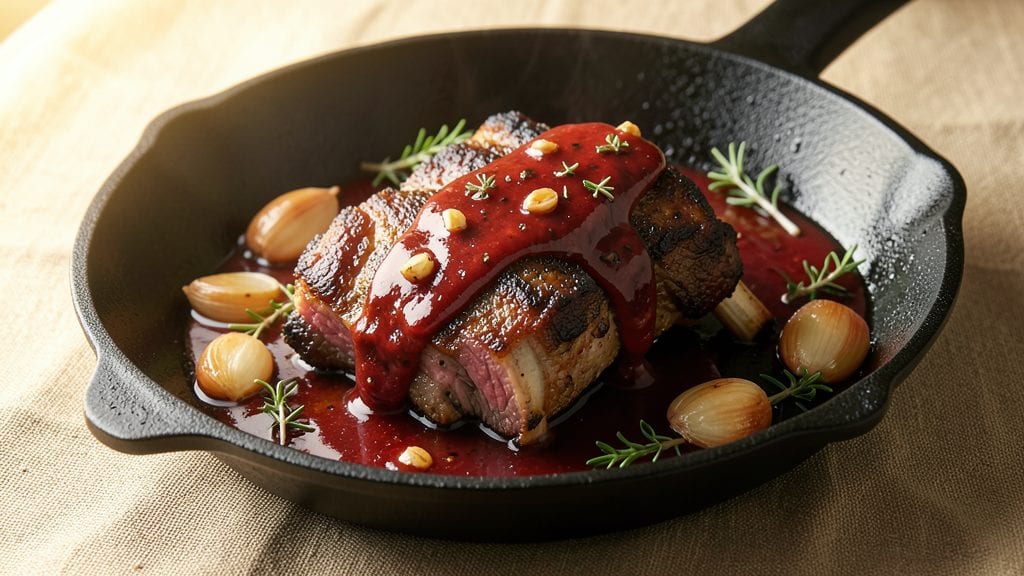
Mastering Gordon Ramsay's short ribs recipe transforms tough cuts into melt-in-your-mouth perfection through precise technique and patience. The key lies in slow-braising until the meat practically falls apart, then finishing with a crisp sear that seals in all that rich, caramelized flavor.
I've refined this method over years of testing—what works in professional kitchens now belongs in your home.
This recipe demands just five core ingredients but delivers restaurant-quality results with bold flavors and tender texture. The marinade infuses deep umami, while red wine reduction adds complexity that elevates simple beef into something extraordinary.
What starts as a tough cut emerges as fork-tender, glossy, and irresistibly rich—exactly what Ramsay's high standards demand.
By the time you serve these short ribs, your guests will taste layers of flavor: caramelized edges from the sear, tender meat that dissolves at a touch, and a sauce so rich it coats every bite.
The technique is straightforward once you understand the timing and temperature balance—no fancy equipment required, just attention to detail.
Perfect for special occasions or when you want to impress without stress. The leftovers reheat beautifully, making this a meal worth doubling. Let's create short ribs that would make Ramsay proud—with techniques you can trust and results that deliver every time.
Ingredients for gordon ramsay short rib
Five core ingredients transform tough beef into melt-in-your-mouth perfection with Ramsay's signature technique.
| Ingredient | Amount | Notes |
|---|---|---|
| Beef Short Ribs (Bone-In) 🥩 | 4 lb | Chuck roll cut, 1/2-inch thick slices |
| Dry Red Wine 🍷 | 1 cup | Bold Cabernet Sauvignon preferred |
| Beef Broth 💧 | 2 cups | Low-sodium, homemade or quality store-bought |
| Tomato Paste 🍅 | 2 tbsp | Smooth, not chunky |
| Garlic Cloves 🧄 | 8 cloves | Peeled, smashed for infusion |
| Fresh Thyme 🌿 | ½ cup | Leaves only, finely chopped |
| Olive Oil 🫒 | ½ cup | Extra-virgin, for searing |
| Diamond Crystal Kosher Salt 🧂 | 2 tbsp | For seasoning and brining |
| Ground Black Pepper 🌶️ | 1 tbsp | Freshly cracked, coarse grind |
| Brown Sugar 🍚 | 2 tbsp | Light, for caramelization |
| Flour 🌾 | ¼ cup | All-purpose, for dredging |
| Unsalted Butter 🧈 | 2 tbsp | Cold, for finishing sear |
The beef is everything. Chuck roll short ribs are non-negotiable—bone-in for flavor, 1/2-inch thick slices for even cooking. Most butchers will cut them for you, but if you're buying a whole chuck roast, ask for it to be sliced against the grain. Costco or Whole Foods usually carry pre-sliced packs, but check the marbling—you want good fat distribution for that fall-apart texture. I always grab mine the day I plan to cook since freshness matters for the sear. The red wine should be bold—Cabernet Sauvignon or Merlot—nothing fruity or sweet. Open a bottle you'd actually drink.
No red wine? Dry sherry or beef broth with 1 tbsp balsamic vinegar works in a pinch, though the acidity won't be identical. The tomato paste can be that squeeze tube from Trader Joe's—it's perfect for small amounts and keeps forever. Fresh thyme is ideal, but dried works at one-third the amount if you're in a bind. For the beef broth, homemade is best, but Swanson or Pacific Foods low-sodium versions are solid. The brown sugar adds depth without sweetness—light brown has more molasses flavor, but dark works too. Just don't skip it; it's what gives those caramelized edges their rich color.
These ribs reheat beautifully—actually better the next day once everything melds. Store leftovers in the braising liquid for 4-5 days in the fridge, or freeze for up to 3 months. I double the batch every time because the leftovers make the best sandwiches. If you're prepping ahead, you can even freeze the raw ribs (still in the marinade) for up to 2 weeks. Just thaw overnight in the fridge before cooking. The sauce reduces dramatically, so I always make extra—it's perfect for drizzling over mashed potatoes or polenta.
Why You'll Love This Recipe
- One-Pan Magic: I swear by this recipe because it’s that simple—just sear the ribs, toss in wine and broth, and let them slow-cook. No flipping pans, no stress, and the rich garlic-wine aroma fills the whole house while you’re at it.
- Rich Without Effort: That deep red wine and tomato paste combo? It’s basically flavor in a bottle. The ribs melt into tender perfection with just a crispy edge, and honestly, the first bite makes you forget you didn’t spend hours on it.
- Weeknight Hero: Between us, this is my go-to when I’m too tired for fussing but still want something impressive. Serve it over mashed potatoes for a cozy night in, or slice it thin for sandwiches the next day—it’s always a win.
- Leftovers That Don’t Suck: I make a double batch on Sundays because the flavor only gets better after a day of resting. Reheat slowly, and it’s like eating restaurant-quality comfort food—no one will guess it’s from last night’s dinner.
Step-by-step instructions for slow-braised short ribs
Mastering this technique transforms tough cuts into melt-in-your-mouth perfection with rich, velvety sauce.
Sear the Short Ribs for Deep Flavor
Pat the 4 lb beef short ribs dry with paper towels—this ensures maximum browning. Heat the 0.5 cup olive oil in a Dutch oven over medium-high heat until shimmering. Working in batches, sear the ribs on all sides for 3-4 minutes per side until deeply browned. This step develops the Maillard reaction, creating that irresistible caramelized crust.
As you sear, sprinkle generously with 1 tablespoon of the diamond crystal kosher salt and all 1 tablespoon ground black pepper. Don't crowd the pan—this prevents steam from forming, which would steam instead of sear. Transfer the browned ribs to a plate and set aside. You'll know they're ready when they release easily from the pan with a spatula.
Build the Braising Foundation
Reduce heat to medium and add the 2 tbsp tomato paste, stirring to coat the bottom of the pot. This creates a flavorful base for your sauce. Pour in the 1 cup dry red wine and scrape up any browned bits with a wooden spoon—this deglazing captures all that concentrated flavor. Let it simmer for 3-4 minutes until reduced by half.
Add the 2 cups beef broth, 2 tbsp brown sugar, and all 0.5 cup fresh thyme. Stir in the 8 smashed garlic cloves and bring to a gentle simmer. The sugar will caramelize slightly, adding depth to the sauce. Return the seared ribs to the pot, bone-side down, and cover with a tight-fitting lid.
Braise Until Fork-Tender
Transfer the Dutch oven to a preheated 325°F oven and braise for 3 hours. Here's where patience pays off—the ribs will slowly break down into tender perfection. After 2 hours, check for doneness by inserting a fork into the thickest part of a rib. If it slides in easily, they're ready. If not, continue braising for another 30 minutes.
During the last 30 minutes, uncover the pot and increase oven temperature to 375°F. This allows the sauce to thicken and develop a glossy finish. The ribs should be fork-tender with a deep mahogany color. If the sauce reduces too much, add a splash of water or broth to maintain consistency.
Finish with a Flour Slurry
Remove the ribs from the pot and set aside. Place the Dutch oven over medium heat and whisk together the 0.25 cup flour with 2 tablespoons of cold unsalted butter. Gradually whisk in the braising liquid until smooth. Simmer for 3-4 minutes until the sauce thickens to a velvety consistency. Taste and adjust seasoning with additional salt or pepper if needed.
Return the ribs to the pot and spoon the sauce generously over the top. Let them sit for 5 minutes to absorb the flavors. Serve immediately with crusty bread or mashed potatoes to soak up every last drop of that rich, caramelized sauce. The result should be ribs that fall apart at the touch with a sauce so luxurious it feels like a restaurant-quality meal.
Pro Tips For Making Gordon Ramsay Short Rib
- Sear Until Black: DESCRIPTION: Don’t just brown those short ribs—push them to a deep, charred crust before deglazing. I used to stop at "medium brown" and wondered why the sauce never packed enough punch. High heat, 3-4 minutes per side, until the edges are almost burnt. That’s where the flavor hides.
- Blot, Don’t Dry-Rub: DESCRIPTION: Pat those ribs dry with paper towels before searing—wet meat steams instead of crisps. I learned this the hard way after a soggy first batch. Skip the pre-salt rub; just blot, season generously with kosher salt, and let them sit 10 minutes. The crust will be worth it.
- Wine First, Tomato Second: DESCRIPTION: Deglaze with the red wine immediately after searing—scrape up every last bit of fond. Then add the tomato paste after the wine reduces by half. I used to toss the paste in early, and it’d turn to glue. Wait, or the sauce will taste like a brick.
- Simmer Low, Not Slow: DESCRIPTION: Cover the pot and simmer at a gentle bubble—just enough to keep the liquid moving, not a rolling boil. I used to crank the heat, and the broth turned cloudy. Low and steady for 2.5 hours guarantees tender ribs without curdling the sauce. Patience here makes all the difference.
Flavor customization for gordon ramsay short rib
Spicy Umami Boost
Add 1 tbsp gochujang or 2 tsp chili flakes to the braising liquid for a Korean-inspired kick. I like to mix in 1 tbsp fish sauce too—just enough to deepen the umami without overpowering.
The heat cuts through the richness, while the fish sauce adds complexity that pairs beautifully with the red wine. 🌶️
Herb Variations
Swap thyme for rosemary or sage if you prefer earthier notes. For a Mediterranean twist, add 1 tsp dried oregano and ½ tsp cinnamon to the braising liquid. Fresh herbs like parsley or cilantro work well as garnishes after cooking. The key is balancing bold flavors with the wine's acidity.
Sweet-Savory Balance
Increase the brown sugar to 4 tbsp for a deeper caramelization, or add 1 tbsp honey> to the sauce at the end for a subtle sweetness. I also like a pinch of smoked paprika—just ½ tsp—for a smoky depth that enhances the ribs' natural richness.
The sauce should taste complex, not cloying.
Cheesy Finish
Stir ½ cup grated Gruyère or Parmesan into the sauce during the final 5 minutes of simmering. The cheese melts into a velvety texture that clings to the ribs.
For a spicier option, add ½ tsp cayenne pepper> with the cheese. This works especially well with the flour slurry technique.
Citrus Brightness
Finish with 1 tbsp lemon juice> or zest of 1 orange> to cut through the richness. The acidity refreshes the palate, balancing the deep flavors. I also garnish with thinly sliced scallions> for a crisp contrast. This variation shines when serving with lighter sides like roasted vegetables.
Smoky Charcoal Twist
For a modern touch, add 1 tsp liquid smoke> to the braising liquid during the last 30 minutes>. This mimics the smoky flavor of grilled ribs without direct heat.
Pair it with ½ tsp coffee granules> for an earthy depth that complements the wine. The result is a restaurant-worthy depth of flavor.
Nutrition facts
Frequently asked questions
Why do I need to sear the short ribs before braising?
The sear creates a flavorful crust through the Maillard reaction, locking in juices and developing deep caramelized notes. Skipping this step means missing out on that restaurant-quality depth of flavor that makes Ramsay's version shine.
Can I use bone-in or boneless short ribs for this recipe?
Bone-in ribs are ideal—they add incredible flavor and moisture during braising. Boneless works too, but the cooking time may be slightly shorter (2-2.5 hours instead of 3 hours). The bone also helps keep the meat tender by acting as a natural insulator.
What's the best way to reheat leftover short ribs?
Place ribs in a cold oven-safe dish with their braising sauce, cover with foil, and reheat at 300°F for 20-25 minutes. The low heat prevents drying out while keeping the sauce velvety. Never microwave—it turns the meat rubbery.
Can I substitute the red wine with something else?
Yes! Use 1 cup beef broth + 1 tbsp balsamic vinegar for similar acidity, or dry sherry for a nutty depth. Avoid sweet wines—they'll make the sauce cloying. The key is maintaining acidity to balance the richness.
What if my ribs aren't tender after 3 hours?
Check your oven temperature—it must stay at 325°F consistently. If ribs are still tough, add ½ cup hot water to the pot, cover, and cook 30-60 more minutes. The collagen needs time to break down completely. Patience is key!