
Beverages
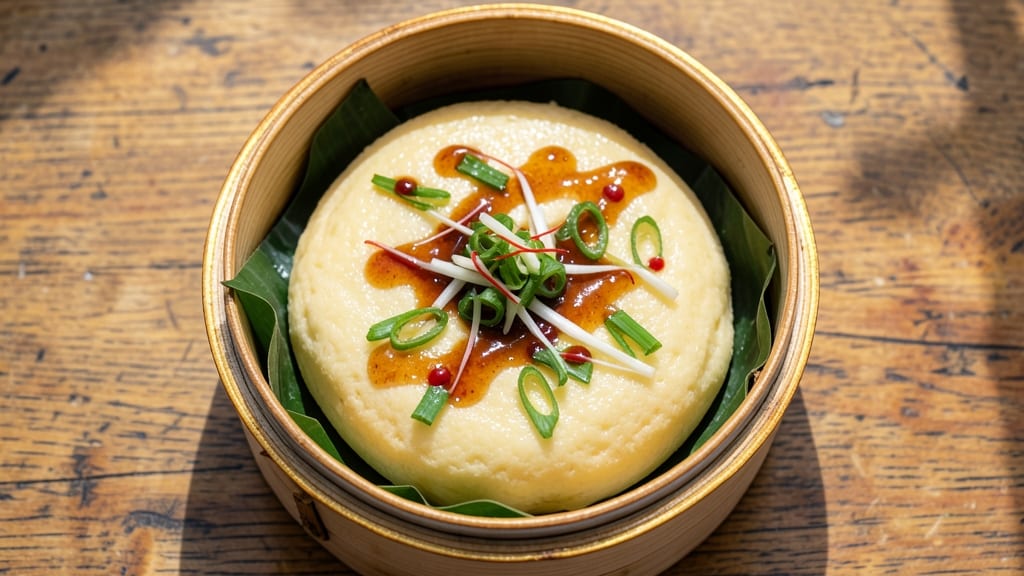
This Chinese steamed egg tofu recipe delivers the delicate, cloud-like texture and savory depth that makes it a vegetarian staple in Chinese cuisine. The secret lies in whisking eggs with water until they reach a ribbon stage—thin, translucent, and impossibly light—before steaming them into silky perfection.
I first encountered this dish in a Shanghai home kitchen, where it was served as both a side and a main, proving its versatility.
The process requires patience but rewards you with a dish that's both elegant and comforting. You'll need just six simple ingredients: eggs, water, soy sauce, and a touch of sugar for balance, all combined in a specific ratio that creates that signature cloud-like consistency.
Steaming at the right temperature—never boiling—preserves the delicate texture while allowing the soy sauce to infuse deeply without overpowering.
What you'll end up with is a dish that's silky yet sturdy enough to hold its shape when sliced, with a subtle umami richness from the soy sauce.
The aroma alone will transport you to a bustling Chinese dim sum house, where steamed egg tofu is served in delicate bamboo baskets alongside other delicate bites. This recipe is perfect for brunch, light lunches, or as a vegetarian centerpiece that impresses even meat lovers.
Serve it warm with a sprinkle of green onions and a drizzle of chili oil for contrast, or pair it with a simple cucumber salad to balance the richness.
The beauty of this dish lies in its simplicity—no heavy sauces, no complicated techniques, just pure, refined flavor that comes together with minimal effort. Let's get started on creating this classic vegetarian treasure.
Ingredients for chinese steamed egg tofu
Six simple ingredients transform into ethereal egg tofu with just a whisk and steamer.
| Ingredient | Amount | Notes |
|---|---|---|
| Large Eggs 🥚 | 12 whole | Room temperature preferred |
| Water 💧 | 1 ½ cups | Cold, filtered preferred |
| Light Soy Sauce 🥄 | 3 tbsp | Kikkoman or Pearl River brand |
| Granulated Sugar 🍚 | 1 tbsp | White or light brown |
| Green Onions 🧅 | ¼ cup | Thinly sliced, for garnish |
| Chili Oil 🌶️ | 1 tbsp | Optional, for serving |
| Bamboo Steamer 🌿 | 1 whole | 12-inch, with lid |
| Steamer Basket 🍜 | 1 whole | Fits bamboo steamer |
The eggs are non-negotiable—large, room-temperature eggs whisk to ribbons best. Trader Joe's or Whole Foods often carry the freshest, but any grocery store will do. Look for eggs with bright, unbroken yolks—that's your quality indicator. The bamboo steamer is key: 12-inch diameter gives even cooking. If you don't have one, a metal colander over boiling water works, but the texture won't be as refined. For soy sauce, Kikkoman or Pearl River brands are the gold standard—avoid the 'cooking' versions, which are saltier and less flavorful.
No light soy sauce? Substitute dark soy sauce at half the amount—it's richer but works in a pinch. Short on green onions? Fresh cilantro or scallions add brightness too. The sugar can be swapped for honey or maple syrup, but sugar dissolves cleanly. For chili oil, Lao Gan Ma is my go-to, but any high-quality chili oil will do. If you're feeling adventurous, add 1 tsp sesame oil to the egg mixture for extra depth. The water should be cold—room temperature makes the eggs cook unevenly. And trust me, don't skip the whisking—this isn't the time for lazy stirring.
This keeps beautifully for 3 days in the fridge, wrapped tightly in plastic. Reheat gently in the steamer for 5-7 minutes—microwaving makes it rubbery. For leftovers, slice thinly and serve cold over salads or hot with chili oil. The texture actually improves slightly after the first day as the proteins relax. Freezing isn't recommended—it turns grainy. If you're making ahead, prep the egg mixture and refrigerate it for up to 1 day before steaming. The flavor develops more overnight, so it's worth the wait.
Why You'll Love This Recipe
- Five-Ingredient Magic: I swear by this—just eggs, water, soy sauce, sugar, and green onions. That’s it. No fancy prep, no hidden ingredients, and yet it tastes like a restaurant dish. The secret? Whisking until silky smooth and steaming until it’s got that delicate, jiggly texture.
- Sweet-Savory Balance: Honestly, the combo of light soy sauce and a touch of sugar hits different. It’s salty but not harsh, sweet but not cloying—like a hug in bite-sized form. The green onions add this bright, fresh finish that cuts through the richness.
- Lunchtime MVP: Between us, this is my go-to for quick lunches. Make a big batch on Sunday, and you’ve got grab-and-go bites for the week. Pack it in bento boxes, toss it in salads, or eat it straight from the fridge—it’s always a win.
- Budget Breakthrough: I’m not kidding when I say this is one of the cheapest protein sources out there. A dozen eggs and a handful of pantry staples feed my family for days. Plus, leftovers reheat beautifully—just a quick steam or microwave, and it’s like it was just made.
Step-by-step instructions for silky steamed egg tofu
Let's create these delicate, cloud-like egg tofu blocks with just the right texture and savory balance.
Whisk Eggs and Seasoning to Perfect Consistency
In a large bowl, crack open all 12 whole large eggs and add the 1.5 cups cold water. Use a whisk to beat them vigorously for 3-4 minutes until the mixture becomes frothy and pale yellow. This aeration creates the signature light texture.
Add the 3 tablespoons light soy sauce and 1 tablespoon granulated sugar, whisking constantly for another 1 minute until fully dissolved. The sugar helps balance the saltiness while adding subtle sweetness. I like to taste the mixture at this point—it should be slightly salty with a hint of sweetness, but not overly so. This is your flavor foundation, so don't skip this check.
Prepare the Steaming Setup
Fill the 1 whole bamboo steamer with about 2 inches of water and bring it to a gentle boil over medium-high heat. While the water heats, place the 1 whole steamer basket inside the bamboo steamer to warm it slightly.
Here's the thing—you want the water to be steaming but not actively boiling when you place the egg mixture in the basket. If it boils too vigorously, your egg tofu will cook unevenly. I find that medium-high heat gives me that perfect gentle steam without the water bubbling over. Keep the lid slightly ajar during this heating phase to allow excess steam to escape.
Pour and Steam to Silky Perfection
Carefully pour the egg mixture into the warmed steamer basket, spreading it evenly into a 1-inch thick layer. The key here is to work quickly but smoothly—any lumps will show up as denser spots in your final tofu. I like to use a spatula to gently tap the basket and help the mixture settle evenly.
Cover the bamboo steamer with its lid and steam over medium heat for 12-15 minutes. You'll know it's ready when the top looks completely set and has a slight sheen to it. The center should still be slightly jiggly when you gently shake the basket—this indicates perfect doneness. If it's still liquidy in the center, give it another 2-3 minutes of steaming.
Cool and Slice for Serving
Remove the steamer basket from the heat and let the egg tofu cool completely at room temperature for 10 minutes. This resting period allows the structure to firm up slightly, making it easier to slice. I find that trying to cut it too soon often results in crumbly pieces.
Once cooled, carefully transfer the egg tofu to a cutting board. Using a sharp knife, slice it into ½-inch thick rectangles or your preferred serving size. The texture should be silky and delicate, almost like a cross between custard and tofu. If you run into any resistance while slicing, it means it needs a few more minutes of cooling before cutting.
Garnish and Serve with Flavorful Accompaniments
Arrange the sliced egg tofu on a serving platter and drizzle with the 1 tablespoon chili oil for a subtle kick. Sprinkle the ¼ cup thinly sliced green onions evenly over the top for both color and freshness. The chili oil adds depth without overpowering the delicate egg tofu, while the green onions provide a bright contrast.
Serve immediately with your choice of dipping sauce or alongside stir-fried vegetables and rice. The egg tofu should be served warm or at room temperature—it never tastes as good cold. Each bite should deliver that signature silky texture with a gentle savory flavor that's perfectly balanced between the soy sauce and sugar.
Pro Tips For Making Chinese Steamed Egg Tofu
- Whisk Eggs Until Ribbon-Thin: Don’t just stir—whisk those eggs until they hold a slow, clear ribbon when you lift the whisk. I learned this the hard way when my first batch turned out gummy. The more you incorporate air, the lighter and silkier the tofu will be after steaming.
- Use Boiling Water, Not Cold: Pour the egg mixture into boiling water, not warm or cold. The sudden heat sets the tofu instantly and keeps it compact. I used to use room-temp water and ended up with a lumpy mess every time—this is the thing that actually changes the outcome.
- Skip the Overcrowding: When shaping the tofu into molds, resist the urge to pack it tightly. Leave a little space between layers so steam circulates—otherwise, you’ll end up with a dense, rubbery block. My grandmother swore by this, and she was right: even distribution matters more than you’d think.
- Steam Over Medium Heat: Don’t blast the steamer on high—medium heat keeps the tofu from drying out or sticking to the mold. I was skeptical until I tried it: the texture stays delicate, and the edges don’t turn rubbery. (Yes, even if you’re impatient like me, trust the process.)
Pro cooking tips for this recipe
Egg Whisking Secrets
Whisking the eggs to a ribbon stage—where the mixture forms thin, translucent strands that hold their shape for a moment before dissolving—is absolutely critical. I use a balloon whisk for maximum aeration, but a fork in a pinch works too.
Whisk for 3-4 minutes until the mixture is pale yellow and noticeably thicker. The goal is to incorporate air, which creates that signature cloud-like texture. If you're unsure, test by lifting the whisk—if the mixture flows slowly and leaves a trail, you're ready. 💛
Steam Temperature Control
Never let the water in your steamer boil vigorously when you add the egg mixture—this causes uneven cooking and dense spots. Aim for a gentle simmer where steam rises steadily but the water isn't bubbling.
I adjust the heat to medium-low once the water reaches boiling, then place the basket in. If your kitchen is humid, reduce heat slightly—too much steam condenses back into the tofu, making it soggy. A lid with small vents helps maintain even steam without overheating.
Layer Thickness Matters
The egg mixture should be poured into a 1-inch thick layer in the steamer basket. Any thicker, and the center won't cook evenly; any thinner, and it may dry out too quickly.
I use a heatproof silicone spatula to spread the mixture evenly, tapping the basket gently to eliminate air bubbles. For even cooking, avoid overcrowding—if making multiple batches, let the first one cool slightly before adding the next to the steamer. This prevents temperature spikes that can cause cracking.
Doneness Test
The perfect steamed egg tofu has a slightly jiggly center when gently shaken in the basket. It should look fully set on top with a satiny sheen, but if you poke it lightly with your finger, it should give just a bit.
Overcooking turns it rubbery, while undercooking leaves it liquidy inside. If unsure, steam for 1-2 minutes longer—it's easier to fix than to undo. The internal temperature should reach 160°F at the center for food safety, though it won't feel hot to the touch.
Cooling and Slicing
Letting the egg tofu cool for 10 minutes at room temperature before slicing is non-negotiable. This resting period allows the proteins to fully set, making it firm enough to slice cleanly.
I use a sharp chef's knife and slice against the grain of any subtle texture lines that form during cooling. For even slices, press down gently but firmly—if the knife resists, the tofu needs more cooling time. Slice into ½-inch rectangles for traditional presentation or thin strips for stir-fries.
Garnish Like a Pro
Green onions should be thinly sliced on the bias (cut at a 45-degree angle) to maximize surface area and visual appeal. Drizzle chili oil in a zigzag pattern for even distribution—this adds heat without overwhelming the delicate tofu.
For extra flair, sprinkle with toasted sesame seeds or a pinch of smoked salt. Serve immediately while the tofu is still warm, as the texture softens slightly when cold. The contrast of crisp green onions and spicy chili oil elevates the dish from simple to restaurant-worthy. ✨
Nutrition facts
Frequently asked questions
Why does my egg tofu turn out dense instead of silky?
Under-whisking the eggs is the #1 culprit! You need to reach the ribbon stage—when the mixture forms thin, translucent strands that hold their shape for a moment. Also, ensure your water isn't boiling vigorously when you steam, as this creates dense spots. A gentle simmer is key for that cloud-like texture.
Can I make this recipe with fewer eggs?
Yes, but the texture will be denser. For a smaller batch, use a 1:1 ratio of eggs to water (e.g., 6 eggs + ¾ cup water) and adjust soy sauce to 1.5 tbsp. The key is maintaining the same whisking technique and steaming time. It won't be as light, but it'll still be delicious!
How do I store and reheat leftover egg tofu?
Wrap tightly in plastic and refrigerate for up to 3 days. To reheat, steam for 5-7 minutes over gentle heat—microwaving makes it rubbery. For best texture, serve warm or at room temperature. The flavor actually improves slightly after the first day as the proteins relax.
What's the best way to serve this dish beyond the basics?
Try slicing it thin for stir-fries or wrapping in spring rolls with shrimp and veggies. For a modern twist, serve with avocado mousse and chili crisp. In Shanghai, it's often paired with congee or pickled vegetables for contrast. The possibilities are endless!
Can I substitute light soy sauce if I don't have it?
Use dark soy sauce at half the amount (1.5 tbsp) for a richer color, or coconut aminos for a gluten-free option. Avoid regular soy sauce—it's saltier and lacks the delicate umami balance. Taste as you go and adjust with a pinch of sugar if needed.