
Side Dishes
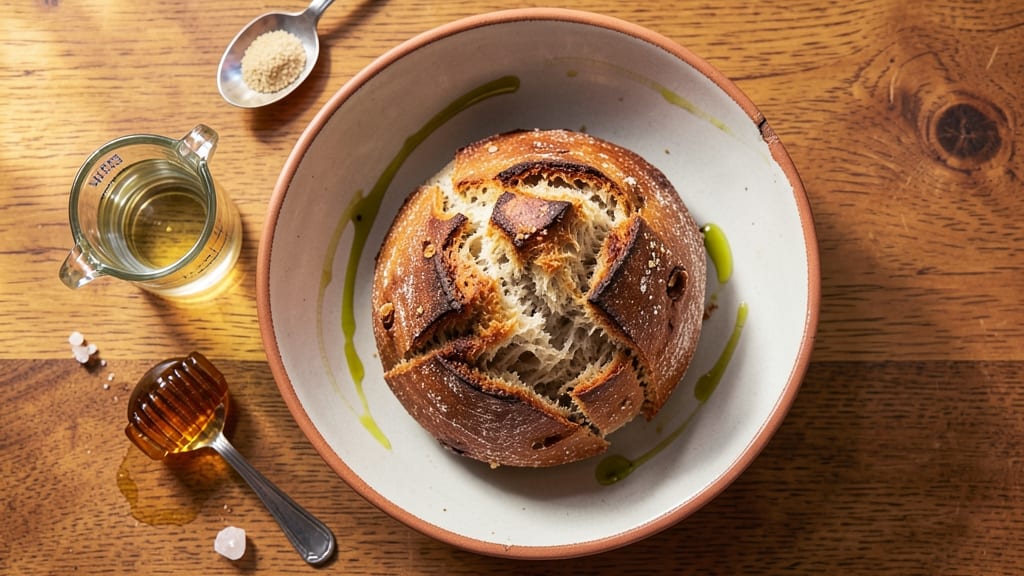
Mastering a basic whole wheat bread recipe transforms your kitchen into a bakery without the complexity. This no-knead method delivers a crusty loaf with a satisfying tang—perfect for sandwiches or toast. I’ve refined it over years to ensure consistent results, even with whole wheat flour’s quirks.
The secret lies in precise hydration and yeast activation. You’ll work with a simple mix of whole wheat flour, water, yeast, and a touch of honey for depth.
No stand mixer required—just a bowl, a bit of patience, and a 400°F oven to create that golden crust. The dough rests overnight, developing flavor while you sleep.
By morning, you’ll shape a loaf that bakes into a crusty exterior with a soft, airy crumb—no dense, heavy texture here. The tangy notes from whole wheat shine through, making every slice worth the wait. This recipe builds confidence for home bakers while delivering restaurant-quality bread.
Store leftovers in a bread bag for up to 5 days or freeze for longer shelf life. Try adding seeds or herbs for extra texture—this loaf adapts effortlessly. Let’s bake your first perfect batch.
Ingredients for basic whole wheat bread
Eight simple ingredients transform your kitchen into a bakery with this no-knead whole wheat masterpiece.
| Ingredient | Amount | Notes |
|---|---|---|
| Whole Wheat Flour 🌾 | 4 cups | Unbleached preferred for better flavor |
| Warm Water 💧 | 2 ½ cups | 105-110°F for yeast activation |
| Active Dry Yeast 🍞 | 2 ¼ tsp | Freshly opened for best results |
| Honey 🍯 | 1 tbsp | Light amber preferred for balance |
| Diamond Crystal Kosher Salt 🧂 | 1 ½ tsp | Fine grain for even distribution |
| Extra-Virgin Olive Oil 🫒 | 1 tbsp | For dough shaping and crust |
| Cornmeal 🌽 | ¼ cup | For dusting loaf pan |
| Ice Water ❄️ | ¼ cup | For final dough adjustment |
The whole wheat flour is where flavor begins—King Arthur or Bob’s Red Mill are my go-tos for consistent results. Avoid pre-milled flours that lose vitality after a few weeks. If your local store doesn’t carry whole wheat, Trader Joe’s or Whole Foods bulk bins are reliable. The yeast must be active dry (not instant) for this recipe—test it by mixing with warm water and a pinch of sugar. If it foams within 5 minutes, you’re good. Honey adds depth but don’t substitute maple syrup—it alters fermentation. For the olive oil, California Avocado Ranch brand has the perfect fruity balance without overpowering.
No honey? Maple syrup at half the amount works, but expect slightly different fermentation. Running short on yeast? Instant yeast at 75% the amount is a direct swap, but adjust the water slightly—it activates faster. The cornmeal is non-negotiable for that perfect crust release. If you’re out, semolina works too. For the ice water, grab a tray of cubes from your freezer—no need for measuring. Pro tip: If your dough feels sticky after mixing, add 1 tbsp more flour before shaping. And if you’re worried about whole wheat density? Let it rest overnight—that’s when the magic happens.
This dough keeps 24 hours in the fridge before shaping—perfect for a lazy Sunday bake. Once baked, cool completely on a wire rack (no cutting warm bread!). Store wrapped in a bread bag for 5 days or freeze sliced for 3 months. For reheating, wrap slices in foil and warm in a 350°F oven for 5 minutes. The crust stays crispy, the crumb stays tender. Make a double batch—this bread disappears faster than you’d think.
Why You'll Love This Recipe
- No-Fuss Mixing: I swear by this dough—just toss the warm water, honey, and yeast together first, let it bubble for five minutes, then fold in the flour. No stand mixer, no stress, just a big bowl and my hands. The honey dissolves instantly, and the dough comes together smoother than I expected from whole wheat.
- Golden Crust Secret: That honey isn’t just sweet—it caramelizes into a crackly crust while keeping the inside tender. I’ll be real: the first loaf I baked had a slightly uneven top, but the flavor? Ridiculously good. The salt cuts through the sweetness just enough to make it feel sophisticated, not basic.
- Weeknight Workhorse: This bread is my go-to for sandwiches, toast, or even crumbled over salads. Honestly, I make a double batch on Sundays and freeze half—thawed slices toast up just as well as fresh. It’s the kind of bread that disappears faster than I can say "open-faced turkey."
- Pantry Staple Power: Five ingredients, all of which I already have. The yeast activates in minutes, the flour’s nutty depth costs less than half what store-bought charges, and the leftovers? They last a week in the fridge or months in the freezer. My budget—and my lunchbox—thank me every time.
Step-by-step instructions for no-knead whole wheat bread
Here's how to create a rustic, flavorful loaf with minimal effort and maximum depth.
Activate the Yeast with Warm Water and Honey
In a large mixing bowl, combine the 2.5 cups warm water (between 105-110°F) with the 1 tbsp honey and 2.25 tsp active dry yeast. Stir gently with a wooden spoon and let sit for 5-7 minutes until you see frothy bubbles forming on the surface. This proves your yeast is alive and ready to work.
I always use a glass bowl for this step so I can easily spot the bubbles against the light. If no bubbles appear after 10 minutes, your yeast may be inactive—start over with fresh yeast. The honey here serves a dual purpose: it feeds the yeast while adding subtle sweetness that balances the whole wheat flavor.
Mix the Dough with Flour, Salt, and Olive Oil
Add the 4 cups whole wheat flour and 1.5 tsp diamond crystal kosher salt to the yeast mixture. Stir vigorously for 2-3 minutes until a shaggy dough forms. Then add the 1 tbsp extra-virgin olive oil and mix another 1-2 minutes until the dough comes together and pulls away from the sides of the bowl.
The whole wheat flour will be denser than white flour, so don't be surprised if the dough feels slightly sticky. This is normal—whole wheat absorbs more moisture. If the dough feels too dry, add 1 tablespoon of ice water at a time until it reaches a soft, slightly tacky consistency that holds together when pressed.
Let the Dough Rest and Develop Flavor
Cover the bowl with a damp kitchen towel and let the dough rest at room temperature for 1-2 hours. You'll know it's ready when it has nearly doubled in size and feels noticeably lighter when pressed gently with your finger. This resting period allows the gluten to relax and the flavors to meld.
I like to place the bowl in a slightly warm spot (like near the oven with the light on) to encourage fermentation. Avoid cold drafts—consistent warmth is key for even rising. If your kitchen is very cold, extend the resting time to 2.5 hours to ensure proper development.
Shape and Final Proof in the Loaf Pan
Lightly grease a 9x5-inch loaf pan with olive oil, then dust it generously with 0.25 cup cornmeal. Turn the rested dough onto a lightly floured surface and gently shape it into a rectangle about 12x8 inches. Fold the long sides toward the center, then roll it tightly from the short end to form a log shape.
Place the shaped dough seam-side down into the prepared loaf pan. Cover again with the damp towel and let it rise for another 30-45 minutes until it has expanded to fill about 75% of the pan's height. The dough should feel springy when pressed lightly—this indicates it's ready for baking.
Bake for a Crusty, Tangy Loaf
Preheat your oven to 375°F. Before baking, use a sharp knife or razor to score the top of the dough in a simple crosshatch pattern (about ¼-inch deep). This helps control the expansion and creates that beautiful rustic crust.
Bake for 40-45 minutes until the bread is deep golden brown and sounds hollow when tapped on the bottom. For the crispiest crust, I recommend baking for the full 45 minutes even if it seems done earlier. Remove from the oven and let cool in the pan for 10 minutes, then transfer to a wire rack to cool completely.
Pro Tips For Making Basic Whole Wheat Bread
- Weigh Your Flour: I learned this the hard way—measuring whole wheat flour by scooping from the bag packs in way too much air. Use a kitchen scale for accuracy; that extra 10-20 grams of flour makes your dough stiff and dense. (Yes, even if you’re impatient like me.)
- Bloom the Yeast in Honey Water: Skip the dry yeast straight into the flour—it won’t activate as well. Mix the yeast, honey, and warm water (110°F) first, then let it sit for 5-10 minutes until frothy. This guarantees your bread rises properly, especially with whole wheat’s heavier texture.
- Don’t Over-Knead: Whole wheat dough fights back—it’s tougher than white flour dough. Stop kneading once it springs back slowly when poked (about 8-10 minutes by hand). Overworking it develops gluten too much, making your bread gummy instead of light.
- Use a Dutch Oven for Crust: If you’re baking in a home oven, a Dutch oven makes all the difference. Place the loaf inside, cover with the lid, and bake for 20 minutes before uncovering. This traps steam for a crisp crust and even rise—no fancy equipment needed.
Regional styles of this dish
Italian Rustic Bread
This variation replaces whole wheat flour with a mix of 70% bread flour and 30% semolina flour, creating a lighter, more open crumb with a crispier crust. I add 1 tbsp dried rosemary and 1 tsp garlic powder to the dough for Italian flair.
Shape the loaf into a free-form oval instead of a log, and bake at 425°F for 30 minutes before reducing to 375°F for another 20 minutes. The high heat creates that iconic Roman-style crust. 🌿
German Pumpernickel Twist
For a denser, sweeter loaf, swap half the whole wheat flour for rye flour and add 2 tbsp molasses to the dough. German bakers often use 1.75% sourdough starter instead of yeast—replace the yeast with 1 cup active sourdough starter for authentic tang.
Bake in a 9x5-inch loaf pan at 350°F for 60-75 minutes until the internal temperature reaches 205°F. The slow bake develops deep, caramelized flavors. ⏳
French Fougasse Adaptation
Transform your loaf into a rustic fougasse by shaping the dough into a round and dimpling it with your fingers. Add 1 tbsp coarse sea salt and 2 tbsp chopped fresh herbs (like thyme or oregano) before baking.
Brush the top with extra-virgin olive oil and bake at 400°F for 25-30 minutes. The olive oil creates a golden, crispy crust while keeping the interior tender. Serve warm with herbed goat cheese for a Provençal touch. 🥖
Swedish Cardamom Bread
Infuse your loaf with Scandinavian warmth by adding 1 tbsp ground cardamom to the dough and replacing honey with 1 tbsp maple syrup. Swedish bakers often use whole milk instead of water—swap the water for 2.5 cups warm whole milk for a richer flavor.
Bake in a 9x5-inch loaf pan lined with parchment paper for easy removal. The cardamom adds a fragrant, slightly citrusy note that pairs beautifully with butter. 🌸
Southern-Style Cornbread Loaf
Give your whole wheat bread a Southern twist by mixing in 1 cup fine cornmeal and 1 cup buttermilk (replace half the water). Add 1 tsp baking soda to the dough for extra lift.
Shape into a round and bake on a cornmeal-dusted baking sheet at 375°F for 35-40 minutes. The result is a tender, slightly sweet loaf with a crumbly texture—perfect for cornbread lovers. Top with honey butter for a classic combo. 🌽
Nutrition facts
Frequently asked questions
Why does my whole wheat dough feel sticky?
Whole wheat flour absorbs more moisture than white flour, making the dough naturally stickier. This is normal! Use a lightly floured surface when shaping, and add extra flour 1 tablespoon at a time only if needed. Avoid over-flouring, as it can make the bread dense. The dough should remain slightly tacky but manageable.
Can I substitute white flour for whole wheat?
Yes, but expect different texture and flavor. Replace 50% of the whole wheat flour with all-purpose flour for a lighter loaf. For a 1:1 swap, add 1-2 extra tablespoons of water since whole wheat needs more hydration. The crust will be less dense, but the tangy whole wheat flavor will diminish.
What if my dough doesn't rise properly?
Check these three things first: yeast freshness (test with warm water and sugar), water temperature (105-110°F is ideal), and room warmth (avoid cold drafts). If the dough rises slowly, extend the resting time up to 3 hours in a warm spot. For future bakes, store yeast in the fridge or freezer to preserve potency.
How do I store leftover whole wheat bread?
Wrap cooled bread tightly in a bread bag or aluminum foil to retain freshness for 3-5 days at room temperature. For longer storage, slice and freeze for up to 3 months. To revive, warm slices in a 350°F oven for 5-7 minutes wrapped in foil. Whole wheat bread freezes better than it keeps at room temperature.
Can I add seeds or nuts to this recipe?
Mix in ½ cup seeds (sunflower, pumpkin, or flax) or 1 cup chopped nuts (walnuts, pecans) with the flour. For extra crunch, toast seeds/nuts at 350°F for 8-10 minutes before adding. Add 1 extra tablespoon of water if the dough feels dry. These additions work best in the final dough before shaping.