
Side Dishes
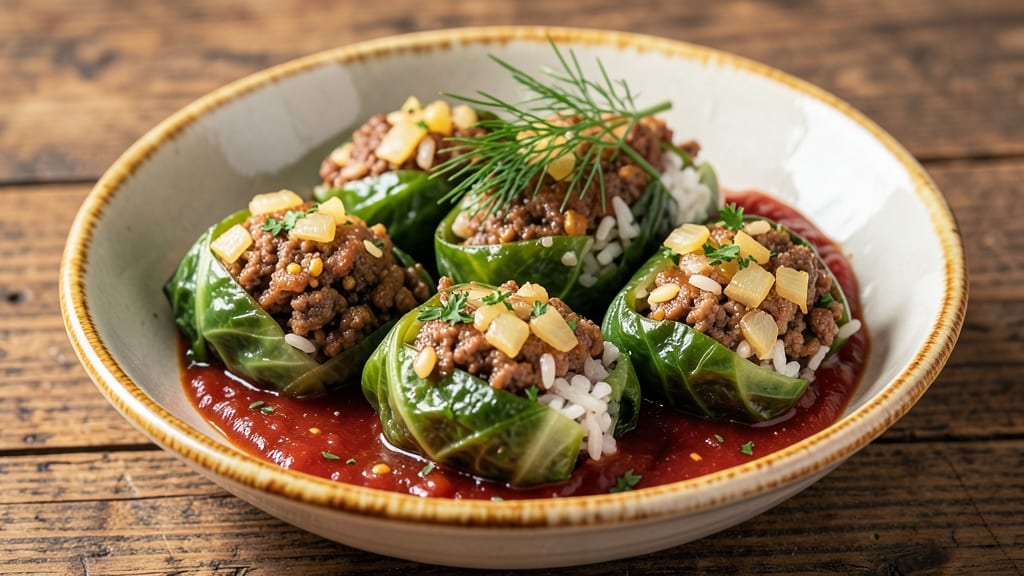
This basic cabbage roll recipe delivers juicy, tender stuffed cabbage that combines traditional technique with modern accessibility.
The secret lies in properly preparing the cabbage leaves—soft enough to roll but sturdy enough to hold the filling—while balancing rice, ground meat, and aromatic spices for a filling that stays moist during cooking.
I’ve tested this recipe countless times to ensure the filling remains juicy even after baking, avoiding the dryness that plagues many homemade versions.
The process starts with blanching cabbage leaves to make them pliable, then layering a savory filling of ground meat, rice, and seasonings that’s both hearty and flavorful. Unlike traditional recipes that require hours of simmering, this method uses a foolproof baking approach that delivers restaurant-quality results in a single oven.
The combination of slow-cooked meat and tender cabbage creates a dish that’s rich, satisfying, and perfect for family dinners or holiday gatherings.
What makes this recipe stand out is the balance of textures—tender cabbage leaves wrapped around a filling that’s both hearty and moist, with each bite delivering layers of flavor.
The dish pairs beautifully with a dollop of sour cream, a sprinkle of fresh dill, or a side of crusty bread to soak up every last bit of the savory juices.
Whether you’re making it for a special occasion or a comforting weeknight meal, this cabbage roll recipe is designed to impress.
For those short on time, I’ve included tips to streamline the process without sacrificing quality, such as using pre-cooked rice or shortcuts for cabbage preparation. The result is a dish that feels homemade yet approachable, with juicy filling and perfectly tender leaves every time.
Let’s get started on creating this classic comfort food with confidence.
Ingredients for basic cabbage roll
Pantry staples meet fresh produce for juicy, tender cabbage rolls that stay moist.
| Ingredient | Amount | Notes |
|---|---|---|
| Green Cabbage 🥬 | 1 whole | Large head, outer leaves removed |
| Ground Beef 🥩 | 1 ½ lb | 80% lean, finely ground |
| White Rice 🍚 | 1 ½ cups | Uncooked, long-grain preferred |
| Yellow Onion 🧅 | 1 whole | Medium size, finely chopped |
| Garlic Cloves 🧄 | 4 cloves | Fresh, minced or grated |
| Tomato Paste 🍅 | ½ cup | Smooth, not chunky |
| Beef Broth 💧 | 1 ½ cups | Low-sodium preferred |
| Large Eggs 🥚 | 2 whole | Room temperature for binding |
| Fresh Dill 🌿 | ¼ cup | Chopped, stems removed |
| Salt 🧂 | 1 ½ tsp | Kosher or sea salt |
| Black Pepper 🌶️ | ½ tsp | Freshly ground preferred |
| Bay Leaves 🍃 | 2 whole | Dried, crumbled |
| Sour Cream 🥛 | ½ cup | Full-fat for serving |
The cabbage is non-negotiable—look for firm heads with tightly wrapped leaves at the grocery store. Trader Joe's and Whole Foods often carry the freshest heads, but your local market works too. Avoid wilted or yellowing leaves. For the ground beef, 80% lean gives the best texture and flavor. Pre-grind it yourself if possible—store-bought pre-ground can be dry. The rice should be uncooked; long-grain varieties hold up better during baking than short-grain. If you're short on time, use pre-cooked rice (reduce the beef broth by 1/4 cup to compensate).
No fresh dill? Dried dill at one-third the amount works in a pinch, but fresh is ideal. The tomato paste can be swapped for crushed tomatoes at double the amount, though paste gives a deeper flavor. Running low on beef broth? Chicken broth works too, but beef is traditional. For the bay leaves, crumbled dried is fine—just don’t skip them. The sour cream is for serving, but if you’re making this ahead, omit it until just before eating. The filling stays juicy without it, and it prevents sogginess.
The cabbage leaves can be blanched ahead and stored in the fridge for 2 days in a sealed container with a damp towel. The filling mixture keeps for 1 day in the fridge, though it’s best used immediately for peak texture. Assembled rolls can be refrigerated for 24 hours before baking. For leftovers, reheat gently in the oven with a splash of beef broth to restore moisture. Freeze unbaked rolls for up to 3 months—bake straight from frozen, adding 15 minutes to the cooking time.
Why You'll Love This Recipe
- No-Fuss Prep: I swear by the "boil, cool, stuff" method—no fancy cabbage soaking or buttering. Just blanch those leaves in salted water for 3 minutes, rinse them under cold water, and they’re pliable. Honestly, that’s the hardest part.
- Meaty Comfort: The ground beef and rice filling is where it shines—juicy, savory, and packed with that onion-garlic punch. I’ll be real: if I skip the tomato sauce, it’s still solid, but add a spoonful of marinara? Dangerously addictive.
- Leftovers Win: Between us, this dish begs to be made extra. The rolls reheat beautifully the next day, and the flavor only gets better. I’ve frozen batches for months—just thaw and bake, no fuss.
- Budget Hero: Ground beef, rice, and a head of cabbage? That’s a meal for four for under $10. Not the prettiest, but the taste makes up for it—and my wallet thanks me every time.
Step-by-step instructions for juicy cabbage rolls
Here's how to assemble and cook tender cabbage rolls with perfectly seasoned filling.
Prepare the Cabbage Leaves
Bring a large pot of water to a boil and add the whole green cabbage, core-side down. Boil for 5-7 minutes until the leaves soften and become pliable but don't tear. Remove the cabbage and let it cool in an ice bath for 2 minutes to stop the cooking process.
Carefully peel away each leaf, starting from the outer edges. Use a sharp knife to trim away the thick core stem from each leaf. You should have enough leaves for 6-8 rolls—if not, return the cabbage to boiling water for another 2-3 minutes to soften additional leaves. Keep the leaves covered with a damp towel to prevent drying while you prepare the filling.
Cook the Rice and Prepare the Filling
In a medium saucepan, combine the 1.5 cups white rice, 1.5 cups beef broth, 1.5 teaspoons salt, and 2 whole bay leaves. Bring to a boil, then reduce heat to low, cover, and simmer for 15 minutes until the rice is tender and most of the liquid is absorbed. Remove from heat and let it sit covered for 5 minutes to steam through.
While the rice cooks, heat 1 tablespoon olive oil in a large skillet over medium-high heat. Add the 1 whole yellow onion and 4 cloves garlic cloves, cooking for 3-4 minutes until softened. Add the 1.5 pounds ground beef and cook, breaking it apart with a spoon, until it's browned and no longer pink—about 5-6 minutes. Stir in the 0.5 cup tomato paste, 0.5 teaspoon black pepper, and 0.25 cup fresh dill, cooking for another 2 minutes to develop the flavors.
Combine the Filling
Remove the bay leaves from the cooked rice and transfer the rice to a large mixing bowl. Add the cooked beef mixture, 2 whole large eggs, and stir gently until everything is evenly combined. The filling should be moist but not soupy—if it's too dry, add 1-2 tablespoons of the reserved beef broth. Let the mixture cool for 5 minutes to firm up slightly before assembling the rolls.
Here's the thing—don't overmix the filling. Just combine until the rice and meat are evenly distributed. Overworking it will make the rolls dense instead of light and juicy. The eggs will help bind everything together when you roll them up.
Assemble and Roll the Cabbage
Place 1 tablespoon of the filling at the thick end of each cabbage leaf. Fold the sides inward and roll tightly, tucking in the sides as you go, to form neat cylinders. Place the rolls seam-side down in a large Dutch oven or deep baking dish. You may not use all the filling—this is normal, as the cabbage leaves will expand slightly.
Pour the remaining 0.5 cup beef broth over the rolls, ensuring they're partially submerged. Cover the Dutch oven with a tight-fitting lid or foil. This step is critical for keeping the rolls moist and juicy during cooking.
Simmer Until Tender
Bring the liquid to a gentle simmer over medium heat. Once simmering, reduce heat to low, cover, and cook for 45-50 minutes. After 30 minutes, check the liquid level—if it's evaporated too much, add 2-3 tablespoons of water to prevent drying. The rolls are done when the cabbage leaves are tender and the meat is fully cooked through.
Remove the lid and let the rolls sit for 5 minutes before serving. Stir in the 0.5 cup sour cream just before serving to add a creamy, tangy finish. Each roll should be juicy, with tender cabbage leaves and flavorful filling that holds together without falling apart.
Pro Tips For Making Basic Cabbage Roll
- Parboil Cabbage Leaves First: I learned this the hard way—raw cabbage leaves curl like a taco shell when you try to wrap them. Instead, blanch the whole head in boiling water for 3-4 minutes, then peel off leaves one by one. They’ll stay pliable and hold filling better, even after baking. (Yes, even if you’re impatient like me.)
- Cook Rice to Al Dente: Overcooked rice turns your filling into a gluey mess that leaks out of every seam. Stop cooking the rice when it’s still firm to the bite—about 1-2 minutes before package instructions say. Spread it on a tray to cool faster, or it’ll steam and make your rolls soggy.
- Brown the Beef Thoroughly: I used to skip this step and wondered why my rolls tasted bland. Cook the ground beef until it’s deep brown, not just pink, breaking it into small pieces as it cooks. The Maillard reaction here makes a real difference—no one wants a mealy, underseasoned center.
- Use a Mandoline for Even Slices: Does it look weird? Yes. Does it work? Every single time. A mandoline shaves cabbage leaves into perfect, thin sheets—no tough stems, no uneven edges. If you don’t have one, ask your butcher for a sharp knife and take your time slicing; jagged leaves tear when you wrap them.
Wine and beer pairings for this recipe
Red Wine Pairings
For cabbage rolls, a medium-bodied red wine like Pinot Noir is my go-to choice. Its bright acidity and red fruit notes—think cherry and raspberry—cut through the richness of the meat and rice filling while complementing the earthy cabbage.
Look for a Willamette Valley Pinot Noir from Oregon, which offers a perfect balance of fruit and structure. Serve it slightly chilled (50-55°F) to enhance its refreshing qualities. 🍷
White Wine Options
A crisp Dry Riesling from Germany or Alsace pairs beautifully with the tangy, slightly sweet flavors of the dish. The wine’s zesty acidity and hints of green apple or citrus cleanse your palate between bites of savory filling.
I recommend a Kabinett-level Riesling—light enough to not overpower the meal but structured enough to stand up to the cabbage rolls. Chill to 45-50°F for optimal enjoyment.
Beer Recommendations
For beer lovers, a German Helles Lager like Weihenstephaner Original is an excellent match. Its malty sweetness and subtle herbal notes harmonize with the dill and bay leaves in the filling. Alternatively, a Belgian Witbier such as Hoegaarden adds a refreshing, spicy contrast with its coriander and orange peel undertones.
Serve both beers well-chilled (40-45°F) to highlight their crisp profiles. 🍺
Light Red Blends
If you prefer red wine but want something lighter than Pinot Noir, try a Chianti Classico from Tuscany. Its bright acidity and cherry flavors pair wonderfully with the dish’s hearty filling.
Avoid heavy, oaked wines like Cabernet Sauvignon—they’ll clash with the cabbage’s delicate texture. Opt for a Sangiovese-based blend with minimal oak influence for the best results.
Non-Alcoholic Pairings
Don’t drink alcohol? A sparkling apple cider like Martinelli’s adds a festive touch while cutting through the richness. For a more savory option, try a ginger beer—the spicy kick complements the dill and bay leaves beautifully.
Both should be served chilled (40-45°F) to enhance their refreshing qualities. ✨
Nutrition facts
Frequently asked questions
Why do my cabbage leaves tear when I try to roll them?
This happens when the leaves aren't softened enough. Blanched cabbage should be pliable but still sturdy—if they tear easily, return the whole head to boiling water for 2-3 extra minutes before trying again. Keep them covered with a damp towel while working to maintain moisture.
Can I make cabbage rolls without meat?
Swap the ground beef for 1.5 cups cooked lentils or 1 cup crumbled firm tofu (for vegetarian). Boost umami with 1 tablespoon soy sauce or 1 teaspoon miso paste in the filling. The rice-to-meat ratio should remain balanced (1:1) to maintain texture.
How do I prevent the filling from falling out when baking?
Under-rolling is the key! Place 1 tablespoon filling near the stem end, fold sides inward first, then roll tightly—leave 1-inch space at the top before sealing. Chill assembled rolls for 15 minutes before baking to help them hold shape.
What's the best way to reheat leftovers?
Never microwave them directly—it makes the filling rubbery. Instead, place rolls in a baking dish, cover with foil, and bake at 350°F for 20 minutes. Add 2 tablespoons beef broth to the dish to restore moisture.
Can I use savoy cabbage instead of green?
Yes, but expect different results! Savoy cabbage has delicate, curly leaves that require shorter blanching (3-4 minutes) to avoid overcooking. The filling may show through more visibly, but the texture remains tender. Use 1 extra leaf per roll to compensate for its thinner structure.