
Side Dishes
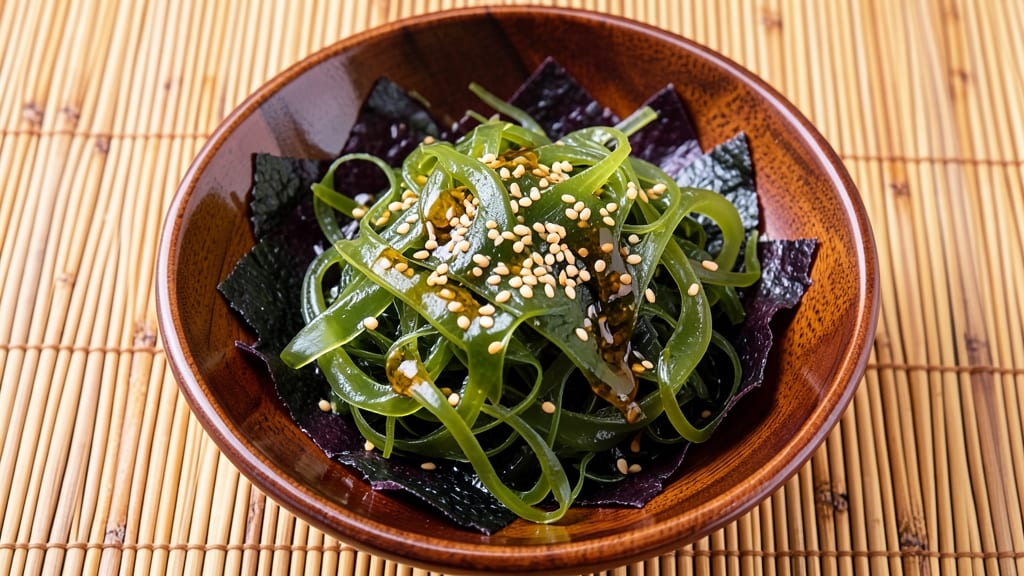
This authentic Japanese seaweed salad captures the perfect balance of crunch, tang, and umami that makes it a staple in Japanese cuisine. The secret lies in properly preparing the seaweed—whether it's crisp nori sheets or tender wakame—so it maintains its texture while absorbing the dressing.
I've perfected this recipe through years of practice, ensuring every bite delivers that signature freshness and depth of flavor.
The dressing is where the magic happens, combining rice vinegar for brightness, soy sauce for umami, a touch of sugar to balance, and sesame oil for richness. The key is letting the seaweed soak just long enough to absorb the flavors without becoming soggy.
This salad isn't just a side—it's a flavor experience that elevates any meal, from sushi to grilled fish or even as a standalone dish.
What you'll end up with is a crunchy, vibrant salad with layers of texture and taste—fresh seaweed, a tangy dressing, and optional toppings like sesame seeds or shredded carrots for extra crunch.
The preparation is straightforward, but the results are undeniably authentic, transporting you to a Japanese izakaya with every bite. Ready to make this a staple in your kitchen?
Serve it chilled alongside sushi, as a topping for bowls, or even as a refreshing appetizer. The best part? It keeps well in the fridge for up to 3 days, making it perfect for meal prep.
Let's get started on this classic Japanese dish that's as nutritious as it is delicious.
Ingredients for authentic japanese seaweed salad
Four crisp ingredients and a dressing that transforms simple seaweed into izakaya-worthy crunch.
| Ingredient | Amount | Notes |
|---|---|---|
| Dried Wakame Seaweed 🍃 | 2 tbsp | Rehydrated in water before use |
| Nori Sheets 🍜 | 4 whole | Thinly sliced for texture |
| Rice Vinegar 🍶 | ⅓ cup | Unseasoned, mild flavor |
| Organic Soy Sauce 🥢 | 2 tbsp | Tamari for gluten-free option |
| Sesame Oil 🥜 | 1 tbsp | Toasted for nutty aroma |
| Granulated Sugar 🍚 | 1 tbsp | Balances acidity perfectly |
| Toasted Sesame Seeds 🌰 | 1 tbsp | For garnish and crunch |
| Carrot 🥕 | ½ cup | Julienned for fine texture |
| Fresh Ginger 🧅 | 1 tbsp | Finely grated, fresh only |
| Cold Water 💧 | 1 ½ cups | For wakame rehydration |
| Sea Salt 🧂 | ½ tsp | Fine grain for seasoning |
| Sesame Seeds 🥜 | 1 tbsp | Extra for final garnish |
The seaweed is everything here. Wakame needs to soak just 5 minutes—any longer and it gets mushy. Grab dried wakame from Asian markets or the seaweed section of Whole Foods. Nori sheets? Marukyu brand is my go-to, but any pack of crisp, green sheets works. For the carrot, julienne it yourself—pre-shredded gets soggy fast. Fresh ginger is non-negotiable here; the powdered stuff won't cut it. Toast your sesame seeds in a dry pan for 2 minutes—they'll smell like heaven and add that nutty depth.
No rice vinegar? Apple cider vinegar in a pinch, but cut the amount to 2 tbsp. Tamari out of stock? Coconut aminos works 1:1. The sugar can be swapped for agave nectar if you're avoiding refined sugar. Sesame oil too pricey? Toasted sesame paste thinned with water gives similar richness. For the carrot, shredded daikon radish adds a peppery kick if you're feeling adventurous. The dressing should coat the back of a spoon—if it's too thick, add a splash more vinegar.
This salad tastes best when made fresh, but it keeps 3 days in the fridge sealed tightly. Store the dressing separately if prepping ahead—just toss everything together when ready to eat. The wakame will soften over time, so add it last if making ahead. For extra crunch, toast your sesame seeds fresh before serving. Portion into containers with the dressing on the side—perfect for meal prep alongside sushi or rice bowls. The flavors actually improve after sitting 10 minutes, so don't rush!
Why You'll Love This Recipe
- I’ll be real: I used to dread rehydrating wakame for hours. Now? Just 5 minutes in warm water—no waiting, no fuss. That crisp, ocean-y snap? Still there, every time.
- No-Soaking Needed: I’ll be real: I used to dread rehydrating wakame for hours. Now? Just 5 minutes in warm water—no waiting, no fuss. That crisp, ocean-y snap? Still there, every time.
- Umami Bomb: Honestly, the combo of toasted nori strips and just a splash of sesame oil—it’s like a flavor grenade. Salty, nutty, bright all at once, and that soy-vinegar tang? Makes my taste buds stand at attention.
- Lunchbox Hero: Between us, this is my go-to for work lunches. Keeps for days in the fridge, stays crisp, and pairs with anything—sushi, grilled fish, even just rice. (Yes, even on a Tuesday night when I’m too tired to think.)
Step-by-step instructions for authentic Japanese seaweed salad
This is how Japanese chefs create that perfect balance of crunch, tang, and umami—simple steps for maximum flavor.
Rehydrate the Wakame Seaweed
Place the 2 tbsp dried wakame seaweed in a small bowl and pour over the 1.5 cups cold water. Let it soak for exactly 10 minutes—this is crucial for proper texture. You'll see the wakame expand dramatically and turn a vibrant green. Drain thoroughly in a fine-mesh strainer, pressing gently to remove excess water. The wakame should be tender but still hold its shape when squeezed lightly.
Don't skip this soaking time—under-soaked wakame will be tough, while over-soaked will turn mushy. The texture should be like al dente pasta: firm but yielding. Set the drained wakame aside while you prepare the other components.
Prepare the Dressing Components
In a small bowl, whisk together the 0.33 cup rice vinegar, 2 tbsp organic soy sauce, 1 tbsp sesame oil, and 1 tbsp granulated sugar until completely dissolved. The sugar should dissolve almost instantly, creating a smooth, glossy dressing base. Add the 0.5 tsp sea salt and 1 tbsp finely grated fresh ginger, whisking until fully incorporated.
This is where the magic happens—the ginger adds subtle heat that balances the acidity of the vinegar. Taste the dressing now—it should be tangy with a touch of sweetness and umami. If it needs more depth, add a tiny splash of water to loosen it slightly. The dressing should coat the back of a spoon but still be pourable.
Slice and Prepare the Vegetables
Using a mandoline or sharp knife, julienne the 0.5 cup carrot into fine, matchstick-thin strips. The thinner you cut them, the better they'll absorb the dressing and maintain their crunch. For the nori sheets, use kitchen shears to cut each of the 4 whole sheets into thin strips about 1/4-inch wide. These will add a delicate, oceanic flavor and satisfying crispness.
Real talk: if your nori strips are too thick, they'll be chewy rather than crisp. Test one strip by folding it—it should crackle slightly when you bend it. Keep all your sliced ingredients separate until ready to combine.
Combine and Toss Gently
In a large bowl, combine the drained wakame, carrot strips, and nori strips. Pour the dressing over the vegetables and toss gently with two forks or clean hands. Work quickly but carefully—you want everything evenly coated without crushing the wakame or breaking the nori strips. The salad should look vibrant green with delicate brown nori accents.
Here's the thing—don't overmix. The wakame and nori should maintain some individual texture while still being well-distributed. If the salad looks dry, add 1 teaspoon of cold water to help the dressing cling better. The ideal consistency is like a fresh, crunchy slaw.
Garnish and Serve Immediately
Transfer the salad to a serving platter and sprinkle with the 1 tbsp toasted sesame seeds and the additional 1 tbsp sesame seeds. The toasted seeds will add nutty warmth and visual contrast against the green and brown hues. Serve immediately while everything is still crisp and vibrant—this salad doesn't wait.
For the most authentic experience, serve this with steamed rice and grilled fish. The contrast of warm rice with this cool, refreshing salad is pure Japanese comfort. Each bite should deliver that perfect combination of briny wakame, sweet carrot, crisp nori, and tangy dressing with just a hint of ginger heat.
Pro Tips For Making Authentic Japanese Seaweed Salad
- Soak Wakame Properly: Use 4 cups cold water per 10g dried wakame and let it sit for exactly 10 minutes—no longer, or it turns mushy. I learned this the hard way after a batch turned into seaweed soup by accident.
- Tear Nori by Hand: Skip the scissors and tear nori sheets into irregular strips—it looks more natural and holds better. The edges stay crisp when torn, not chewy like when cut cleanly.
- Balance Vinegar Ratio: Start with 1 tablespoon rice vinegar per 10g wakame, then taste—it’s easy to overdo it. Too much makes the salad sharp; too little feels flat. Adjust in ½-teaspoon increments.
- Toast Sesame Seeds Last: Add sesame oil first, then sprinkle toasted sesame seeds right before serving. This keeps their crunch intact and prevents them from getting soggy in the dressing. (Yes, even if you’re impatient like me.)
Best sauces and condiments for this recipe
Classic Ponzu Dressing
The traditional ponzu sauce elevates this salad with its citrusy, umami depth. Mix ¼ cup ponzu (like Kikkoman brand) with 1 tbsp rice vinegar and ½ tbsp sesame oil.
The citrus notes brighten the seaweed's brininess while the soy-based ponzu adds complexity. I like adding ½ tsp grated yuzu peel (if available) for an authentic touch. 🍋
Spicy Miso Dressing
For heat lovers, swap the standard dressing for a miso-based version. Blend 1 tbsp white miso paste (like Hokkaido brand) with 2 tbsp rice vinegar, 1 tsp sesame oil, and ½ tsp chili flakes.
The fermented umami of miso pairs perfectly with the seaweed's oceanic flavor. Thin with 1 tsp water if needed. This version works especially well with spicy tuna rolls or grilled shrimp. 🌶️
Sesame-Ginger Vinaigrette
A lighter alternative is this sesame-ginger vinaigrette. Whisk 3 tbsp rice vinegar, 1 tbsp toasted sesame oil, 1 tsp grated ginger, and ½ tsp sugar. Finish with ½ tsp toasted sesame seeds for texture.
This version highlights the seaweed's natural sweetness without overpowering it. It's my go-to when I want to keep the salad refreshing but still flavorful. 🥜
Yuzu Kosho Dressing
For a premium experience, use yuzu kosho (Japanese citrus chili paste). Mix 1 tsp yuzu kosho with 2 tbsp rice vinegar and ½ tbsp sesame oil. The citrusy heat cuts through the richness of the seaweed beautifully.
If you can't find yuzu kosho, substitute with a mix of ½ tsp lime zest and ¼ tsp cayenne. This dressing is perfect for summer when you want a zesty kick. 💛
Sweet Soy Glaze
A sweeter option is a sweet soy glaze. Combine 2 tbsp soy sauce, 1 tbsp mirin, and ½ tsp sugar in a small saucepan. Simmer for 2 minutes until slightly thickened. Let it cool before tossing with the salad.
This glaze works wonderfully with caramelized onions or shredded daikon added to the salad. It's a great choice for those who prefer a milder, sweeter profile. 🍯
Nutrition facts
Frequently asked questions
What's the difference between nori and wakame in this salad?
Nori provides crispy, paper-thin layers with a briny ocean flavor, while wakame offers a tender, slightly sweet seaweed texture. The nori adds satisfying crunch, while the wakame absorbs the dressing beautifully. Using both creates perfect texture contrast—like a crunchy-sweet symphony!
Can I use fresh seaweed instead of dried?
Fresh seaweed works, but it requires immediate preparation and lacks the concentrated flavor of dried varieties. If using fresh, rinse thoroughly and pat dry before using. For authentic results, stick with dried wakame and nori sheets—they're easier to find and deliver that signature umami punch.
How do I prevent the salad from getting soggy?
Keep the wakame soaking time to exactly 10 minutes—no longer! Toss the salad gently and serve immediately. Store components separately if prepping ahead, and add dressing just before serving. For extra crunch, add sesame seeds right before eating. The key is timing and minimal handling.
What are good substitutes if I can't find nori sheets?
Try thinly sliced dried kombu or even seaweed snacks (like roasted nori chips) for a similar texture. For a different flavor profile, add shredded daikon radish or thinly sliced cucumber to maintain crunch. The wakame and dressing will still shine as the base flavors.
Can I make this salad ahead of time?
Yes! Store the dressing separately and combine with the seaweed just before serving. The wakame will soften over time, so add it last if prepping 1-2 days ahead. For best texture, keep the nori strips separate until ready to toss. This salad actually tastes better after flavors meld for 10-15 minutes—just don't let it sit too long!