Desserts
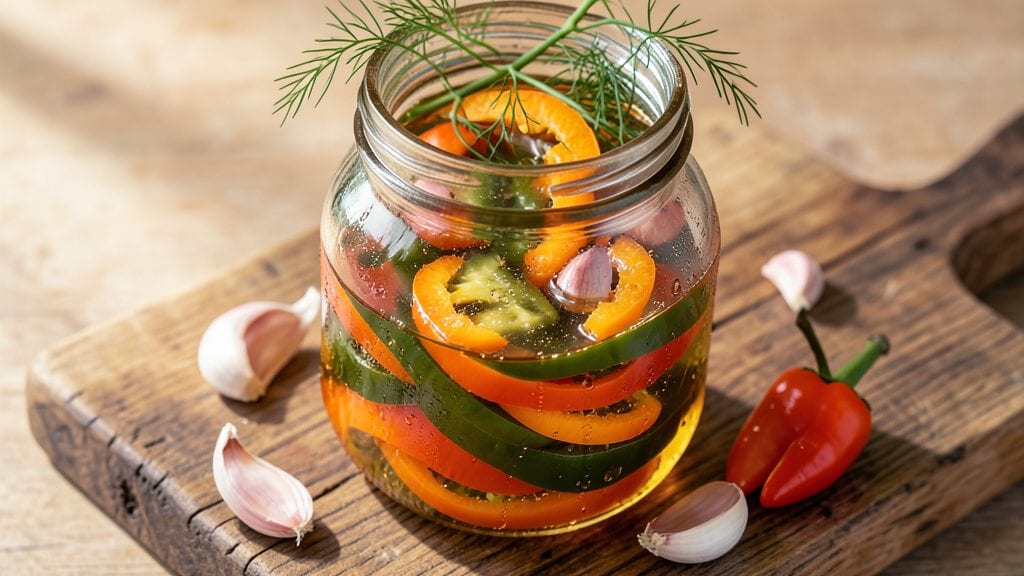
This pickled banana peppers refrigerator recipe transforms simple ingredients into tangy, crunchy bites that elevate any dish in just 10 minutes. The secret lies in balancing vinegar, salt, and fresh herbs to create a bright, zesty condiment that stays crisp and flavorful for weeks.
I developed this method after realizing most store-bought versions lack the freshness and texture of homemade—until now.
What makes this recipe stand out is its simplicity and versatility. You only need 5 ingredients—banana peppers, vinegar, water, salt, and optional garlic or dill—to create a condiment that’s perfect for sandwiches, salads, or as a tangy garnish.
The no-cook method means no sterilizing jars or waiting for canning—just slice, pack, and refrigerate for ready-to-use flavor whenever you need it.
The result is crisp, vibrant peppers with a perfect balance of tangy and slightly sweet. The acidity from the vinegar preserves the peppers while enhancing their natural heat, creating a bite that stays fresh for up to 4 weeks in the fridge.
This is the kind of condiment that turns ordinary meals into something special with minimal effort.
Use these pickled peppers to add a bright, crunchy element to tacos, pasta salads, or even cocktails. The process is foolproof, and the flavor is unbeatable—once you try homemade, you’ll never go back to store-bought again.
Ingredients for pickled banana peppers refrigerator
Five ingredients transform ordinary peppers into vibrant, refrigerator-ready condiments with restaurant-quality tang.
| Ingredient | Amount | Notes |
|---|---|---|
| Banana Peppers 🌶️ | 1 ½ lbs | Fresh, firm, unblemished peppers |
| White Vinegar 💧 | 2 cups | Distilled white vinegar preferred |
| Water 💧 | 1 cup | Filtered or bottled preferred |
| Diamond Crystal Kosher Salt 🧂 | 1 tbsp | Fine grain preferred |
| Fresh Garlic Cloves 🧄 | 3 cloves | Optional, peeled and sliced |
| Fresh Dill Sprigs 🌿 | 6 whole | Optional, for herbaceous notes |
| Extra-Virgin Olive Oil 🫒 | 1 tbsp | Optional, for glossy finish |
The quality of banana peppers is critical—opt for firm, unblemished peppers with vibrant color, as they'll retain their texture best. Local farmers markets often carry fresher peppers than grocery stores, but the produce section at Whole Foods or Trader Joe's will suffice. Avoid peppers with soft spots or wrinkled skin, as they'll compromise the final texture. For vinegar, distilled white vinegar is ideal due to its neutral flavor, though apple cider vinegar adds subtle sweetness if you prefer. The kosher salt should be Diamond Crystal or similar fine-grain variety—it dissolves completely for even flavor distribution.
No fresh garlic or dill? Garlic powder at half the amount works, though fresh is superior. For dill, dried dill at one-third the quantity suffices, but the aroma won't be as pronounced. The optional olive oil adds a subtle richness—Trader Joe's or Costco carry high-quality extra-virgin options at reasonable prices. If you're short on vinegar, lemon juice mixed with water (1:1 ratio) creates a brighter, slightly sweeter brine. For extra crunch, add 1 tbsp of mustard seeds—they'll stay crisp and add a delightful bite.
Store the pickled peppers in an airtight container in the refrigerator for up to 4 weeks, though they'll remain crisp and flavorful for 2-3 weeks at peak. The vinegar brine will keep indefinitely—simply replace the peppers as needed. For serving, drain the peppers and pat dry with a paper towel to remove excess moisture. These peppers elevate charcuterie boards, tacos, or pasta salads with minimal effort, and their vibrant color makes any dish visually striking. Freezing isn't recommended, as it compromises texture.
Why You'll Love This Recipe
- No-Fuss Jar Magic: I swear by this—just slice those peppers, toss in the salt and vinegar mix, and let the fridge do the work. No boiling, no fancy gadgets, just 15 minutes of hands-off waiting.
- Garlic Kiss Perfection: That first bite? The vinegar’s tang meets the garlic’s punch, then the peppers soften just enough to stay crisp. Honestly, it’s the kind of flavor that makes you reach for the jar without thinking.
- Party Starter Secret: Slap these on a charcuterie board, toss them into pasta, or shove them in a sandwich—no one will guess they’re from my fridge. (Yes, even on a Tuesday night.)
- Lasts Like Crazy: A jar of these keeps for months, so I always have backup for tacos, pizza, or when I’m craving something tangy. Plus, vinegar and salt stretch my grocery budget further than I’d expect.
Step-by-step instructions for pickled banana peppers
This refrigerator method delivers restaurant-quality pickles in minutes without canning equipment.
Sterilize and Prepare the Banana Peppers
Rinse the 1.5 lbs banana peppers under cold water to remove any dirt or wax, then pat thoroughly dry with paper towels. Using a sharp knife, trim off the stems and any discolored ends. For even pickling, slice the peppers into ¼-inch thick rounds or leave them whole if you prefer larger pieces. The key here is uniformity—the peppers should be similar in size so they pickle evenly throughout.
Place the prepared peppers in a large bowl and sprinkle with the 1 tbsp diamond crystal kosher salt. Toss gently to coat each piece completely. Let them sit for 10 minutes while you prepare the pickling liquid. This salting step draws out excess moisture, which helps create crisp peppers and prevents a watery brine. You'll notice the peppers releasing small amounts of liquid as they begin to sweat.
Create the Pickling Brine
In a medium saucepan, combine the 2 cups white vinegar and 1 cup water. Add the 3 cloves fresh garlic cloves and 6 whole fresh dill sprigs, then bring to a boil over medium-high heat. Once boiling, reduce heat to medium and let the mixture simmer for 5 minutes. This gentle simmer infuses the vinegar with garlic and dill flavors while sterilizing the liquid for safe preservation.
While the brine simmers, transfer the salted peppers to a clean, airtight quart-sized jar or container with a lid. The jar should be large enough to accommodate the peppers while allowing at least 1 inch of headspace at the top. This space is crucial for safe pickling—it prevents the liquid from overflowing when the jar is sealed and refrigerated.
Combine and Seal for Refrigeration
Using a slotted spoon, carefully transfer the peppers from the bowl to the jar, packing them tightly but not mashing. Pour the hot brine over the peppers, ensuring each piece is fully submerged. The liquid should cover the peppers by at least ½ inch. Add the 1 tbsp extra-virgin olive oil to the surface, which creates a protective layer that enhances flavor and preserves freshness.
Seal the jar tightly and let it cool to room temperature. Once cool, transfer the jar to the refrigerator where it will pickle for at least 24 hours before reaching peak flavor. The peppers will develop their signature tang and crisp texture within this time. I recommend waiting 48 hours for maximum flavor development, but they're safe to eat immediately if needed.
Store and Enjoy
The pickled banana peppers will keep in the refrigerator for up to 3 months, though they're best enjoyed within the first month when the peppers maintain their ideal crunch. When ready to serve, remove the peppers from the jar and drain briefly before using. The brine can be used as a tangy dressing for salads, marinades for meats, or a flavorful addition to Bloody Marys.
For best results, store the peppers fully submerged in their brine. If the liquid level drops significantly, you can add a bit more vinegar-water mixture (1:1 ratio) to maintain proper preservation. The peppers should be firm to the touch and maintain their bright color. If they become soft or lose their vibrant hue, they've reached the end of their prime storage period.
Pro Tips For Making Pickled Banana Peppers Refrigerator
- STERILIZE THE JARS FIRST: If you’re skipping the boiling water bath, at least run your jars and lids through a quick 10-second rinse in boiling water—just enough to kill any lingering bacteria. I learned this the hard way when a jar of peppers went fuzzy after a week; sterilizing takes 30 seconds but saves you from tossing a whole batch.
- SLICE PEPPERS THIN AND EVEN: Uneven slices mean uneven pickling—some will be rubbery, others over-soft. Grab a sharp knife and cut them into ¼-inch slices, then stack and slice again for perfect uniformity. (Yes, it’s tedious, but your future self will notice the difference when every bite has the same crisp-tangy texture.)
- USE COLD VINEGAR, NOT HOT: Pouring boiling vinegar into the jar can shock the peppers and make them turn mushy. Instead, mix the vinegar and water cold, then add the salt and garlic—this keeps the peppers firm and bright. I used to rush this, and the results were always sadder than a ghost pepper in milk.
- PACK PEPPERS TIGHTLY, BUT NOT FORCED: Stuff the peppers in the jar as snugly as possible—this maximizes flavor infusion—but don’t jam them like you’re playing Tetris. A loose pack lets the brine circulate, while a forced pack traps air and slows pickling. (And yes, your jar will look fuller, but the flavor suffers.)
Regional styles of this pickled banana peppers refrigerator
Southern U.S. Style
In the Southern states, pickled banana peppers often take on a spicier profile with extra heat and bold seasonings. I like adding ½ tsp of cayenne pepper or 1 tsp of red pepper flakes to the brine for an authentic kick.
For a true Southern touch, use apple cider vinegar instead of white vinegar—it adds subtle sweetness that balances the heat. Serve these peppers on fried chicken sandwiches or as a tangy topping for creamy mac and cheese. 🌶️
Italian-Inspired
Italian cuisine transforms these pickles into a bright, herby condiment perfect for pasta dishes. Add 1 tsp dried oregano and ½ tsp red pepper flakes to the brine, along with a zest of 1 lemon for acidity.
Use these peppers as a topping for spaghetti aglio e olio or as a garnish for bruschetta. The Italian approach keeps the peppers crisp while infusing them with Mediterranean herbs. 🌿
Mexican Fiesta Style
For a Mexican-inspired twist, add 1 tsp ground cumin and ½ tsp smoked paprika to the brine along with the garlic and dill. Thinly slice the banana peppers and pack them into the jar with 1 tbsp chopped cilantro for a fresh finish.
These peppers are perfect for tacos al pastor, quesadillas, or as a garnish for guacamole. The smoky notes complement Mexican flavors beautifully. 🌮
Middle Eastern Twist
Inspired by Middle Eastern flavors, I like adding 1 tsp ground coriander and ½ tsp ground cumin to the brine, along with a 1-inch piece of fresh ginger, sliced.
The peppers take on a warm, aromatic profile that pairs well with hummus, falafel, or grilled lamb kebabs. The ginger adds a subtle zing that elevates the tangy-sweet balance. 🧄
Hungarian Paprika Version
For a bold, smoky flavor, incorporate 1 tbsp Hungarian sweet paprika into the brine. This version works wonderfully with goulash, stuffed cabbage rolls, or as a topping for roasted potatoes. The paprika gives the peppers a deep, earthy note that contrasts beautifully with the vinegar's acidity. 🇭🇺
Asian-Inspired Pickles
To create an Asian-inspired version, replace the garlic with 1-inch piece of fresh ginger and add 1 tsp sesame seeds to the jar before sealing. Use rice vinegar instead of white vinegar for a milder acidity.
These peppers shine in ramen broth, sushi rolls, or as a garnish for pho noodle soup. The ginger and sesame add a unique depth that's both familiar and exciting. 🍜
Nutrition facts
Frequently asked questions
Can I use apple cider vinegar instead of white vinegar?
Yes, apple cider vinegar works beautifully and adds a subtle sweetness that pairs well with the peppers. For a Southern-style version, it's especially recommended. Just note that the color of the brine may darken slightly compared to white vinegar.
How do I keep my pickled banana peppers extra crisp?
Salting the peppers for 10 minutes before pickling removes excess moisture, which is key to crispness. Also, make sure they're fully submerged in the vinegar brine and store them in the refrigerator—not at room temperature. The cold preserves their texture better than warm storage.
What can I do if my peppers turn soft or mushy?
Soft peppers usually mean they weren't fully submerged in brine or were stored too long. If this happens, try using them immediately in dishes where texture isn't critical, like sauces or soups. For future batches, ensure the peppers are completely covered and refrigerate promptly after sealing.
Can I reuse the pickling liquid?
Yes! The vinegar brine keeps indefinitely in the fridge. Simply strain out any softened peppers and store the liquid in a clean jar. Use it as a tangy dressing for salads, a marinade for meats, or even a Bloody Mary mix. Just avoid reusing it if it smells off or develops mold.
Are these pickled peppers safe to eat without cooking?
This refrigerator method preserves the peppers safely without cooking. The vinegar acts as a natural preservative, and the cold storage keeps bacteria at bay. Just ensure your peppers are fresh and firm before pickling, and the brine is always fully submerged.