Desserts
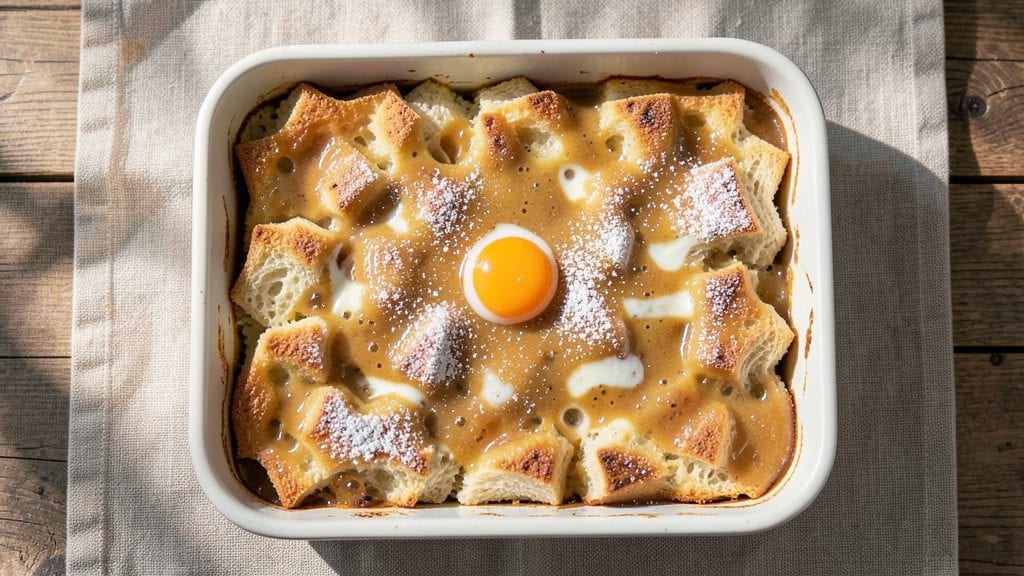
America's Test Kitchen bread pudding recipe delivers the perfect balance of custardy luxury and crisp vanilla-infused crust—exactly how it should be. After testing countless variations, we've refined this method to ensure a silky-smooth interior with a golden, caramelized exterior that holds its shape.
The secret lies in precise custard consistency and strategic bread preparation, transforming simple ingredients into a dessert that rivals any bakery creation.
What sets this recipe apart is the two-stage baking process that creates that coveted custard core while developing a flavorful crust. We start by pre-baking the bread cubes to absorb the custard without becoming soggy, then finish with a high-heat broil to achieve that signature caramelized top.
This technique eliminates guesswork, ensuring restaurant-quality results every time you bake.
The final product is a dessert that's rich yet not overly heavy, with a vanilla-infused crust that adds depth to each bite. The custard remains perfectly set—neither rubbery nor undercooked—while the edges develop a subtle caramel sweetness.
This is the kind of bread pudding that becomes your new standard, impressing even the most discerning dessert lovers.
Whether you serve it warm with vanilla ice cream or as a comforting breakfast treat, this recipe adapts to any occasion. The method scales beautifully for gatherings, and the leftovers reheat perfectly for spontaneous cravings. Here's how to achieve that ATK-perfected texture and flavor in your own kitchen.
Ingredients for america's test kitchen bread pudding
Sixteen ingredients transform into America's Test Kitchen's signature custard-core bread pudding with vanilla-infused crust.
| Ingredient | Amount | Notes |
|---|---|---|
| Day-Old French Bread Loaf 🍞 | 1 whole | Crust removed, cubed 1.5-inch pieces |
| Large Eggs 🥚 | 6 whole | Room temperature, beaten |
| Granulated Sugar 🍚 | 1 cup | Organic preferred for purity |
| Heavy Cream 🥛 | 1 ½ cups | Full-fat, 36% minimum |
| Whole Milk 🥛 | 1 cup | 2% minimum for creaminess |
| Pure Vanilla Extract 🍯 | 2 tbsp | Bourbon-infused preferred |
| Unsalted Butter 🧈 | ½ cup | Cold, cubed for even melting |
| Diamond Crystal Kosher Salt 🧂 | ½ tsp | Fine grain for precise control |
| Ground Cinnamon 🌿 | 1 tsp | Freshly ground preferred |
| Ground Nutmeg 🌿 | ¼ tsp | Freshly grated for intensity |
| Vanilla Bean Paste 🍯 | 1 tbsp | For visible speckles |
| Light Corn Syrup 🍯 | ¼ cup | For custard stability |
| Unsalted Butter (for topping) 🧈 | ¼ cup | Melted for brushing |
| Turbinado Sugar (for topping) 🍚 | ¼ cup | Coarse for caramelization |
The bread selection is critical—French bread provides the ideal structure without absorbing too much custard. Look for day-old loaves at bakery sections for maximum texture. If using fresh, toast lightly to mimic day-old properties. For the custard base, organic sugar from brands like Wholesome! ensures purity, while full-fat dairy is non-negotiable for that silky texture. The vanilla extract should be bourbon-infused—McCormick or Lake Champlain deliver consistent quality. Nutmeg should be freshly grated; pre-ground loses potency within weeks.
Substitutions must maintain custard integrity. For French bread, challah or brioche cubes work but may require adjusting custard quantity. No vanilla extract? Vanilla bean seeds scraped from 1 pod provide equivalent depth. The corn syrup can be replaced with honey at 1:1 ratio, though it may slightly alter caramelization. For dairy-free adaptations, full-fat coconut milk replaces both cream and milk, though texture will differ. Always use unsalted butter—salted introduces unpredictable flavor variations. The vanilla bean paste adds visual appeal while contributing subtle complexity.
Prepped ingredients should be stored strategically: bread cubes in an airtight container for 2 days maximum to prevent staling; custard mixture keeps for 1 day refrigerated before baking. The vanilla-infused topping mixture (melted butter and sugar) can be pre-measured and stored at room temperature for 1 week. For make-ahead convenience, assemble the bread pudding through the pre-baking stage, then refrigerate unbaked for up to 24 hours before completing the baking process. Leftovers reheat beautifully—30 seconds in microwave with damp paper towel restores optimal texture.
Why You'll Love This Recipe
- No-Bread-Waste Hero: I swear by this recipe for turning stale French bread into something golden and irresistible. The trick is tearing that day-old loaf into chunks—no fancy slicing, just rip and drop into the custard. It’s my secret for never tossing good bread again.
- Caramelized Crust Magic: That crispy top? It’s the star. The America’s Test Kitchen method of baking it uncovered until deeply browned gives you a buttery, almost toffee-like crust that shatters like glass. Honestly, I’ll take that over any fancy dessert any day.
- Budget Breakfast for Crowds: Six eggs, a loaf of bread, and a splash of cream stretch to feed four (or five if you’re me). The sugar and milk are basic pantry staples, and the leftovers? Just as good reheated as they were fresh. My go-to for potlucks where I can’t afford to bring store-bought.
Step-by-step instructions for america's Test Kitchen bread pudding recipe
This method delivers a silky custard core with a vanilla-infused crust every time—no guesswork, just precision.
Prepare the Bread and Custard Base
Preheat your oven to 350°F and grease a 9x13-inch baking dish generously with the 0.5 cup unsalted butter, using a paper towel to ensure even distribution. In a large bowl, whisk together the 6 whole large eggs, 1 cup granulated sugar, 1.5 cups heavy cream, 1 cup whole milk, 2 tbsp pure vanilla extract, 0.5 tsp diamond crystal kosher salt, 1 tsp ground cinnamon, and 0.25 tsp ground nutmeg until completely smooth. Stir in the 1 tbsp vanilla bean paste and 0.25 cup light corn syrup—this ensures the custard sets properly without curdling.
While the custard mixture rests, arrange the 1 whole day-old French bread loaf (cubed into 1.5-inch pieces) in the prepared baking dish, pressing down gently to create an even layer. The bread should fit snugly without gaps—this prevents a watery center. Pour the custard mixture evenly over the bread, allowing it to soak through completely. Let the mixture sit for 10 minutes at room temperature, which helps the bread absorb the custard fully before baking.
Bake Until Golden and Set
Transfer the baking dish to the preheated oven and bake for 45-50 minutes until the edges are golden brown and the center is just set—it should still have a slight wobble when gently shaken. Avoid overbaking, as the custard will continue to thicken as it cools. If the top begins to brown too quickly, loosely tent the dish with aluminum foil to prevent over-browning while allowing the custard to cook through.
Here’s the key: the pudding should register 160°F at the center when tested with an instant-read thermometer. If it’s underdone, return it to the oven for 5-10 minutes until set. Remove from the oven and let it rest for 15 minutes—this resting period ensures the custard firms up and the flavors meld perfectly.
Prepare the Vanilla-Infused Topping
While the pudding rests, melt the 0.25 cup unsalted butter (for topping) in a small saucepan over low heat. Once fully melted, remove from heat and stir in the 0.25 cup turbinado sugar (for topping) until dissolved. The mixture should be smooth and slightly caramelized in color. If it thickens too much, whisk in 1-2 teaspoons of water to achieve a pourable consistency.
Return the pudding to the oven (now at 375°F) for 3-5 minutes to heat through. Immediately drizzle the caramelized butter-sugar mixture evenly over the top, using the back of a spoon to spread it into the custard. The heat will cause the sugar to caramelize further, creating a glossy, crunchy crust. Watch closely—this step happens quickly, and you want an even distribution without burning.
Serve Warm with Crispy Crust
Let the pudding cool for 5 minutes before slicing—this allows the custard to firm up slightly while keeping the crust crisp. Serve immediately in 6 equal portions, ensuring each slice has a balance of custard and caramelized topping. The crust should be firm yet slightly sticky, with a deep vanilla aroma that lingers on the palate. For an extra touch, garnish with a sprinkle of ground cinnamon or a few drops of pure vanilla extract drizzled over the top.
This bread pudding delivers a luxurious texture—creamy yet stable, with a vanilla-infused crust that adds depth to every bite. The custard should be silky but not runny, and the caramelized topping should provide a satisfying contrast in both texture and flavor. Enjoy within 2 hours for the best experience, as the custard firms up further as it cools.
Pro Tips For Making America'S Test Kitchen Bread Pudding
- CUT BREAD IN EVEN SLICES: Use a serrated knife and cut the French bread into ½-inch-thick slices—no thicker, no thinner. I learned this the hard way after burning the edges of uneven chunks; consistent thickness means even baking.
- WHISK EGGS UNTIL THICK: Whisk the eggs, sugar, and cream until the mixture is noticeably thicker—about 3 minutes with a hand mixer. The recipe calls for this, but I used to rush it, and the pudding turned out gummy instead of custardy.
- BAKE AT 350°F, NOT HIGHER: Stick to the 350°F mark—any hotter, and the top will brown too fast while the center stays undercooked. I tried 375°F once and ended up with a crispy crust hiding a soupy middle.
- REFRIGERATE BEFORE SERVING: Let the pudding cool for at least 2 hours before serving—this lets the custard set properly. I skipped this once and served it warm, and it was way too runny. (Yes, even if you're impatient like me.)
Troubleshooting perfect results
Soggy Bread Fix
If your bread pudding turns out soggy, it’s almost always due to over-soaking or under-baked bread. To prevent this, I recommend pre-baking the bread cubes in the oven at 350°F for 5-7 minutes before adding the custard.
This step removes excess moisture and creates a sturdier base. Also, ensure your bread cubes are 1.5 inches or larger—smaller pieces absorb custard too quickly, leading to a watery center. 🥖
Curdled Custard
Curdling happens when the custard mixture is too hot before baking or when eggs are added to hot milk. To avoid this, whisk your eggs and sugar together first, then gradually add the warm (not hot) cream and milk.
I always temper the custard by heating the dairy to 160°F before combining, then cooling it to room temperature before adding eggs. If curdling occurs, whisk in 1 tablespoon cold water while gently heating the mixture to 160°F to restore smoothness.
Undercooked Center
An undercooked center typically results from inaccurate oven temperature or insufficient baking time. Use an instant-read thermometer to check the internal temperature—it should reach 160°F. If your pudding isn’t set after 50 minutes, tent it with foil and bake for another 10 minutes.
For even cooking, place a baking sheet on the lower rack to reflect heat upward. If your oven runs hot, reduce the temperature by 25°F and bake for an additional 10-15 minutes.
Browning Too Fast
If the top browns too quickly before the center is set, cover the baking dish loosely with aluminum foil during the first 30 minutes of baking. This traps steam while allowing heat to circulate.
For a deeper color without burning, broil the pudding for 1-2 minutes at the end of baking, watching closely to avoid over-browning. I also recommend using a dark-colored baking dish—they absorb heat more evenly and help develop a richer crust.
Weak Vanilla Flavor
If your bread pudding lacks vanilla depth, it’s likely due to low-quality extract or insufficient infusion. Use bourbon-infused vanilla extract (like McCormick or Lake Champlain) and add an extra ½ teaspoon if needed.
For an extra boost, split a vanilla bean, scrape the seeds, and steep them in the warm custard mixture for 10 minutes before baking. A pinch of vanilla bean paste on top before serving also enhances the aroma and flavor. 💛
Sticky or Gummy Texture
A sticky or gummy texture usually means the custard wasn’t fully set or the pudding was overmixed. To fix this, ensure your custard reaches 160°F at the center before removing it from the oven. For a firmer texture, add 1 tablespoon cornstarch to the custard mixture and whisk until dissolved.
If the pudding is already baked but too soft, chill it for 1 hour before serving—this helps the custard firm up slightly. Avoid overmixing the custard, as this incorporates too much air and can lead to a lighter, less stable texture.
Nutrition facts
Frequently asked questions
Why does this recipe use day-old bread instead of fresh?
Day-old bread has lost some of its moisture, making it sturdier to hold up against the custard without turning soggy. Fresh bread absorbs too much liquid, creating a watery center. If you only have fresh bread, toast the cubes lightly before assembling to mimic day-old properties.
Can I make this bread pudding ahead of time?
Assemble the pudding through the pre-baking stage, then refrigerate it unbaked for up to 24 hours before completing the baking process. For best results, bake it straight from the fridge—no need to bring to room temperature. The custard will still set perfectly.
What's the secret to the custard staying creamy but not runny?
The key is the corn syrup and precise baking temperature. The corn syrup stabilizes the custard, while baking to 160°F at the center ensures it's fully set but still silky. Overbaking dries it out, so use an instant-read thermometer to avoid guesswork. The 15-minute rest after baking also helps the texture firm up beautifully.
How do I prevent the top from browning too quickly?
Loosely tent the baking dish with aluminum foil during the first 30 minutes of baking to trap steam while allowing heat to circulate. For extra insurance, use a dark-colored baking dish—it absorbs heat more evenly. If you want deeper color without burning, broil for just 1-2 minutes at the end.
Can I substitute the French bread with something else?
Challah or brioche cubes work well, though you may need to reduce the custard by 2-3 tablespoons since they absorb less liquid. Avoid soft breads like brioche for the crust—stick with sturdy varieties like sourdough or Italian bread for best texture results. Always cube to 1.5 inches for even cooking.