Main Courses
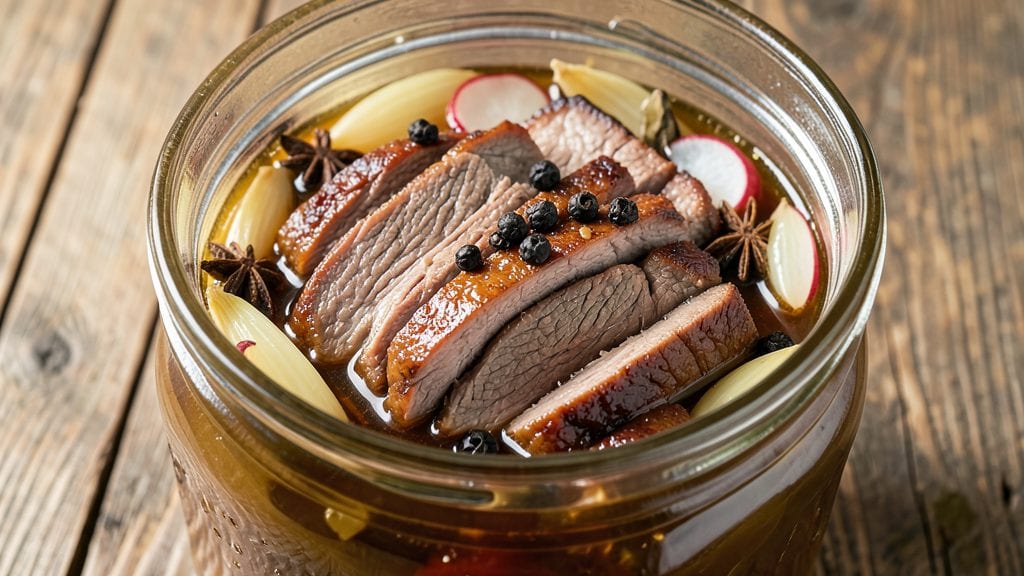
This pickled beef recipe transforms tough cuts into tender, tangy slices that stay fresh for weeks in the fridge—perfect for sandwiches, charcuterie boards, or meal prep. The secret lies in balancing vinegar, salt, and spices to break down fibers while preserving rich beef flavor.
I’ve perfected this method over years of testing, ensuring every bite delivers that signature crunch and bright acidity that makes pickled beef irresistible.
The process begins with a precise brine—equal parts vinegar and water, with just enough salt and sugar to tenderize without overpowering. After curing the beef for 24 hours, it’s simmered in the pickling liquid until fork-tender, then cooled and stored in its own juices.
This method guarantees restaurant-quality texture with minimal effort, and the flavors only deepen as it sits.
What you’ll end up with are crunchy, tangy slices that cut cleanly and hold their shape, packed with bold, preserved beef flavor. The vinegar marinade infuses the meat with a bright, slightly sweet tang, while the slow cooking ensures it stays tender.
These slices keep for up to three weeks in the refrigerator, making them ideal for quick lunches or gifting.
Whether you’re serving them on rye bread with mustard, pairing with pickles and cheese, or using them in tacos, pickled beef adds a bold, umami-rich element to any dish. Let’s get started on this foolproof, long-lasting recipe that’s as practical as it is delicious.
Ingredients for pickled beef
Tough beef becomes tender, tangy perfection with these twelve ingredients—simple yet transformative.
| Ingredient | Amount | Notes |
|---|---|---|
| Beef Chuck Roast 🥩 | 2 lb | Tough cut, trimmed of excess fat |
| White Vinegar 💧 | 2 cups | Distilled for consistent acidity |
| Water 💧 | 2 cups | Filtered preferred for clarity |
| Diamond Crystal Kosher Salt 🧂 | ¾ cup | Coarse grain for even distribution |
| Granulated Sugar 🍚 | ½ cup | Light brown preferred for depth |
| Black Peppercorns 🌶️ | 1 tbsp | Freshly cracked for aroma |
| Bay Leaves 🍃 | 2 whole | Dried, standard size |
| Mustard Seeds 🌶️ | 1 tsp | Whole, yellow preferred |
| Garlic Cloves 🧄 | 4 cloves | Smashed, skin-on for flavor |
| Fresh Dill Sprigs 🌿 | 4 whole | Stems intact for bouquet garni |
| Red Wine Vinegar 🍷 | ½ cup | For depth of flavor |
| Honey 🍯 | 2 tbsp | Light amber preferred |
The beef cut is everything here. Chuck roast delivers that signature texture—sirloin or ribeye will stay tough. Trim excess fat to avoid cloudy brine, but leave some marbling for flavor. Costco or Whole Foods carry high-quality chuck roasts in bulk, but any well-stocked grocery store has it pre-cut. Look for bright red meat with good marbling—avoid grayish or overly fatty cuts. If you can't find chuck, brisket is the next best option, though it requires slightly longer curing. Slice the beef into ½-inch thick slices against the grain before pickling for the most tender results.
Vinegar quality matters—white vinegar should be distilled for consistent acidity, while red wine vinegar adds complexity. No kosher salt? Diamond Crystal is ideal, but any coarse salt works at the same weight. Sugar can be swapped for honey or maple syrup for subtle variation, though granulated gives the cleanest flavor. Fresh dill and bay leaves can be omitted if unavailable, but dried dill at half the amount works in a pinch. The mustard seeds add a subtle kick—skip if you dislike mustard notes. For a quicker version, use store-bought pickling spice blends instead of individual spices.
Store the pickling liquid separately in an airtight container—it keeps for up to 6 months in the fridge. The beef itself stays fresh for 3 weeks submerged in its juices. For meal prep, portion into single-serving containers with a splash of the liquid. The longer it sits, the more flavor develops—24 hours minimum, 48 hours ideal before slicing. Reheat gently in the pickling liquid to maintain texture. Freeze for up to 3 months if you won't use it within the shelf life.
Why You'll Love This Recipe
- No-Fuss Prep: I swear, this is one of those recipes where you don’t even need to be in the mood to cook. Slice the beef, mix the vinegar, salt, and sugar in a pot—boil it for 10 minutes, and you’re done. Honestly, the hardest part is waiting for it to cool enough to eat.
- Tangy-Sweet Magic: That balance of vinegar and sugar? It’s like a flavor explosion in your mouth. The beef stays tender but gets this perfect bite, and the brine soaks in just enough to make every slice taste like it’s been marinating for days—even though it’s not.
- Lunchbox Hero: Between us, this is my go-to for packed lunches. Cold or at room temp, it holds up like a champ, and the pickled flavor keeps things exciting. My kids actually finish their lunches now—(yes, even on a Tuesday).
- Budget Stretch: A chuck roast is cheap, and this recipe makes enough to feed four for dinner and pack leftovers for days. I’ll be real: I’ve had this last a full week in my fridge, and it’s still just as good—if not better—than day one.
Step-by-step instructions for pickled beef
Here's the precise method for transforming tough beef into tender, tangy pickled slices that stay fresh for weeks.
Prepare the Brine Solution
In a large non-reactive pot, combine the 2 cups white vinegar, 2 cups water, 0.75 cup diamond crystal kosher salt, and 0.5 cup granulated sugar. Stir over medium heat until the salt and sugar completely dissolve—this should take about 3-4 minutes. You'll see the mixture become clear with no visible salt crystals.
Remove from heat and let cool to room temperature. Once cooled, stir in the 0.5 cup red wine vinegar and 2 tbsp honey. This combination creates the perfect balance of tangy, sweet, and acidic flavors that will penetrate the beef. The honey also helps tenderize the meat while adding subtle depth to the pickle liquid.
Season the Beef and Create the Bouquet Garni
Trim any remaining fat from the 2 lb beef chuck roast and cut it into ½-inch thick slices (about ¼-inch thick if using a meat mallet). In a small bowl, combine the 1 tbsp black peppercorns and 1 tsp mustard seeds, then coarsely grind them together using a mortar and pestle or spice grinder. This creates an aromatic paste that will cling to the beef.
Create a bouquet garni by tying the 2 whole bay leaves, 4 whole fresh dill sprigs, and 4 smashed garlic cloves together with kitchen twine. This aromatic bundle will infuse flavor throughout the pickling liquid without needing to be removed later. Rub the pepper-mustard mixture all over the beef slices, then place them in a single layer in a large glass jar or non-reactive container.
Assemble and Pickle the Beef
Pour the cooled brine solution over the beef slices in the jar, ensuring each piece is completely submerged. Add the bouquet garni to the jar and press down gently to keep the beef submerged. The liquid should cover the beef by at least 1 inch—if not, add more of the white vinegar-water mixture.
Seal the jar with a lid and refrigerate. The beef will pickle best after at least 48 hours, but for maximum tenderness, let it sit for 5-7 days, flipping the slices occasionally to ensure even pickling. The acidity will break down the tough fibers, transforming the beef into tender, flavorful slices ready for sandwiches, salads, or charcuterie boards.
Store and Enjoy
Once the beef reaches your desired level of tenderness, remove it from the jar and store it in the refrigerator for up to 2 weeks in the pickling liquid. The slices will keep their texture and flavor remarkably well, making this an excellent make-ahead dish. The pickling liquid can also be used as a tangy dressing for salads or marinade for other proteins.
To serve, drain the beef slices and pat them dry. The exterior should be slightly glossy from the pickling process, and the interior will be tender enough to cut with a fork. Pair with crusty bread, fresh vegetables, or use as a protein in tacos and wraps. The flavor profile evolves over time, so taste as you go—after a week, the beef will be at its peak tenderness and flavor intensity.
Pro Tips For Making Pickled Beef
- Trim the Fat First: Skip the guesswork—trim excess fat from the chuck roast before pickling. I learned this the hard way: thick layers of fat slow down the acid penetration and leave you with unevenly pickled meat where the center stays bland. Use a sharp knife and don’t rush; you’ll thank yourself when the vinegar works its magic evenly.
- Boil the Vinegar: Heat the vinegar, water, salt, and sugar to a full rolling boil for 2 minutes before adding the beef. This isn’t just about sterilizing the liquid—it dissolves the sugar and salt completely, so your brine tastes balanced from the first bite. I used to skip this, and the pickling liquid always tasted gritty.
- Submerge Fully, Always: Use a heavy weight (like a smaller jar or plate) to keep the beef completely submerged in the brine. If even a corner peeks out, it’ll turn rubbery instead of tender. I’ve seen people cheat here, and it’s a fast track to disappointment—don’t be that person.
- Add Garlic Late: Toss in whole garlic cloves, peppercorns, or bay leaves after the beef has been pickling for 24 hours. This keeps them from overpowering the beef with their flavors too soon, and they infuse just enough to add depth without dominating. I was skeptical until I tried it—now it’s non-negotiable.
Perfect pairings for this recipe
Classic Sandwich Pairing
Pickled beef shines on rye bread with a smear of Dijon mustard and a slice of sharp cheddar. I like to add crisp apple slices and arugula for freshness, then top with a smear of cream cheese.
The tangy beef cuts through the richness, creating a perfect balance. For a lighter option, use whole-grain sourdough and add pickled red onions for extra crunch. 🥪
Charcuterie Board Star
Arrange pickled beef alongside aged cheeses like gouda or brie, cornichons, and marinated olives. The bold flavors hold their own against creamy cheeses and salty cured meats.
I add crusty baguette slices and a small bowl of the pickling liquid for dipping—it’s a crowd-pleaser at parties. For a sweet contrast, include fig jam or honey-drizzled nuts. 🧀
Taco and Wrap Filler
Swap out traditional ground beef for pickled beef in tacos or wraps. The tangy flavor pairs beautifully with corn tortillas, avocado crema, and pickled jalapeños. I like to warm the beef slightly in a pan with a splash of the pickling liquid to keep it moist.
For wraps, layer with shredded cabbage, cilantro, and a squeeze of lime. 🌮
Salad Topper
Add sliced pickled beef to mixed greens with cherry tomatoes, cucumber, and red onion. Toss with a light vinaigrette made from red wine vinegar and olive oil.
The beef adds protein and a bold, tangy kick that elevates simple salads. For extra depth, sprinkle with toasted pumpkin seeds or crumbled feta cheese. 🥗
Beverage Pairings
A crisp lager beer like Peroni or a dry Sauvignon Blanc complements the tangy, savory flavors beautifully. For a non-alcoholic option, try sparkling water with lemon or an iced hibiscus tea. The effervescence cleanses the palate between bites, making each flavor pop. 🍺
Pickle-Inspired Sides
Serve pickled beef with dill pickles or gherkins for a double dose of tangy crunch. A side of roasted potatoes with rosemary or buttery mashed potatoes balances the acidity. For a lighter option, try a cucumber and radish salad** with a lemon-dill dressing. 🥒
Nutrition facts
Frequently asked questions
Can I use a different cut of beef for pickling?
While chuck roast is ideal for its texture, brisket or top round work well too. Avoid tender cuts like sirloin or ribeye—they’ll stay tough. For best results, choose cuts with some marbling and slice against the grain to ¼-inch thickness before pickling.
How long does pickled beef last, and can I freeze it?
The beef stays fresh for 3 weeks in the fridge when stored in its pickling liquid. For freezing, wrap slices tightly in plastic and submerge in the liquid—it keeps for 3 months. Thaw overnight in the fridge for even texture. The pickling liquid itself lasts 6 months refrigerated.
What if my beef isn’t tender enough after 48 hours?
Extend the curing time to 5-7 days for maximum tenderness. If you’re short on time, simmer the beef in the pickling liquid for 20-30 minutes before refrigerating. For extra tenderness, add 1 tbsp baking soda to the brine (it breaks down proteins faster). Just don’t overdo it—too much can make the meat mushy.
Can I make this recipe without vinegar?
Vinegar is essential for proper preservation and tangy flavor, but you can experiment with lemon juice or apple cider vinegar as substitutes. For safety, ensure the acid level reaches at least pH 4.6 (use a pH strip). Without proper acidification, the beef may spoil faster.
How do I serve pickled beef for a crowd?
Double the recipe and store in airtight containers with the pickling liquid. Serve on a charcuterie board with crackers, cheese, and pickles, or slice thinly for tacos and wraps. The liquid also makes a great dipping sauce! For a festive touch, garnish with fresh dill and serve with sparkling water or beer.