Snacks
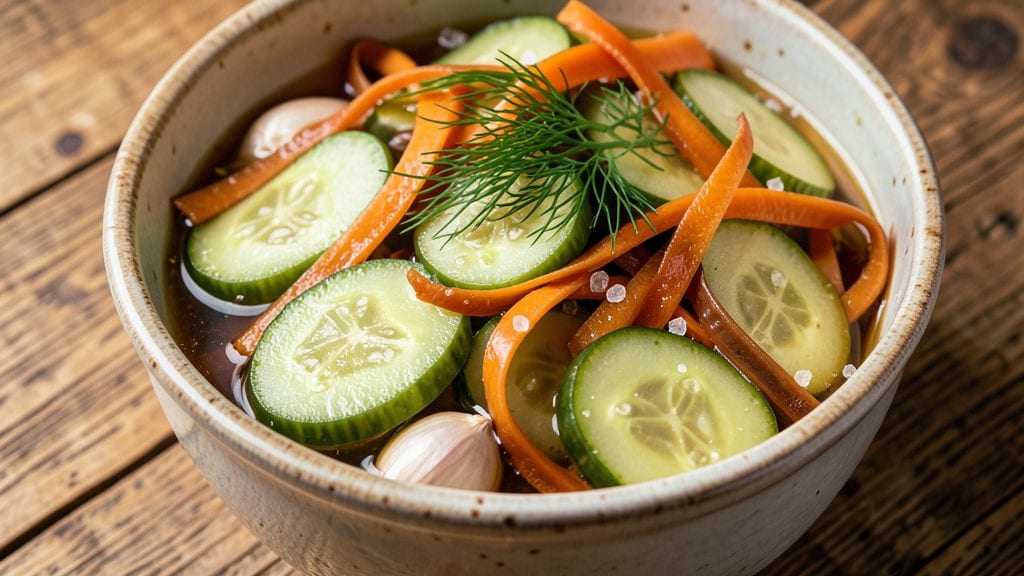
This pickle mix vegetable recipe transforms simple garden veggies into a tangy, crunchy snack mix that takes just 10 minutes to prepare. The secret lies in balancing vinegar, salt, and spices to create a briny, bright flavor that clings to every slice—whether you ferment for depth or quick-pickle for speed.
I perfected this method after years of testing, and it’s now my go-to for meal prep, sandwich toppings, or snacking straight from the jar.
The beauty of this recipe is its versatility—you can use carrots, cucumbers, radishes, or even red onions, sliced thin for maximum crunch. For fermented pickles, lacto-fermentation develops complex flavors over a week, while quick-pickling delivers instant tang in under an hour.
The brine is simple: vinegar, water, salt, and a touch of sugar to balance the acidity, with optional spices like dill or mustard seeds for extra depth.
What you’ll end up with is a jar of bright, crisp vegetables bursting with flavor—perfect for adding to sandwiches, salads, or snacking straight from the fridge. The texture stays satisfyingly crunchy, and the tangy bite cuts through rich dishes beautifully.
This recipe is foolproof, adaptable, and ready in minutes, whether you’re prepping for the week or craving a quick snack.
Store in the refrigerator for up to 2 weeks (longer for fermented versions), and the flavors only improve with time. Pair with charcuterie, serve alongside burgers, or enjoy as a standalone snack. Here’s how to make it—simple, professional, and guaranteed to impress.
Ingredients for pickle mix vegetable
Simple veggies meet bold flavors in this tangy, crunchy mix—perfect for snacks or sandwich toppings.
| Ingredient | Amount | Notes |
|---|---|---|
| White Vinegar 🍶 | 1 cup | Distilled white vinegar preferred |
| Water 💧 | 1 cup | Filtered or bottled preferred |
| Granulated Sugar 🍚 | ¼ cup | White or raw cane sugar |
| Diamond Crystal Kosher Salt 🧂 | ½ cup | Non-iodized preferred |
| Carrots 🥕 | 1 lb | Organic preferred, sliced thin |
| Cucumber 🥒 | 1 whole | English or Persian, sliced thin |
| Red Onion 🧅 | 1 whole | Thinly sliced, red preferred |
| Radishes 🍅 | ½ lb | French or cherry, sliced thin |
| Fresh Dill Weeds 🌿 | ¼ cup | Chopped, stems removed |
| Mustard Seeds 🌶️ | 1 tsp | Yellow or brown preferred |
| Black Peppercorns 🌶️ | ½ tsp | Crushed lightly |
| Garlic Cloves 🧄 | 3 cloves | Minced, optional for depth |
| Lemon Juice 🍋 | ¼ cup | Freshly squeezed |
The vegetables are the stars here, so pick fresh, crisp produce—carrots and cucumbers should snap when sliced. Trader Joe's or local farmers markets are my go-to for the best quality. Red onions add a sharp bite, but if you prefer milder flavor, swap in shallots. For the vinegar, distilled white vinegar is ideal—apple cider vinegar works too but leans sweeter. The sugar balances the acidity, so don’t skip it even if you’re avoiding sweetness elsewhere. Slice everything uniformly for even pickling.
No fresh dill? Dried dill at one-third the amount works in a pinch, but fresh is brighter. Short on radishes? Jalapeños or green beans add crunch and heat. Mustard seeds can be omitted if you dislike their bite, but they add a subtle depth. The garlic is optional but worth it for an extra layer of flavor—just toast the cloves lightly before mincing to mellow their sharpness. For fermented pickles, reduce the vinegar to half a cup and add 1 tbsp of sea salt to the brine instead.
Store in an airtight jar in the fridge for up to 2 weeks—fermented versions last even longer. The flavors deepen over time, so wait at least 24 hours before eating for maximum tang. Portion into smaller jars for easy snacking or meal prep. This mix keeps its crunch beautifully, so don’t worry about sogginess. If the veggies soften too quickly, add a splash of vinegar to revive them.
Why You'll Love This Recipe
- No-Fuss Preservation: I swear by this recipe because it’s basically a jar of flavor that lasts. Toss in chopped carrots, a splash of vinegar, and a pinch of salt—no fancy tools or hours of canning. Honestly, the sugar keeps things sweet without overpowering, and the vinegar’s tang cuts right through the carrots’ natural earthiness.
- Crunchy-Tangy Magic: Between us, that first bite of crisp carrots with the briny vinegar and just-right sweetness? It’s the kind of contrast that makes you reach for another spear. The salt isn’t overpowering—it’s the kind that lingers just enough to make your taste buds sing.
- Lunchbox Hero: This mix is my secret weapon for school lunches or office snacks. Pack it in a small jar, and it stays fresh for days—no sad, wilted veggies here. My kids actually eat their veggies when they’re this fun, and honestly, so do I.
- Pantry Staple: The ingredients? Cheap. The effort? Minimal. A big batch costs next to nothing, and it turns into a side dish, snack, or even a topping for sandwiches. I’ll be real: I’ve had this sitting in my fridge for weeks, and it’s still good. That’s the kind of recipe that saves money and stress.
Step-by-step instructions for homemade pickle mix vegetable recipe
This quick method transforms fresh vegetables into a tangy, crunchy snack mix that stays fresh for weeks.
Prepare the Brine Solution
In a medium saucepan, combine the 1 cup white vinegar, 1 cup water, 0.25 cup granulated sugar, and 0.5 cup diamond crystal kosher salt. Bring to a boil over medium-high heat, stirring until the sugar and salt fully dissolve. The mixture should look completely clear with no visible grains.
Here's the thing—don't rush this step. You want the brine to be completely smooth, as any undissolved sugar or salt will settle at the bottom of your jar and create a gritty texture in your finished mix. Once boiling, reduce heat to maintain a gentle simmer and let it cook for 3-4 minutes to ensure everything is fully incorporated.
Clean and Slice the Vegetables
While the brine simmers, wash and thoroughly dry all vegetables. Using a sharp mandoline or knife, slice the 1 lb carrots, 1 whole cucumber, 1 whole red onion, and 0.5 lb radishes into thin, even pieces—about 1/8-inch thick. Uniform slicing ensures even cooking and presentation.
Real talk: radishes can be particularly stubborn. I like to slice them last and keep them separate until we're ready to combine everything. Their sharp flavor pairs beautifully with the other vegetables, but they tend to soften faster during the pickling process.
Add Aromatics and Spices
Remove the pan from heat and stir in the 0.25 cup fresh dill weeds, 1 tsp mustard seeds, 0.5 tsp crushed black peppercorns, 3 minced garlic cloves, and 0.25 cup lemon juice. Let the mixture steep for 5 minutes to allow the flavors to meld together. You'll notice the dill releases its bright, fresh aroma and the garlic infuses the liquid with its pungent depth.
This is where the magic happens. The lemon juice adds a bright citrus note that cuts through the tanginess of the vinegar, while the mustard seeds and peppercorns provide subtle heat and complexity. Don't skip this steeping time—it's what transforms a simple brine into a flavorful pickle bath.
Pack and Process the Vegetables
Sterilize four 16-ounce jars and their lids by boiling them in water for 10 minutes. Using a slotted spoon, carefully pack the sliced vegetables into each jar, leaving about 1-inch headspace at the top. Pour the hot brine over the vegetables until each jar is completely filled.
Here's the critical part: make sure every vegetable piece is completely submerged in the brine. If any pieces float to the top, press them down gently with a sterilized utensil. Air exposure can lead to mold growth and spoilage. The brine should cover the vegetables by at least 1/2 inch to ensure proper preservation.
Seal and Store for Maximum Freshness
Wipe the rims of the jars with a clean, damp cloth to remove any brine residue, then seal with sterilized lids. Process the jars in a boiling water bath for 10 minutes to create an airtight seal. Remove from the water bath and let cool completely before storing in a cool, dark place.
Your pickle mix vegetables will keep for up to 6 months in the pantry, though they'll likely be gone in days. The flavors develop and intensify over time, so they actually taste better after a week or two of storage. For best results, wait at least 24 hours before opening to allow the flavors to fully meld together.
Pro Tips For Making Pickle Mix Vegetable
- Boil the Vinegar First: Heat your white vinegar to a full rolling boil before adding water or sugar—this drives off the harshest acid smell and makes the final flavor smoother. I used to skip this, and the pickles always smelled like a science lab. Two minutes of boiling changes everything.
- Slice Carrots Thin and Even: Cut carrots into uniform ¼-inch sticks—thicker pieces stay crunchy but bland, while thinner slices soften just enough to soak up flavor. Use a mandoline if you’re impatient (I know, I know), but a sharp knife works too if you take your time.
- Measure Salt by Volume: Diamond Crystal kosher salt is fluffy—don’t eyeball it. Use the 1:1 ratio by volume (e.g., 1 cup salt to 1 cup sugar) or your brine will turn out too weak. I learned this after my first batch tasted like sad, watered-down pickles.
- Cool Before Packing: Let the hot pickle mix sit at room temperature for 10 minutes before transferring to jars—this prevents thermal shock and keeps the glass from cracking. (Yes, I’ve broken jars doing it the rushed way.) A wire rack makes this step effortless.
Wine and beer pairings for these flavors
Crispy Beer Pairings
A crisp, light lager like Peroni or Heineken is my go-to for this pickle mix—its clean, refreshing profile cuts through the tangy brine without overpowering the bright vegetable flavors. The effervescence helps cleanse your palate between bites, making each crunchy piece taste even fresher.
For a local option, try a German Helles like Weihenstephaner, which adds a subtle malt sweetness that balances the acidity beautifully. 🍺
Hoppy IPA Balance
If you prefer something bolder, an American-style IPA like Sierra Nevada Pale Ale or Stone Ruination works surprisingly well. The citrusy hop notes mirror the lemon in the brine, while the bitterness tames the sweetness of the carrots and onions.
I recommend a 6% ABV IPA so the beer doesn’t overwhelm the delicate vegetable flavors. Save the 8%+ double IPAs for heartier dishes.
Wine Pairing Classics
A dry Sauvignon Blanc from New Zealand—like Cloudy Bay—is my top wine choice. Its zesty acidity and herbal notes complement the dill and mustard seeds in the pickle mix, while the crisp finish cleanses the palate.
For a red option, try a Pinot Noir from Oregon, such as Domaine Serene, which has enough brightness to stand up to the tangy vegetables without being too heavy. 🍷
Cocktail Pairing Ideas
Turn your pickle mix into a cocktail garnish with a gin and tonic infused with cucumber slices. The gin’s botanical notes enhance the dill and mustard seeds, while the tonic’s bitterness balances the sweetness.
For a non-alcoholic option, mix sparkling water, lemon juice, and a pinch of salt—add a few pickle mix pieces for a tangy, crunchy twist. This works especially well on hot days.
Regional Beer Twists
In the Midwest, try a wheat beer like Blue Moon—its banana and clove notes add unexpected depth to the pickle mix’s bright flavors. For Southern styles, a Southern-style pale ale like SweetWater 420 offers a malty sweetness that pairs wonderfully with the carrots and onions.
In California, a West Coast IPA like Almondine brings a perfect balance of hoppy bitterness and citrusy brightness.
Non-Alcoholic Options
For a refreshing non-alcoholic pairing, try sparkling apple cider like Martinelli’s. The effervescence and slight tartness mirror the pickle mix’s acidity, while the apple notes complement the carrots and onions.
For a more savory option, sip on iced hibiscus tea—the tartness enhances the pickle’s tang, and the floral notes create a surprising but delightful contrast. 💫
Nutrition facts
Frequently asked questions
Can I make this pickle mix without vinegar?
For a fermented version, yes! Replace the vinegar with 1 tbsp of sea salt per quart of water and let the vegetables ferment for 3-5 days in an airtight container. The natural lacto-fermentation creates probiotics and deeper flavors, but the texture may soften faster. Quick-pickling requires vinegar for safety and tang.
How do I keep the vegetables extra crispy?
Use a calcium chloride solution (1 tsp per quart of water) in your brine to maintain crunch. Also, slice vegetables thinly and uniformly—thicker pieces soften faster. Store in the fridge for up to 2 weeks (fermented versions last longer) and avoid overcrowding jars to prevent sogginess.
What’s the best way to use up leftover brine?
Save it for future batches! Strain out any solids, store in a clean jar, and refrigerate for up to 1 month. Use it to marinate proteins like chicken or tofu, or dilute with water for a tangy salad dressing. The leftover brine is packed with flavor and perfect for quick-pickling extra veggies.
Can I add hot peppers or jalapeños to this mix?
Thinly slice 1-2 jalapeños or hot peppers and add them with the other vegetables. For milder heat, remove seeds and membranes first. The vinegar will mellow the spice, but you’ll still get a pleasant kick. Start with 1/2 tsp of cayenne powder if you prefer a subtler heat.
Why did my pickles turn cloudy or slimy?
Cloudiness often means the brine wasn’t hot enough when poured over veggies—always use boiling brine to sterilize. Sliminess indicates mold or fermentation gone wrong. Check for floating veggies (not submerged) or improper storage (jar not sealed tightly). Discard any questionable batches and sterilize jars thoroughly next time.