
Main Courses
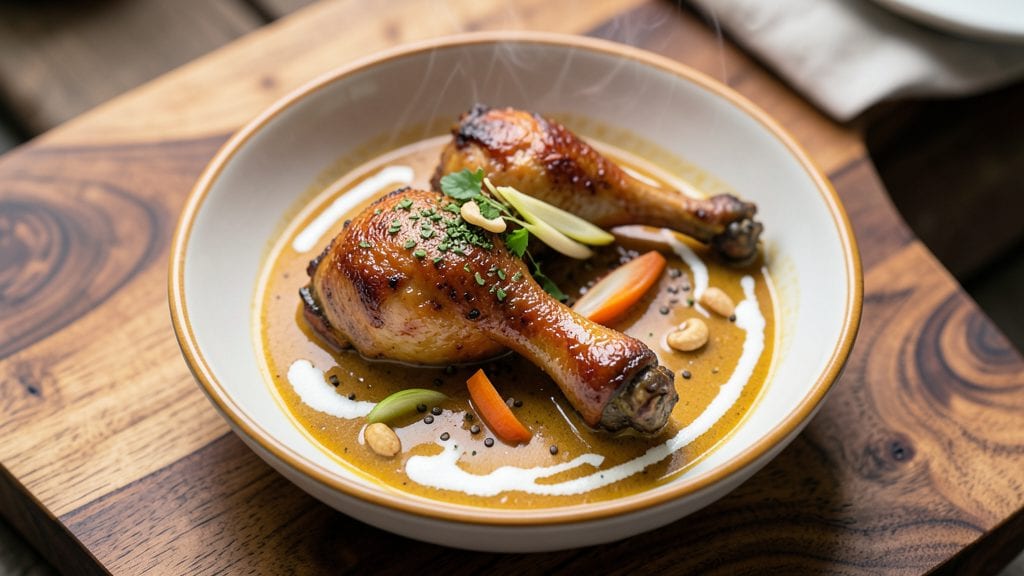
This duck curry recipe delivers the rich, aromatic fusion of coconut and ginger that defines authentic South Asian flavors—perfect for weeknight dinners or special occasions.
The secret lies in slow-braising duck with whole spices, creating a sauce that’s velvety yet complex, with layers of warmth from fresh ginger and depth from toasted cumin. I’ve refined this method over years of testing, balancing sweetness, spice, and umami to achieve restaurant-quality results at home.
The process begins with marinating duck legs in a spice paste that develops flavor as it cooks, then simmers in coconut milk until the meat falls apart tenderly. This recipe simplifies traditional techniques—like tempering whole spices—without sacrificing authenticity, making it accessible for home cooks while delivering professional outcomes.
The ginger-infused coconut sauce thickens beautifully, coating each bite in a fragrant, slightly sweet glaze.
By the time you serve this curry, your kitchen will smell like a bustling Mumbai street, and every spoonful will offer a harmonious blend of textures: crispy duck skin, melt-in-your-mouth meat, and a sauce that’s creamy yet vibrant.
Serve it over steamed basmati rice or warm naan to soak up every drop of that fragrant coconut-ginger goodness. This dish transforms a simple weeknight into a culinary experience.
Whether you’re feeding a family or hosting dinner guests, this duck curry scales effortlessly while maintaining its depth of flavor. The slow-cooking method ensures tender duck and a sauce that only improves with time, making it ideal for meal prep or last-minute entertaining.
Let’s get cooking—your taste buds will thank you.
Ingredients for duck curry
Rich coconut milk, aromatic ginger, and toasted spices transform simple duck into an aromatic masterpiece.
| Ingredient | Amount | Notes |
|---|---|---|
| Duck Legs 🦆 | 2 whole | Bone-in, skin-on for crispiness |
| Fresh Ginger 🌿 | 3 tbsp | Finely grated, aromatic quality |
| Garlic Cloves 🧄 | 6 cloves | Peeled and minced finely |
| Coconut Milk 🥥 | 1 ½ cans | Full-fat, 13.5 oz each |
| Whole Cumin Seeds 🌶️ | 1 ½ tbsp | Toasted until fragrant |
| Ground Coriander 🌿 | 1 tbsp | Freshly ground preferred |
| Turmeric Powder 🌶️ | 1 tsp | Bright orange, vibrant color |
| Ground Cardamom 🌿 | ½ tsp | Green pods preferred |
| Garam Masala 🌶️ | 1 tsp | Toasted blend for depth |
| Red Curry Paste 🌶️ | 2 tbsp | High-quality, authentic |
| Tomato Paste 🍅 | 2 tbsp | Smooth, no sugar added |
| Brown Sugar 🍯 | 2 tbsp | Lightly packed |
| Lemon Juice 🍋 | 1 tbsp | Freshly squeezed |
| Fresh Cilantro 🌿 | ¼ cup | Chopped, for garnish |
| Basmati Rice 🍚 | 1 cup | Uncooked, long-grain |
| Extra-Virgin Olive Oil 🫒 | 2 tbsp | For searing duck |
The duck legs are non-negotiable for this dish—bone-in and skin-on is essential for that crispy, flavorful skin and melt-in-your-mouth meat. Look for duck legs at Whole Foods or your local butcher shop, where they’ll often have the freshest cuts. If you can’t find them, duck breast halves work in a pinch, but they’ll cook faster and need different timing. The ginger should be bright and firm, with no soft spots—Penzeys Spices or the produce section at Trader Joe’s usually have the best quality. Toast your whole cumin seeds in a dry pan for 30 seconds until fragrant—that’s where the depth of flavor comes from.
No fresh ginger? Powdered ginger works at half the amount, but it won’t have the same zing. Short on coconut milk? Substitute with heavy cream plus a splash of coconut extract, though the texture won’t be identical. The red curry paste is key—Maesri or Thai Kitchen are my go-tos, but any high-quality paste will do. If you’re feeling adventurous, toast the garam masala with the cumin seeds for an extra layer of warmth. The brown sugar balances the heat, so don’t skip it—it’s what makes the sauce sing. And if you’re serving this to guests who love cilantro, garnish it generously. If they hate it, skip it entirely.
This curry tastes even better the next day, so make it ahead if you can. The sauce thickens as it cools, so you might need to add a splash of water or coconut milk when reheating. Store it in an airtight container in the fridge for up to 5 days, or freeze portions for 3 months. The rice? Cook it separately—1 cup basmati to 1.5 cups water, simmered until fluffy. Serve the curry over the rice, garnished with fresh cilantro and a squeeze of lemon—trust me, that bright finish ties everything together.
Why You'll Love This Recipe
- One-Pan Magic: I swear by this—just duck, ginger, garlic, and a handful of spices in one pot. No chopping mountains of veggies, no last-minute prep. The cumin seeds toast in minutes, filling the kitchen with that warm, earthy aroma before the real work even starts.
- Rich Without Effort: That crispy duck skin? Gold. The ginger and garlic simmer into the coconut milk until it’s velvety, with just enough kick to wake up your taste buds. Honestly, the first bite makes you forget how little actual work went into it.
- Weeknight to Dinner Party: Same recipe, different vibes. Serve it over rice with a squeeze of lime for a lazy Tuesday, or drizzle with fresh cilantro and toasted cashews for guests. Between us, it’s the one dish I never skip—even when I’m too tired to think.
- Leftover Luxury: This curry actually improves the next day. The duck gets even more tender, the flavors meld deeper, and reheating it? Just a splash of water, five minutes in the microwave. My freezer’s full of it—I make a double batch and thank myself later.
Step-by-step instructions for duck curry with coconut and ginger
This method delivers restaurant-quality duck curry with tender meat and aromatic coconut-ginger sauce.
Sear the Duck Legs for Maximum Flavor
Pat the 2 whole duck legs dry with paper towels—this ensures crispy skin. Heat the 2 tablespoons extra-virgin olive oil in a large Dutch oven over medium-high heat until shimmering. Place the duck legs skin-side down and sear for 8-10 minutes until the skin is deep golden brown and crispy. I press down gently during the first minute to prevent curling.
Flip the duck legs and cook for another 5-6 minutes until the skin is evenly browned. Remove them from the pot and set aside, leaving the rendered duck fat in the pan. This golden fat forms the flavor base for your curry, so don't drain it. The skin should be crisp enough to stand up slightly when touched—this is your signal to move forward.
Toast the Spices and Build the Aromatic Base
In the same Dutch oven with the duck fat, add the 1.5 tablespoons whole cumin seeds and toast over medium heat for 1-2 minutes until fragrant and lightly browned. Add the 6 cloves minced garlic cloves and 3 tablespoons freshly grated ginger, cooking for 30 seconds until the garlic turns golden and the ginger loses its raw bite. This step develops the spice complexity that makes this curry special.
Stir in the 2 tablespoons red curry paste and 2 tablespoons tomato paste, cooking for 1 minute until the pastes darken slightly. Add the 1 tablespoon ground coriander, 1 teaspoon turmeric powder, 0.5 teaspoon ground cardamom, and 1 teaspoon garam masala, stirring constantly for 30 seconds to toast the spices. The mixture should smell rich and earthy—this is your aromatic foundation.
Simmer the Duck in Coconut Milk
Return the duck legs to the pot skin-side up. Pour in the 1.5 cans coconut milk, scraping up any browned bits from the bottom. Add 2 tablespoons brown sugar and 1 tablespoon freshly squeezed lemon juice, stirring to combine. Bring to a gentle simmer over medium-low heat, then reduce heat to low and cover partially. Simmer for 1 hour, turning the duck legs occasionally, until the meat is fork-tender and pulls away from the bone easily.
Here's the thing—don't rush this step. The coconut milk should reduce slightly, creating a velvety sauce that clings to the duck. If the sauce gets too thin, uncover and simmer for an additional 10 minutes to thicken. The duck is done when it reaches an internal temperature of 165°F and the sauce has a rich, caramelized color.
Prepare the Basmati Rice
While the duck simmers, rinse the 1 cup basmati rice under cold water until the water runs clear. In a separate pot, combine the rice with 1.5 cups water (or follow package instructions) and bring to a boil. Reduce heat to low, cover, and simmer for 15 minutes until the rice is tender and the liquid is absorbed. Fluff with a fork and keep warm until serving.
This rice should be light and separate, not sticky. If you prefer a firmer bite, reduce the cooking time by 2-3 minutes. The rice should be ready just as you finish the curry, so you can serve them together.
Finish and Garnish the Curry
Once the duck is tender, carefully remove it from the sauce and transfer to a cutting board. Tent with foil and let rest for 10 minutes. Skim any excess fat from the sauce if needed, then return the duck to the pot and warm through for 2-3 minutes. Stir in the 0.25 cup chopped fresh cilantro just before serving to brighten the flavors.
Slice the duck legs against the grain for tender, bite-sized pieces. Serve the curry over the basmati rice, spooning generous amounts of the fragrant coconut sauce over the top. The finished dish should have a perfect balance of tender duck, aromatic spices, and creamy coconut milk—each bite should deliver rich, complex flavors that linger.
Pro Tips For Making Duck Curry
- CRISP THE DUCK FIRST: Skip the raw duck straight into the pot—it’ll turn your curry into a greasy mess. Pat the legs very dry, then sear them skin-side down in a screaming-hot pan until the skin renders crisp and golden (about 10 minutes). The fat will infuse the curry with depth, and you’ll get that coveted crunch without deep-frying. (Yes, even if you’re impatient like me.)
- GRATE GINGER FINE: I used to chop ginger into rough bits, and it would sit like rocks in my curry. For duck curry, use a microplane or the smallest holes of a box grater—you want it almost paste-like. This way, it blends seamlessly into the sauce instead of making you chew. (Prove me wrong and try it both ways; you’ll notice the difference immediately.)
- LOW AND SLOW AFTER COCONUT: Once you add the coconut milk, drop the heat to a barely simmer. Duck is forgiving, but rushing this step turns the curry into a watery, curdled disaster. Let it cook uncovered for 45–60 minutes, stirring occasionally, until the sauce thickens and the duck falls off the bone. (Your future self will thank you for not skimming this.)
- TOAST CUMIN SEEDS: Whole cumin seeds deserve more than a quick toss into the pot. Dry-toast them in the same pan you crisped the duck (about 30 seconds until fragrant) before grinding. This unlocks their nutty aroma, which cuts through the richness of the duck fat. (Sounds weird, but it works—trust the process.)
Pro cooking tips for perfect results
Duck Skin Secrets
Crispy duck skin is the star of this dish, and the key is patience. After searing, let the skin crisp for 8-10 minutes on medium-high heat—don’t rush it. I press down gently with a metal spatula during the first minute to flatten any curls.
For extra crispiness, finish the duck skin under a broiler for 1-2 minutes just before serving. This step transforms your curry from good to restaurant-worthy. 🔥
Spice Toasting Mastery
Toast your whole cumin seeds and garam masala until they’re fragrant but not burnt—this releases their essential oils. I use a cast-iron Dutch oven on medium heat for 1-2 minutes until the spices smell like a spice market.
Too much heat burns them, turning bitter. For deeper flavor, toast the spices in a dry pan before adding them to the curry base. This step is non-negotiable for authentic flavor.
Sauce Thickness Control
The coconut milk should reduce to a velvety consistency, but if it gets too thin, uncover and simmer for 10 minutes to thicken. I’ve found that adding 1 tablespoon cornstarch mixed with 2 tablespoons water works wonders if you’re short on time.
Stir in the slurry at the end and cook for 2 minutes to avoid a starchy aftertaste. The sauce should coat the back of a spoon without being gluey.
Duck Doneness Test
Check for doneness by inserting a meat thermometer into the thickest part of the duck leg—it should read 165°F. If it’s not quite there, return the duck to the pot and simmer for another 10-15 minutes.
The meat should pull away from the bone effortlessly. Overcooking dries out the duck, so keep an eye on it. A fork-tender test is also reliable, but the thermometer is foolproof.
Ginger-Glazed Finish
For a restaurant-quality touch, add 1 tablespoon honey or brown sugar during the last 5 minutes of cooking to caramelize the sauce. This step enhances the ginger’s natural sweetness and adds a glossy sheen.
Stir in the fresh cilantro just before serving to keep it vibrant and bright. The contrast between the crispy skin, tender meat, and fragrant sauce is what makes this curry unforgettable. ✨
Slow Cooker Adaptation
For hands-off cooking, sear the duck legs as directed, then transfer everything to a 6-quart slow cooker. Add the coconut milk, spices, and brown sugar, then cook on low for 6-7 hours or high for 3-4 hours.
The slow cooker’s gentle heat ensures tender duck without drying it out. Shred the meat directly in the pot for a fall-apart texture. This method is perfect for busy weeknights but still delivers deep, complex flavors. 💡
Nutrition facts
Frequently asked questions
Can I use duck breast instead of duck legs for this curry?
Duck breast works but requires adjustments—it cooks much faster than legs (20-25 minutes total vs 1 hour). Slice breasts 1-inch thick and sear skin-side down for 4-5 minutes until crispy. Remove from pan, then cook the sauce separately. Add the duck back only at the end to warm through (2-3 minutes) to avoid overcooking. The meat will be more delicate but equally flavorful.
How can I make this curry less spicy?
Reduce the red curry paste to 1 tablespoon instead of 2 and omit the garam masala or cardamom if you're sensitive. For extra mildness, add 1/4 cup plain yogurt at the end to balance heat. Always taste as you go—you can adjust with more coconut milk or a pinch of sugar to mellow the flavors.
What's the best way to reheat leftover duck curry?
Reheat gently in a saucepan over low heat with 2-3 tablespoons water or coconut milk to prevent drying. Cover and simmer for 5-7 minutes, stirring occasionally. For microwave reheating, use 30-second intervals on medium power, stirring between each. Add a splash of water or coconut milk if the sauce thickens too much. Leftovers taste even better the next day!
Can I substitute coconut milk with something else?
For a dairy-free option, use heavy cream (equal amount) with 1 teaspoon coconut extract for flavor. For a lighter version, blend 1 cup Greek yogurt with 1 cup water and 1 tablespoon butter. However, coconut milk provides the unique sweetness and texture that defines this dish—if possible, stick with it for authentic results.
Why did my duck curry turn out too thin?
This usually happens if the coconut milk wasn't reduced enough. Next time, simmer uncovered for 10-15 extra minutes to thicken naturally. For quick fixes, mix 1 tablespoon cornstarch with 2 tablespoons cold water, stir into the sauce, and cook for 2 minutes until thickened. Avoid adding too much liquid when reheating—this curry should have a velvety, spoon-coating consistency.