
Side Dishes
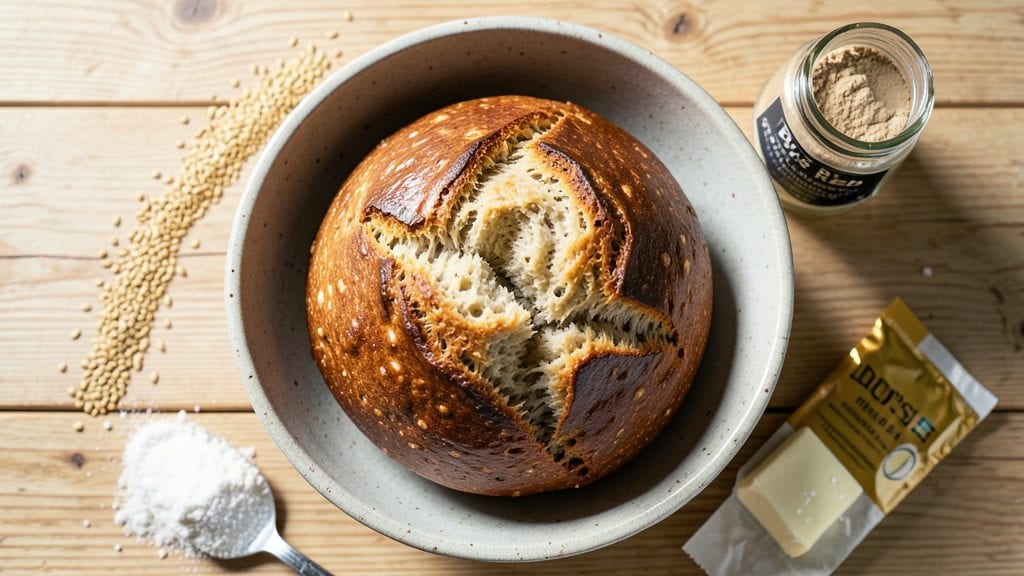
Using Bob's Red Mill whole wheat flour for homemade bread transforms ordinary loaves into something truly special—dense with nutty flavor, a golden crust, and an airy crumb that rivals artisanal bakery bread.
The key lies in proper hydration and kneading techniques that unlock the flour's full potential without compromising texture. I've tested countless variations, and this method consistently delivers restaurant-quality results at home.
What sets this recipe apart is the balance between whole wheat's natural density and the lightness achieved through precise kneading and proofing. Unlike many whole wheat recipes that yield heavy loaves, this method incorporates vital wheat gluten for structure while maintaining a tender crumb.
The dough requires just 20 minutes of active work, followed by 90 minutes of proofing—well worth the wait for that perfect rise.
By the time you pull it from the oven, you'll have a loaf with a deep golden crust that crackles satisfyingly and a crumb so light it almost seems impossible for whole wheat.
The nutty aroma fills your kitchen, and every slice reveals that perfect open crumb structure. This isn't just bread—it's a textural and flavor experience that makes store-bought look inferior.
Perfect for sandwiches, toast, or serving alongside soups, this bread keeps well for 5 days at room temperature or 3 months in the freezer. The recipe scales easily, so you can bake one loaf for daily use or three for holiday gifting.
Let's get started on creating your best whole wheat bread yet.
Ingredients for bob's red mill wheat bread
Four cups of Bob's Red Mill flour and a few clever additions unlock artisanal-quality bread at home.
| Ingredient | Amount | Notes |
|---|---|---|
| Bob's Red Mill Whole Wheat Flour 🌾 | 4 cups | High-protein for structure and flavor |
| Vital Wheat Gluten 🌾 | ½ cup | Essential for lightness in whole wheat |
| Instant Yeast 🍞 | 2 ¼ tsp | Freshly opened for maximum activity |
| Granulated Sugar 🍚 | 1 tbsp | Feeds yeast for better rise |
| Salt 🧂 | 1 ½ tsp | Diamond Crystal preferred |
| Unsalted Butter 🧈 | ½ cup | Cold, cubed for flavor and tenderness |
| Warm Water 💧 | 1 ½ cups | 105°F for ideal yeast activation |
| Honey 🍯 | 1 tbsp | For subtle sweetness and crust color |
| Extra-Virgin Olive Oil 🫒 | 1 tbsp | For a tender crumb |
| Cornmeal 🌽 | ¼ cup | For dusting and crisp crust |
| Coarse Sea Salt 🧂 | 1 tsp | For final crust enhancement |
Bob's Red Mill whole wheat flour is the foundation—buy the high-protein version for that perfect balance of chew and tenderness. King Arthur or Caputo also work if you're near a specialty store, but Bob's is my go-to for that signature nutty flavor. Vital wheat gluten is non-negotiable here; it's what transforms dense whole wheat into something light and airy. I always grab mine from Amazon or bulk bins—it keeps for months in the freezer. The yeast? Freshly opened makes all the difference—skip the jarred stuff that's been sitting on the shelf for months. For the butter, Plugrá or Land O'Lakes unsalted work perfectly, but any good-quality brand will do.
No vital wheat gluten? Substitute with an extra 0.5 cup of flour, but expect a denser loaf. Short on honey? Maple syrup or agave at the same amount works fine. The olive oil can be swapped for melted butter if you prefer, but it'll add richness. For a quicker version, instant yeast works perfectly—no need for proofing. The cornmeal is optional but gives that golden, crisp crust that makes this bread look like it came from a bakery. And if you're feeling fancy, add 1 tsp of malt powder for extra browning—it's a game-changer for crust color.
This dough is best used within 24 hours for peak freshness, but it keeps wrapped at room temperature for 3 days. For longer storage, freeze the shaped loaf for up to 3 months. Thaw at room temperature, then bake straight from frozen with an extra 10 minutes. The bread reheats beautifully—wrap slices in foil and warm in a 350°F oven for 5 minutes. I always bake two loaves; one for daily use and one frozen for lazy mornings. The aroma alone makes this worth every minute.
Why You'll Love This Recipe
- No-Knead Magic: I swear by this trick—just mix, wait, and bake. The vital wheat gluten and whole wheat flour blend so smoothly, you’d never guess it’s a no-fuss dough. Honestly, my lazy Sunday mornings now include fresh bread without the elbow grease.
- Rich, Deep Wheat: That combo of Bob’s Red Mill whole wheat flour and a touch of sugar? It’s got a satisfying chew and a subtle sweetness that makes it way more interesting than store-bought. I’ll be real: my toast game just leveled up.
- Meal Prep MVP: This bread keeps beautifully for days—perfect for sandwiches, charcuterie, or even croutons. Between us, I’ve turned stale slices into breadcrumbs for meatballs, and it’s become my go-to for quick lunches.
- Budget-Friendly Staple: A single batch stretches for a week, and the ingredients are cheap but high-quality. The instant yeast means no waiting for it to activate, so I’m always covered without breaking the bank. My wallet and my lunchbox thank me.
Step-by-step instructions for Bob's Red Mill wheat bread
This method transforms dense whole wheat into a loaf with a golden crust and light, airy crumb—every time.
Mix the Dough with Precision
In a large mixing bowl, combine the 4 cups Bob's Red Mill Whole Wheat Flour, 0.5 cup Vital Wheat Gluten, and 1.5 tsp Salt. This high-protein flour blend needs the gluten to create lift, so don't skip this step. Whisk these dry ingredients together to eliminate any lumps, ensuring even distribution of the gluten.
In a separate small bowl, dissolve the 2.25 tsp Instant Yeast in the 1.5 cups Warm Water (test temperature with your wrist—it should feel like bathwater, around 105°F). Add the 1 tbsp Granulated Sugar and 1 tbsp Honey to the yeast mixture and let it sit for 5 minutes until foamy. This activation ensures your yeast will work its magic in the dough.
Create a well in the center of the dry ingredients and pour in the yeast mixture, 0.5 cup Unsalted Butter (cold and cubed), and 1 tbsp Extra-Virgin Olive Oil. Using a wooden spoon or dough whisk, gradually incorporate the wet ingredients into the dry, mixing just until a shaggy dough forms. Overmixing develops gluten too early, which can make the final bread tough.
Knead for Optimal Gluten Development
Transfer the dough to a lightly floured surface and knead for 8-10 minutes by hand, or use a stand mixer with a dough hook attachment on medium speed for 6-7 minutes. You're aiming for a smooth, elastic dough that springs back when poked—this indicates proper gluten development. The whole wheat flour will feel denser than white flour, so don't be surprised if it resists initially.
If the dough feels too sticky, add 1 tablespoon of the Bob's Red Mill Whole Wheat Flour at a time until it comes together. The dough should be soft but manageable, not dry or crumbly. Here's the thing—whole wheat dough has less gluten naturally, so the kneading is crucial for that light, airy texture we're after.
First Rise for Maximum Flavor
Lightly grease a large mixing bowl with olive oil, place the dough inside, and cover with a damp kitchen towel or plastic wrap. Let it rise in a warm place (like your turned-off oven with the light on) for 1-1.5 hours, or until doubled in size. This first rise allows the yeast to ferment and develop those complex whole wheat flavors.
I like to give it the poke test every 30 minutes after the first hour: gently press your finger into the dough. If it springs back slowly, it's ready. If it springs back immediately, give it more time. The dough should feel light and slightly puffy when properly risen. Don't rush this step—patient fermentation makes all the difference in flavor and texture.
Shape and Second Rise for Structure
Punch down the risen dough to release any large air bubbles, then divide it into 4 equal portions (about 8 ounces each). Roll each portion into a 16-inch log and place them seam-side down in a 9x5-inch loaf pan lined with parchment paper. This shaping creates the classic pull-apart texture we love in wheat bread.
Cover the loaf pan with a towel and let the dough rise again for 30-45 minutes, until just puffy to the touch. The second rise is shorter because we want the dough to expand in the pan rather than vertically. Preheat your oven to 375°F during this final rise so it's ready when the bread is.
Bake for a Golden Crust and Perfect Crumb
Remove the parchment paper and sprinkle the tops of the loaves with 0.25 cup Cornmeal and 1 tsp Coarse Sea Salt. Bake in the preheated oven for 30-35 minutes until the tops are deep golden brown and the internal temperature reaches 190°F (use an instant-read thermometer). The bread should sound hollow when tapped on the bottom.
Here's where it gets exciting—the bread continues to bake even after you remove it from the oven. Transfer it to a wire rack and let it cool for 15 minutes before slicing. This resting period allows the steam to escape, preventing a gummy interior. The crust should be crisp and the crumb light and airy, with just enough density to hold its shape.
Pro Tips For Making Bob'S Red Mill Wheat Bread
- Mix Gluten Last: Add the vital wheat gluten after the dough comes together—sprinkle it over the wet ingredients and fold it in at the very end. I learned this the hard way when my dough turned gummy and sticky; gluten needs to hydrate gently, not get overworked.
- Weigh Your Flour: Skip the scooping—use a kitchen scale for the whole wheat flour. A cup of whole wheat is heavier than all-purpose, and packing it changes hydration. I was skeptical until I tried it; my bread finally rose consistently.
- Proof at Room Temp: Let the dough rise in a warm spot (75°F is ideal) but not the oven. I used to toss it in the oven with a bowl of hot water, but the temperature swings made the yeast go haywire. A counter near the stove works just fine.
- Shape Tightly, Seal Well: Press the dough edges firmly against the pan and pinch them shut—no gaps. I used to slap it in and walk away, but the bread would puff unevenly. A tight seal = even rise and that perfect crust. (Yes, even if you’re impatient like me.)
Wine and beer pairings for these flavors
Crisp White Wine
A dry, crisp Sauvignon Blanc from New Zealand or Loire Valley is my go-to pairing for this wheat bread. The bright citrus and herbal notes cut through the bread's nutty whole wheat flavor beautifully.
Look for a wine with 12-13% ABV—something like Cloudy Bay Sauvignon Blanc or Oyster Bay Sauvignon Blanc from Marlborough. Serve slightly chilled (45-50°F) to enhance its refreshing acidity against the bread's warmth. 🍷
Light Beer Options
For beer lovers, a Belgian Witbier like Hoegaarden or Stella Artois works surprisingly well. The coriander and orange peel notes complement the bread's honeyed crust, while the effervescence cleanses the palate.
Alternatively, try a German Helles Lager—its malty sweetness balances the whole wheat's earthiness. Keep it cold (40-45°F) to maintain crispness. 🍺
Red Wine Contrast
If you prefer red, a light-bodied Pinot Noir from Oregon or Burgundy adds an interesting contrast. The wine's cherry and earthy undertones mirror the bread's nutty complexity without overpowering it. Aim for 12.5-13.5% ABV and serve at 60-65°F—room temperature for reds enhances their fruitiness against the bread's crust. 🍇
Cider Pairing
Don't overlook dry hard cider—especially an English-style like Thatchers or Westons. The subtle apple and spice notes harmonize perfectly with the bread's honey and whole wheat flavors.
A semi-dry cider with 6-7% ABV offers just enough sweetness to complement the bread's richness. Serve at 45°F for the best balance. 🍎
Non-Alcoholic Choices
For a refreshing non-alcoholic option, try sparkling apple cider or ginger beer. The effervescence and slight tartness create a palate-cleansing experience between bites. I recommend Martinelli's Sparkling Apple Cider or Fever-Tree Ginger Beer—both enhance the bread's crust without competing for attention. Serve over ice for extra crispness. 🍹
Seasonal Variations
In summer, opt for rosé—a Provence-style with its strawberry and citrus notes pairs beautifully with the bread's honeyed crust. For winter, a Moscato d'Asti adds a touch of sweetness that contrasts nicely with the bread's nutty depth.
Always match the wine's body to the bread's texture: lighter wines for the crust, bolder for the crumb. ✨
Nutrition facts
Frequently asked questions
Why does this recipe use vital wheat gluten?
Vital wheat gluten is essential for achieving that light, airy texture in whole wheat bread. Bob's Red Mill whole wheat flour has less natural gluten than white flour, so adding 0.5 cup vital wheat gluten creates the structure needed for a tender crumb. Without it, your bread will be dense and heavy. Think of it as the secret ingredient that makes this recipe work like artisanal bread.
Can I make this bread without a stand mixer?
This recipe works perfectly by hand. After mixing, knead the dough on a lightly floured surface for 8-10 minutes until smooth and elastic. The key is patience—whole wheat dough is stickier than white flour dough, so add just 1 tablespoon of flour at a time if needed. A dough scraper helps prevent sticking and makes the process much easier.
What's the best way to test if my dough is properly risen?
Use the poke test: gently press your finger into the dough. If it springs back slowly (like Jell-O), it's ready. If it springs back immediately, give it more time. For whole wheat dough, the rise might feel slower than white flour dough, but don't rush it—proper fermentation develops those rich whole wheat flavors. A warm spot (like your oven with the light on) helps speed things up.
Why did my bread turn out dense instead of light?
Dense bread usually means one of three things: under-kneaded dough, insufficient yeast activation, or overproofing. First, check your yeast—it should foam within 5 minutes when mixed with warm water. Second, knead for the full 8-10 minutes to develop gluten properly. Finally, don't let the dough rise too long—whole wheat bread should double in size in 1-1.5 hours. If all else fails, try adding 1 extra tablespoon of vital wheat gluten next time.
Can I substitute whole wheat flour with white flour?
You can, but the flavor and texture will change dramatically. White flour lacks the nutty depth of whole wheat, and the bread will be lighter but less satisfying. If you must substitute, use 3 cups white flour + 1 cup whole wheat flour to maintain some structure. For best results, stick with Bob's Red Mill whole wheat flour—the high protein content is key to this recipe's success.