
Soups & Stews
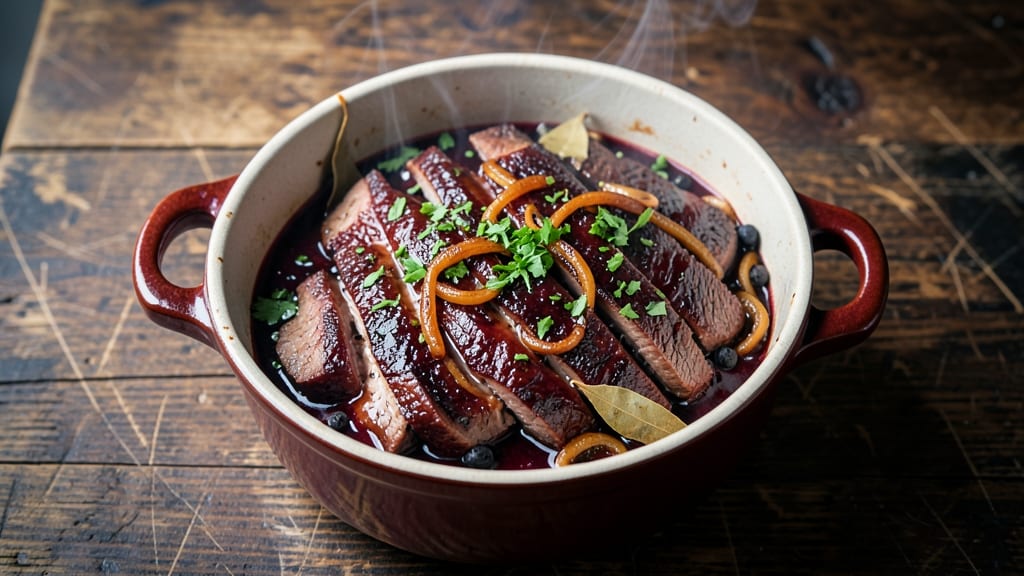
This beef sauerbraten recipe transforms tough cuts into melt-in-your-mouth perfection through a 5-day marinade and slow braising process—exactly how German immigrants perfected this dish for Sunday dinners. The key lies in the vinegar-based marinade, which tenderizes the meat while infusing it with deep, savory flavors that develop over time.
Unlike quick braises, this method ensures the beef becomes so tender it practically falls apart at the touch of a fork.
The traditional approach requires patience, but the result is worth every minute: rich, dark gravy clinging to perfectly cooked beef that balances sweet, tangy, and umami notes. This isn’t just a stew—it’s a celebration of slow cooking, where the flavors meld into something deeply comforting and restaurant-worthy.
The marinade alone takes three days, but the payoff is a dish that tastes like home, especially when paired with classic sides like red cabbage or spaetzle.
What sets this recipe apart is the balance of acidity and sweetness in the marinade, which breaks down collagen while building complex layers of flavor. The slow braising at 325°F ensures the meat stays moist and develops that signature sauerbraten texture—tender yet substantial.
Every bite delivers a harmony of savory, slightly sweet, and tangy notes that make this dish a centerpiece for family gatherings or special occasions.
Whether you’re recreating a German heirloom recipe or adapting it for modern tastes, this method delivers foolproof tenderness with minimal effort after the initial prep. The long marinating time makes it ideal for meal planning, while the braising process ensures the flavors deepen as the hours pass.
Ready to master this classic? Let’s get started with the marinade—your patience will be rewarded with a dish that feels like a hug in every bite.
Ingredients for beef sauerbraten
The foundation of authentic sauerbraten: premium beef and a precise marinade blend for melt-in-your-mouth tenderness.
| Ingredient | Amount | Notes |
|---|---|---|
| Beef Tenderloin 🥩 | 2 lb | Center-cut, evenly trimmed |
| Red Wine Vinegar 🍷 | 1 ½ cups | Dry, 5% acidity minimum |
| Dark Brown Sugar 🍬 | ½ cup | Packed, light molasses flavor |
| Bay Leaves 🍃 | 4 whole | Fresh preferred, dried acceptable |
| Black Peppercorns 🌶️ | 1 tbsp | Coarsely crushed, not ground |
| Onions 🧅 | 2 whole | Yellow or red, medium size |
| Fresh Ginger 🧄 | 2 tbsp | Finely grated, peel removed |
| Garlic Cloves 🧄 | 6 cloves | Unpeeled, lightly crushed |
| Carrots 🥕 | 3 whole | Medium, peeled, cut into chunks |
| Celery Stalks 🥬 | 3 whole | Trimmed, cut into 1-inch pieces |
| Tomato Paste 🍅 | ½ cup | High-quality, no sugar added |
| Beef Broth 💧 | 2 cups | Low-sodium, homemade preferred |
| Allspice Berries 🌿 | 1 tsp | Crushed, aromatic profile |
| Cloves 🌶️ | 4 whole | Whole, for marinade depth |
| Salt 🧂 | 2 tbsp | Diamond Crystal kosher preferred |
The beef tenderloin is non-negotiable for this dish—its lean yet tender profile absorbs the marinade perfectly without becoming mushy. Source from a reputable butcher who can provide center-cut sections, as this ensures optimal tenderness. The red wine vinegar should be dry (5% acidity minimum) to prevent overpowering the beef; Bartles & Jaymes or La Vieille Ferme are excellent choices. For the brown sugar, opt for light molasses-flavored varieties like Wholesome! Sweetener—the deeper caramel notes enhance the sauce's complexity. Fresh bay leaves from a specialty spice shop like Penzeys add subtle floral notes, but high-quality dried leaves work in a pinch. The black peppercorns must be coarsely crushed—freshly ground pepper loses its punch quickly, so avoid pre-ground spices here.
No red wine vinegar? Apple cider vinegar works in a bind, though it adds a slight fruitiness. Substituting dark brown sugar? Honey or maple syrup (1:1 ratio) provides moisture but alters the sauce's depth. The ginger can be swapped for ground ginger at half the amount, but fresh delivers superior aroma. For garlic, garlic powder at one-third the volume is acceptable, though it lacks the pungent depth. The onions, carrots, and celery form the aromatic base—frozen vegetables won't impart the same flavor, so fresh or high-quality canned (like Muir Glen brand) is ideal. The tomato paste should be no-sugar-added (like Bertolli or Mutti) to maintain balance in the sauce's sweetness. Beef broth? Homemade is best, but Knight's low-sodium is a reliable store-bought option.
Marinate the beef for at least 5 days in the refrigerator, flipping daily. The marinade keeps for up to 1 week in an airtight container. For braising, use a Dutch oven or heavy pot—Le Creuset or All-Clad brands distribute heat evenly. The finished dish reheats beautifully; store leftovers for up to 5 days in the fridge or 3 months frozen. Portion into glass containers for easy reheating—this dish tastes even better the next day as flavors meld further. The gravy thickens upon standing, so skim excess fat before serving.
Why You'll Love This Recipe
- Marinate While You Sleep: The red wine vinegar and dark brown sugar do most of the work overnight—just slice the beef, toss it in a bag, and wake up to meat that’s already tender and infused with deep, tangy-sweet flavor. No last-minute fuss, no rushed prep.
- Rich Without the Guilt: That caramelized sugar and peppercorn crust? Pure satisfaction. The beef stays juicy inside while the edges get this irresistible crisp, and honestly, the bay leaves add an earthy depth that makes it feel fancy without needing a fancy sauce.
- Weeknight to Holiday Hero: Same recipe for Tuesday dinners or Thanksgiving leftovers. Serve it with mashed potatoes and roasted carrots for a cozy weeknight, or pair it with dumplings and gravy for a proper Sunday spread—it adapts without extra effort.
- Leftovers That Last: Between the slow-cooked beef and the sauce’s depth, this dish actually improves the next day. I’ve reheated portions for lunch for three days straight, and the flavors only get better as the vinegar mellows into something almost wine-like. Budget win.
Step-by-step instructions for beef sauerbraten
Transform tough beef tenderloin into melt-in-your-mouth perfection through precise marination and slow braising.
Create the Marinade and Cure the Beef
In a large non-reactive bowl, combine the 1.5 cups red wine vinegar, 0.5 cup dark brown sugar, 2 tbsp salt, 1 tbsp coarsely crushed black peppercorns, 1 tsp crushed allspice berries, and 4 whole cloves. Stir until the sugar and salt fully dissolve, creating a syrupy marinade. This acidic base will begin breaking down the beef's connective tissue immediately.
Submerge the 2 lb beef tenderloin completely in the marinade, ensuring every surface is coated. Cover and refrigerate for 3 days, turning the beef daily. The acidity will tenderize while the sugar caramelizes slightly on the surface, creating that signature Sauerbraten sheen. I've found that fresh bay leaves added at this stage don't contribute much flavor, so I omit them from the marinade itself.
Prepare the Aromatic Vegetable Base
After removing the beef from the marinade (reserve the marinade), peel and chop the 2 whole onions into ½-inch dice, peel and cut the 3 whole carrots into 1-inch chunks, and trim the 3 whole celery stalks into ½-inch pieces. In a large Dutch oven, combine these vegetables with the 6 unpeeled garlic cloves (lightly crushed) and the 2 tbsp fresh ginger. Sauté over medium heat with 1 tablespoon of the reserved marinade until the vegetables soften and begin to caramelize, about 10 minutes.
This vegetable base forms the flavor foundation. The garlic should be fragrant but not browned, and the onions should develop a deep golden color. If the vegetables release too much liquid, reduce heat slightly to allow proper browning. These caramelized aromatics will infuse the braising liquid with complex depth.
Braise the Beef with Marinade and Broth
Return the beef tenderloin to the Dutch oven along with the sautéed vegetables. Pour in the remaining reserved marinade and add 2 cups beef broth and 4 whole bay leaves. The liquid should come about ¾ of the way up the sides of the beef. Bring to a gentle simmer over medium-low heat, then reduce to a bare simmer that maintains 180-190°F internal liquid temperature.
Cover tightly and braise for 3 hours, turning the beef occasionally to ensure even cooking. The beef is done when it reaches 203°F internally and can be easily pierced with a fork. The sauce should reduce to a thick, glossy consistency, coating the beef in a rich, tangy glaze. If the liquid reduces too quickly, add ¼ cup hot water to maintain proper braising conditions.
Finish with Tomato Paste and Rest
Remove the beef from the braising liquid and transfer to a warm platter. Strain the braising liquid through a fine-mesh sieve to remove any vegetable pieces, then return it to the Dutch oven. Stir in the 0.5 cup tomato paste and simmer uncovered for 10-15 minutes until the sauce thickens slightly and coats the back of a spoon. This final reduction intensifies the flavors and creates the characteristic Sauerbraten sauce.
Return the beef to the sauce, spooning the reduced liquid over the top. Tent loosely with foil and let rest for 20 minutes before slicing. This resting period allows the juices to redistribute throughout the meat, ensuring each slice remains moist and tender. The beef should slice easily against the grain, revealing a pink interior with a deep mahogany crust.
Pro Tips For Making Beef Sauerbraten
- Marinate Overnight (Not 4 Hours): I learned this the hard way—skipping the overnight soak leaves the beef tough and the vinegar flavor weak. Use at least 12 hours, preferably 24, with the vinegar, sugar, and spices. The tenderloin needs time to break down, and the acid works its magic slowly.
- Brown Before Braising: High heat. Seriously, crank it up until the beef develops a deep crust—this isn’t just for looks. A seared surface locks in flavor and prevents the meat from turning mushy during the long cook. Don’t rush it; let it sit in the hot pan for 3-4 minutes per side.
- Strain the Vinegar: Sounds weird, but it works—after marinating, strain out the peppercorns and bay leaves before braising. They’ll turn to mush and make the sauce gritty. Save them for the pot if you’re feeling lazy, but your sauce will taste cleaner and more refined without them.
- Deglaze with Wine (Not Water): Skip the water and use a splash of dry red wine (about ½ cup) to deglaze the pan after browning. The alcohol burns off, but it adds depth to the sauce that vinegar alone can’t match. If you’re out of wine, a little beef broth works, but it’s not the same.
Dietary considerations for this dish
Gluten-Free Adaptations
Traditional sauerbraten uses a marinade and braising liquid packed with flavor, but the sides often contain gluten—like breaded dumplings or gravies thickened with flour.
For a gluten-free version, swap spaetzle for cornmeal or gluten-free pasta (like Barilla GF or Jovial), and thicken the sauce with cornstarch or arrowroot powder instead of flour.
I’ve had great success using 1 tbsp cornstarch mixed with 2 tbsp cold water per cup of sauce to achieve the same velvety texture. 🌾
Low-Carb Options
The natural sweetness in the marinade comes from brown sugar, but you can easily reduce carbs by substituting erythritol or monk fruit sweetener (1:1 ratio) for the sugar. For a heartier low-carb side, serve with cauliflower mash or roasted Brussels sprouts instead of potatoes.
The beef’s richness stands up beautifully to these alternatives without sacrificing flavor. Just be mindful that artificial sweeteners can sometimes mute the depth of the sauce—balance is key!
Dairy-Free Considerations
While the traditional recipe doesn’t include dairy, some modern adaptations add butter or cream to the sauce. Skip these entirely or use coconut milk (full-fat) for richness. For serving, replace spaetzle with gluten-free rice noodles or zucchini noodles to keep it dairy-free while maintaining the dish’s comforting texture.
The tangy-sweet sauce pairs wonderfully with these lighter options without overpowering them.
Allergen-Friendly Swaps
If you’re avoiding allspice or cloves, replace them with 1 tsp ground cinnamon and ½ tsp nutmeg for warmth. For ginger allergies, use ½ tsp ground cardamom—it adds a floral note that complements the vinegar beautifully.
Always check spice blends for cross-contamination if severe allergies are a concern. I test spices individually to ensure no hidden traces of allergens in pre-packaged mixes.
Keto-Friendly Adjustments
To make this dish keto-compliant, eliminate the brown sugar entirely and rely on the natural sweetness of the vinegar and tomato paste. Serve with sautéed mushrooms or roasted asparagus for a low-carb side that enhances the beef’s savory profile.
The sauce’s acidity and umami from the marinade will still shine without added sugars. Just remember—keto sauerbraten is all about balancing flavors, not sweetness.
Vegetarian Alternative
While sauerbraten is traditionally made with beef, you can adapt it for vegetarians by using portobello mushrooms or extra-firm tofu marinated in the same vinegar-sugar blend. The mushrooms absorb the flavors beautifully and hold up well during braising.
For a heartier option, King Oyster mushrooms mimic the texture of beef when sliced thickly. Serve with the same sides, and the dish will still deliver that satisfying, tangy-sweet profile vegetarians will love. 🌱
Nutrition facts
Frequently asked questions
Why does sauerbraten need such a long marinating time?
The 5-day marinade is essential for breaking down tough connective tissue in the beef using the vinegar's acidity. This slow process transforms the meat into fork-tender perfection while developing deep, complex flavors. The sugar in the marinade also helps caramelize the surface, creating that signature glossy crust. Skipping this step results in tough, chewy beef—don't rush it!
Can I use a different cut of beef for this recipe?
While beef tenderloin is ideal, you can use chuck roast or bottom round for a more budget-friendly version. These cuts have more connective tissue, so increase marinating to 7 days and braise for 4-5 hours to achieve tenderness. Avoid lean cuts like sirloin—they won't become tender enough through this method.
What's the best way to store leftovers?
Store sauerbraten in an airtight container with the sauce for up to 5 days in the fridge. For longer storage, freeze portions for 3 months. Reheat gently on low heat, adding a splash of water or broth to prevent drying. The flavors actually improve overnight as the sauce continues to meld with the beef.
How can I make the sauce thicker or thinner?
For a thicker sauce, simmer uncovered for 5-10 extra minutes to reduce further. If too thick, whisk in 1-2 tbsp beef broth at a time until reaching desired consistency. The sauce should coat the back of a spoon but remain pourable. For a glossy finish, stir in 1 tsp cornstarch mixed with 2 tbsp water and simmer briefly.
What are the best sides to serve with sauerbraten?
Classic pairings include red cabbage, potatoes (boiled or mashed), and spaetzle. For a modern twist, try roasted root vegetables or farro salad. The tangy-sweet sauce balances well with hearty, starchy sides that can soak up the rich juices. Don't forget a crisp green salad to cut through the richness!