
Main Courses
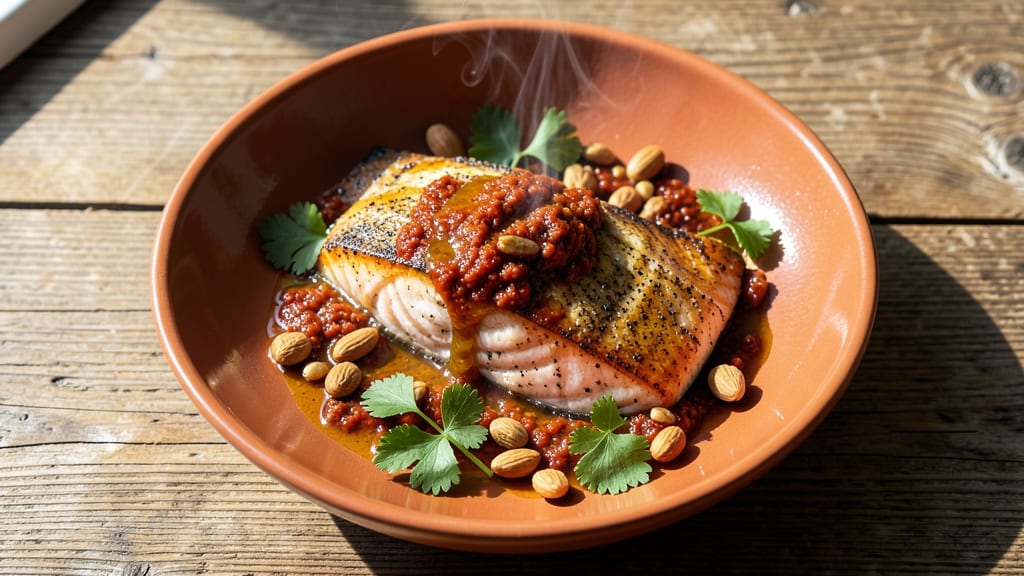
This baked Moroccan salmon recipe transforms simple fillets into a restaurant-worthy dish with just a few key spices and a crispy harissa-spiced crust.
The blend of warm cumin, smoky paprika, and fiery harissa creates layers of flavor that penetrate every bite, while the baking process ensures the salmon stays perfectly tender inside. I developed this recipe after years of experimenting with Moroccan cuisine—this version delivers authentic taste without requiring a tandoor oven.
The secret lies in the marinade, where harissa brings that signature North African heat while cumin and coriander add earthy depth. You'll bake the salmon at 400°F for just 12-15 minutes, giving you golden, crackling skin that contrasts beautifully with the moist, flaky flesh underneath.
This method preserves all the natural oils and keeps the texture restaurant-quality, not dry or rubbery.
What makes this dish truly special is how it balances bold flavors with simple preparation. The harissa-spiced crust adds visual appeal and a satisfying crunch, while the tender salmon inside delivers melt-in-your-mouth satisfaction.
Serve it with fluffy couscous or roasted Mediterranean vegetables to complete the Moroccan-inspired meal—each bite tells a story of spices and tradition.
Perfect for weeknight dinners or special occasions, this recipe scales effortlessly for two or four. The marinade keeps well in the fridge, so you can prep ahead and bake when ready.
Once you try this, Moroccan salmon will become a regular on your dinner rotation—simple enough for weeknights but impressive enough for guests.
Ingredients for baked moroccan salmon
Four fillets, bold spices, and a crispy crust—this is your Moroccan-inspired salmon shortcut.
| Ingredient | Amount | Notes |
|---|---|---|
| Fresh Atlantic Salmon Fillets 🐟 | 2 whole | Skin-on, 6-8 oz each |
| Harissa Paste 🌶️ | 2 tbsp | High-quality, not powdered |
| Ground Cumin 🌿 | 1 tbsp | Toasted for deeper flavor |
| Smoked Paprika 🌶️ | 1 tbsp | For authentic smokiness |
| Ground Coriander 🌿 | 1 tsp | Freshly ground preferred |
| Extra-Virgin Olive Oil 🫒 | 2 tbsp | High-quality, fruity variety |
| Fresh Lemon Juice 🍋 | 1 tbsp | From 1 small lemon |
| Honey 🍯 | 1 tbsp | For subtle sweetness |
| Garlic Cloves 🧄 | 3 cloves | Minced for marinade |
| Diamond Crystal Kosher Salt 🧂 | ½ tsp | For seasoning |
| Freshly Ground Black Pepper 🌶️ | ¼ tsp | For finishing |
| Fresh Parsley 🌿 | ¼ cup | Chopped for garnish |
The harissa is the star here. Penzeys or Trader Joe's carry excellent pastes—avoid the powdered versions, which lack depth. If you can't find harissa, a mix of cayenne and smoked paprika (1:2 ratio) works in a pinch, though it won't have the same complexity. For the salmon, freshness matters most—look for fillets with vibrant color and minimal fishy odor. I always buy wild-caught Atlantic from the seafood counter, not pre-packaged. The skin should stay intact during baking, so pat the fillets dry with paper towels before seasoning—they'll crisp up beautifully.
No harissa paste? Substitute 1 tbsp each of cayenne and smoked paprika plus 1 tsp cumin—it won't be identical, but close. Running out of honey? A quick swap is maple syrup, though it adds a slightly different depth. The olive oil should be extra-virgin and fruity—none of that cheap cooking oil. For the garlic, I usually roast the cloves first (wrap in foil, 400°F for 10 minutes) to mellow the flavor, but raw works too. The parsley is purely decorative, but it brightens up the plate—dried won't cut it here.
This marinade keeps for 5 days in the fridge, so prep ahead if you're busy. The salmon bakes in just 12-15 minutes, so time it right—overcooking turns it rubbery. For leftovers, store in an airtight container with a paper towel on top to keep the crust crisp. Reheats beautifully in a 350°F oven for 5-7 minutes. I always make a double batch of the marinade—use the extra on grilled chicken or roasted potatoes.
Why You'll Love This Recipe
- One-Pan Magic: I swear by this—just toss the salmon fillets on a sheet pan, slather on that harissa paste, sprinkle the cumin and smoked paprika, and let the oven do the work. No chopping, no fuss, no cleanup beyond one pan.
- Flavor Bomb: That harissa brings the heat (not too spicy, promise), while the cumin and coriander add this earthy, cozy depth. The salmon comes out tender with a crispy edge—like a warm hug for your taste buds.
- Weeknight & Weekend: Make it for yourself on a Tuesday or double the batch for a dinner party. The leftovers reheat beautifully, and honestly? It’s just as impressive served on a fancy plate as it is straight from the pan.
- Budget-Friendly Luxury: Salmon feels fancy, but this recipe stretches it—harissa and spices cost pennies, and a single fillet feeds two. Plus, the leftovers turn into tomorrow’s lunch or a quick office salad. Smart, satisfying, and still feels special.
Step-by-step instructions for baked Moroccan salmon
Here's how to create perfectly tender salmon with a fragrant harissa-spiced crust that delivers bold North African flavors.
Create the Harissa-Spiced Crust
In a small bowl, combine the 2 tablespoons harissa paste, 1 tablespoon ground cumin, 1 tablespoon smoked paprika, and 1 teaspoon ground coriander. This blend forms the aromatic base that will create both flavor and texture. Add 1 tablespoon honey and 1 tablespoon fresh lemon juice, mixing until you achieve a thick, spreadable paste with a vibrant orange hue.
The harissa paste provides the signature heat while the honey and lemon juice create a beautiful balance between sweet, tart, and spicy. This mixture will form the crust on your salmon, delivering both flavor and a delicate crunch. Set this mixture aside while you prepare the salmon.
Prepare and Season the Salmon
Pat the 2 whole fresh Atlantic salmon fillets (skin-on) completely dry with paper towels. This step is crucial for achieving a crispy crust. Arrange the fillets on a clean work surface with the skin-side down. Using a sharp knife, make shallow diagonal cuts through the flesh (not the skin) about ½-inch apart. This creates channels that will hold the spice mixture.
Season both sides of each fillet generously with 0.5 teaspoon diamond crystal kosher salt and 0.25 teaspoon freshly ground black pepper. The salt will draw out moisture, helping to create that perfect crust, while the pepper adds a subtle warmth that complements the harissa. Let the seasoned fillets rest at room temperature for 10 minutes while you prepare the next components.
Assemble and Bake for Tender Perfection
Preheat your oven to 400°F. Line a baking sheet with parchment paper and lightly brush the surface with 1 tablespoon of the 2 tablespoons extra-virgin olive oil. Arrange the salmon fillets skin-side down on the prepared baking sheet. Using your fingers or a small offset spatula, press the harissa-spice mixture firmly into the cuts and over the surface of each fillet, ensuring even coverage.
Drizzle the remaining 1 tablespoon extra-virgin olive oil over the top of each fillet. The oil helps create a beautiful sheen and aids in browning. Bake for 12-15 minutes, until the edges are golden brown and the internal temperature reaches 145°F when measured with an instant-read thermometer. The salmon should flake easily with a fork but remain moist in the center.
Finish and Garnish
Remove the salmon from the oven and transfer to serving plates. Immediately sprinkle with the 0.25 cup chopped fresh parsley, which adds a bright contrast to the rich, spiced salmon. The parsley should be distributed evenly across the surface for both visual appeal and freshness. Let the salmon rest for 3-5 minutes before serving to allow the juices to redistribute.
Serve immediately with sides like couscous or a fresh salad to complement the Moroccan flavors. The result should be tender, flaky salmon with a beautifully spiced crust that delivers both heat and complexity in every bite. The balance of harissa, honey, and lemon creates a memorable flavor profile that stays with you.
Pro Tips For Making Baked Moroccan Salmon
- Preheat Pan First: I learned this the hard way—slapping salmon straight onto a cold sheet pan means uneven cooking and a sad, rubbery texture. Heat your baking tray for 5 minutes at 400°F (200°C) before adding the fish, so it starts cooking instantly and develops that perfect crust from the harissa.
- Whisk Harissa with Oil: Harissa paste is thick and stubborn. Mix it with 1 tablespoon of olive oil before spreading it on the salmon—this helps it adhere better and prevents clumping. (Yes, even if you’re impatient like me, skip the dry rub shortcut.)
- Don’t Overcrowd the Pan: Salmon needs space to breathe, or it’ll steam instead of crisp. Arrange fillets in a single layer with at least 1 inch between them. If you’re making two batches, use a second tray—crowding turns your crispy dream into a sad, soggy mess.
- Add Lemon Last: The acid in lemon can break down the salmon’s texture if added too early. Spritz or squeeze it over the fillets in the last 3 minutes of baking—this keeps the flesh tender while brightening the flavors. (Your future self will notice the difference.)
Serving suggestions for baked moroccan salmon
Moroccan-Inspired Sides
Start with fluffy Moroccan-style couscous—cook 1 cup fine couscous with 2 cups chicken broth, then fold in 1 tbsp butter and 1 tbsp chopped cilantro. The light, fluffy texture soaks up the salmon’s harissa flavors beautifully. For extra authenticity, add ½ tsp ground ginger to the broth. 🌿
Roasted Mediterranean vegetables like zucchini, bell peppers, and red onions bring vibrant color and sweetness. Toss 2 cups chopped veggies with 1 tbsp olive oil, ½ tsp cumin, and ¼ tsp smoked paprika, then roast at 400°F for 20 minutes.
The caramelized edges contrast perfectly with the salmon’s spiced crust.
Fresh Garnishes
Brighten the plate with pickled red onions—thinly slice 1 red onion, soak in ¼ cup vinegar, 1 tsp sugar, and ¼ tsp salt for 15 minutes.
Their tangy crunch cuts through the richness. A sprinkle of toasted pine nuts adds texture and a nutty depth that mirrors Moroccan flavors.
Sauce Pairings
Drizzle with lemon-honey sauce—whisk 2 tbsp honey, 1 tbsp lemon juice, 1 tsp olive oil, and a pinch of salt. The sweet-tart balance enhances the harissa’s heat. For extra richness, add 1 tsp tahini for a creamy, nutty finish.
Bread Service
Serve with warm Moroccan bread like khobz or msemen—light, pillowy, and perfect for soaking up sauce. Buy pre-made from Middle Eastern markets or bake your own using 2 cups flour, 1 packet yeast, and 1 tsp sugar. Warm in a 350°F oven for 5 minutes before serving.
Drink Pairings
Cool mint lemonade with ½ cup muddled mint, 1 cup lemon juice, ½ cup honey, and 4 cups cold water refreshes the palate. For alcohol lovers, a crisp Sauvignon Blanc from Morocco’s Atlas Mountains mirrors the harissa’s acidity and herbal notes. 🍷
Nutrition facts
Frequently asked questions
Can I use frozen salmon for this Moroccan recipe?
Frozen salmon works, but thaw it properly first. Place the fillets in a sealed bag and submerge in cold water for 30-45 minutes until flexible but still cold. Never thaw at room temperature—this promotes bacterial growth. Pat completely dry before seasoning to ensure that crispy crust.
What makes this different from regular baked salmon?
The harissa-spiced crust and Moroccan flavor blend set it apart! While regular baked salmon relies on simple seasonings, this recipe uses harissa for heat, cumin for earthiness, and smoked paprika for depth—plus the honey-lemon balance that creates a sweet-spicy contrast. The crust also adds texture that plain baking can't match.
How do I adjust the heat level in the harissa crust?
Reduce heat by using 1 tbsp harissa instead of 2 tbsp and adding ½ tsp extra honey. For more heat, increase harissa to 3 tbsp and add a pinch of cayenne. Always taste the paste before applying—harissa varies in spiciness between brands.
Can I make this recipe ahead of time?
Yes! Marinate the salmon for up to 5 days in the fridge. For best results, bake it fresh, but you can assemble the spiced fillets 4 hours ahead and refrigerate uncovered. Reheat at 350°F for 5-7 minutes to restore crispiness. The flavors actually improve overnight!
What if my salmon skin doesn't crisp up?
Pat the fillets extra dry before seasoning—moisture prevents crispiness. Also ensure the oven is fully preheated to 400°F and use skin-on fillets. If needed, broil for 1-2 minutes at the end for extra crisp. Avoid overcrowding on the baking sheet.